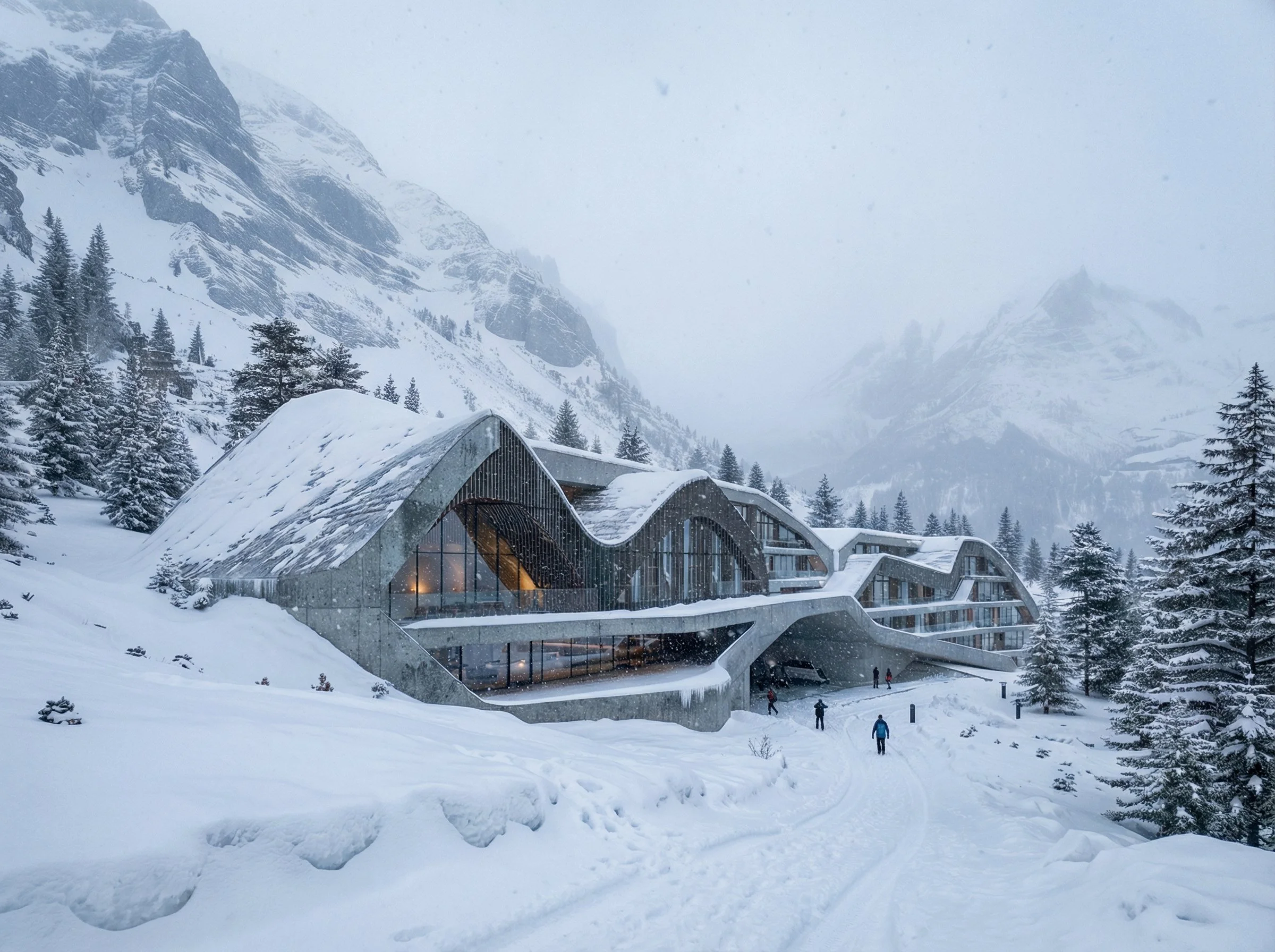
ALPine hotel
The project is embedded into the landscape, where topography, snow and wind directly inform its geometry. The continuous roof responds to these conditions while framing views and softening the boundary between nature and architecture. Material choices reinforce this dialogue. Exposed concrete anchors the building and provides thermal mass, while timber elements filter light and add warmth. Glass is used selectively to frame the landscape rather than dominate it. The experience is built on transitions cold to warm, outside to inside, rough to refined. Movement through the building becomes a sequence of these shifts, making atmosphere and material the main drivers of the project.
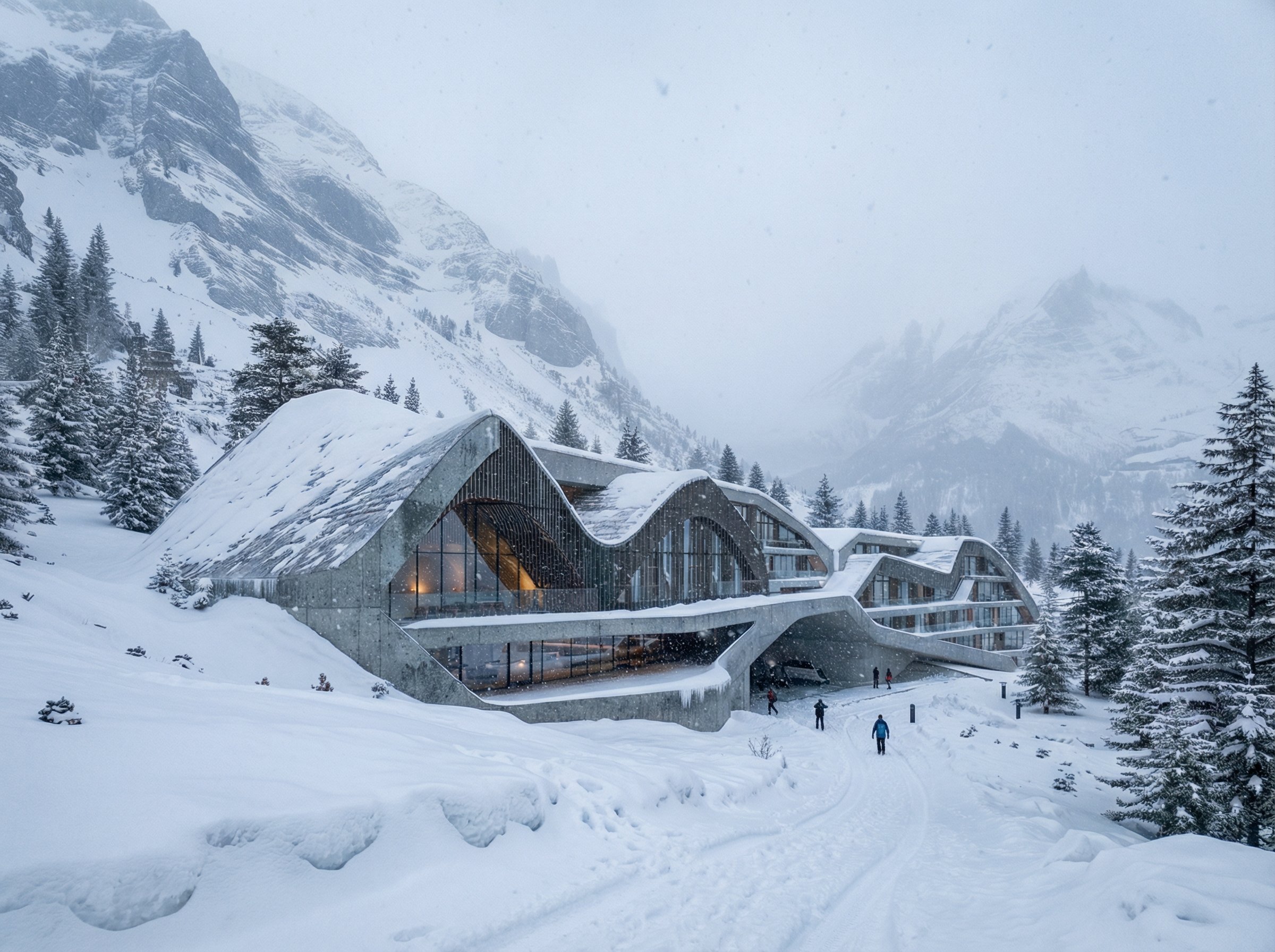
The building does not sit against the landscape, but moves with it. Its form follows the quiet logic of the terrain, shaped as if it belongs to the same system of forces that shape the snow and the ground. It becomes part of the environment rather than something placed upon it.
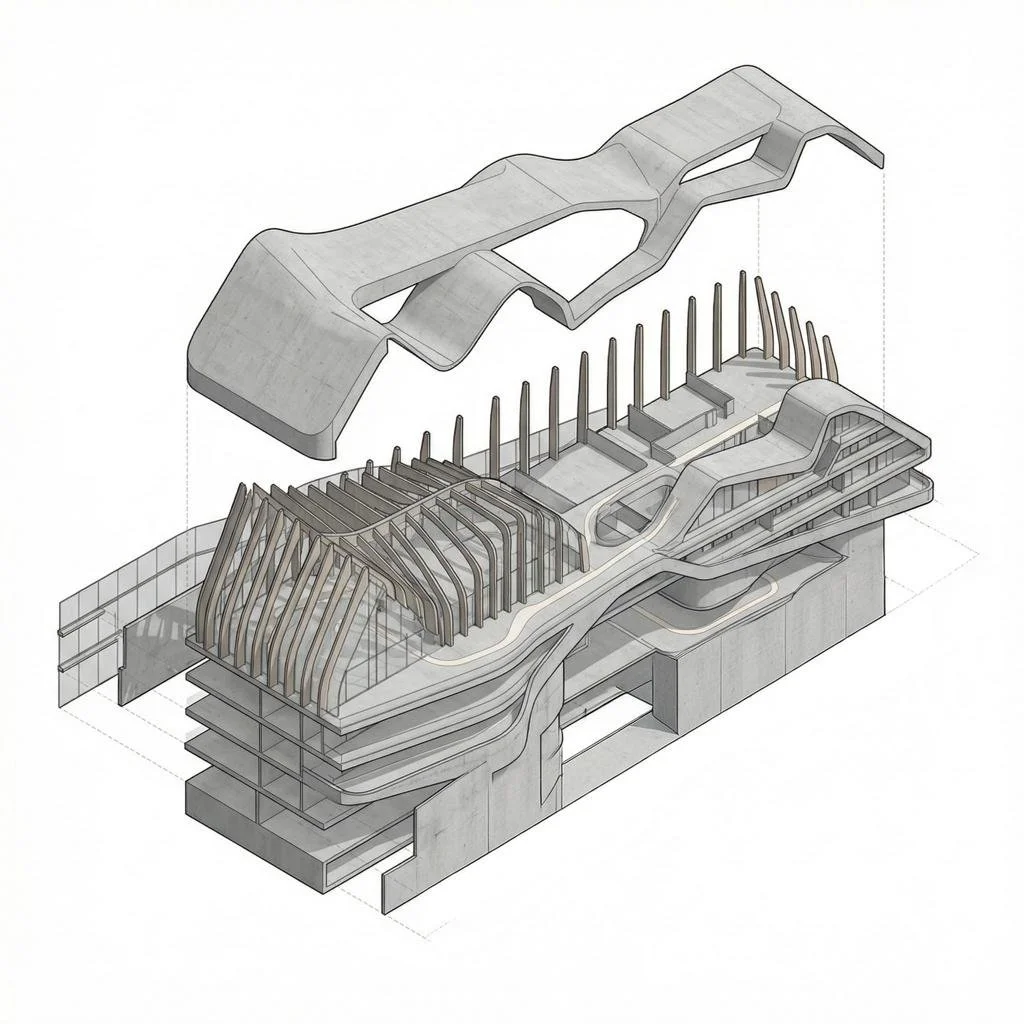
When the building is opened, its internal logic becomes clear. Layers separate, revealing relationships that are otherwise hidden. Structure, space, and movement align into a system that is both precise and quiet, holding the complexity of the whole.
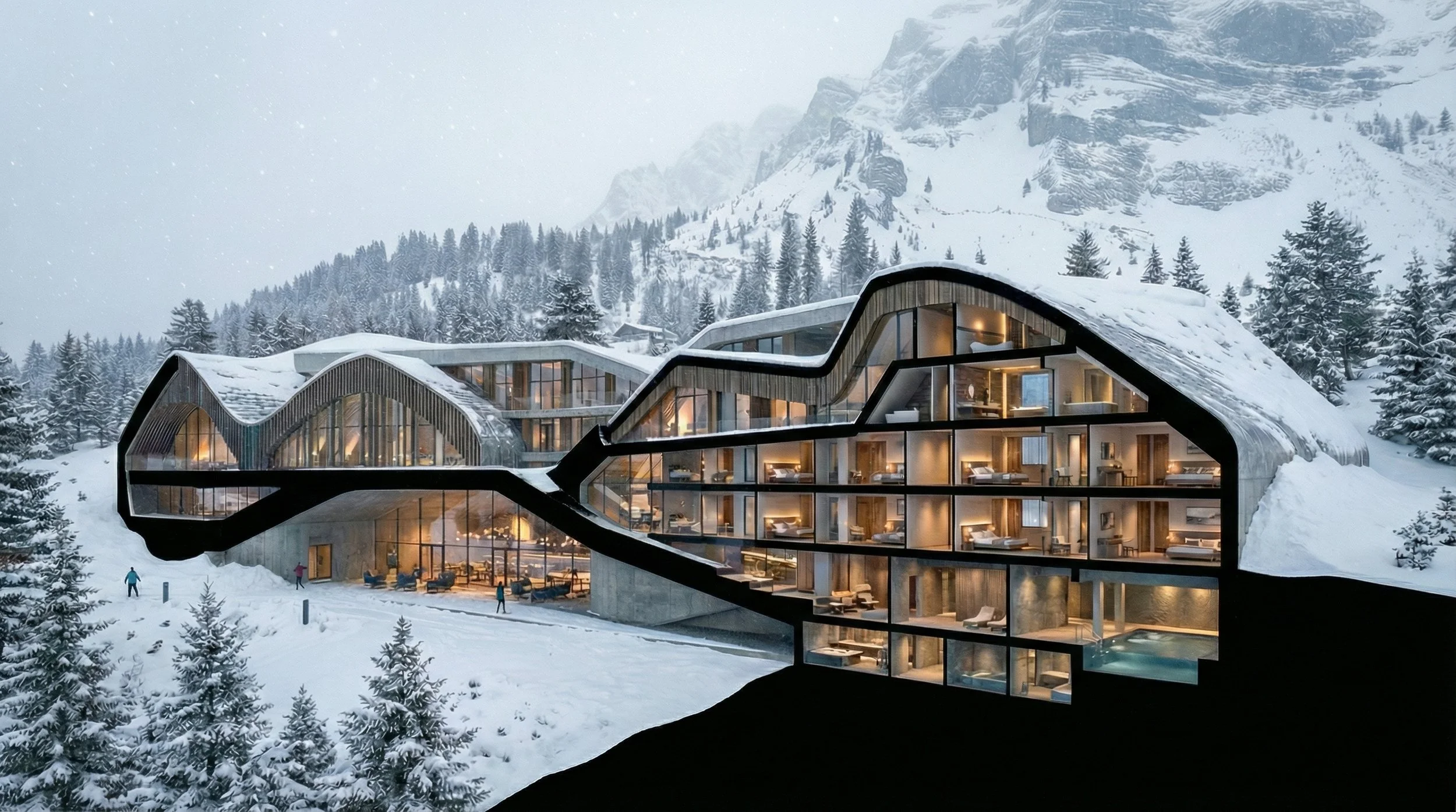
Seen from within, the building reveals itself as a series of layers, each holding a different rhythm. Movement, rest, encounter, withdrawal, all exist at once, connected through space rather than separated by it. The architecture unfolds vertically and horizontally, allowing experience to move freely.
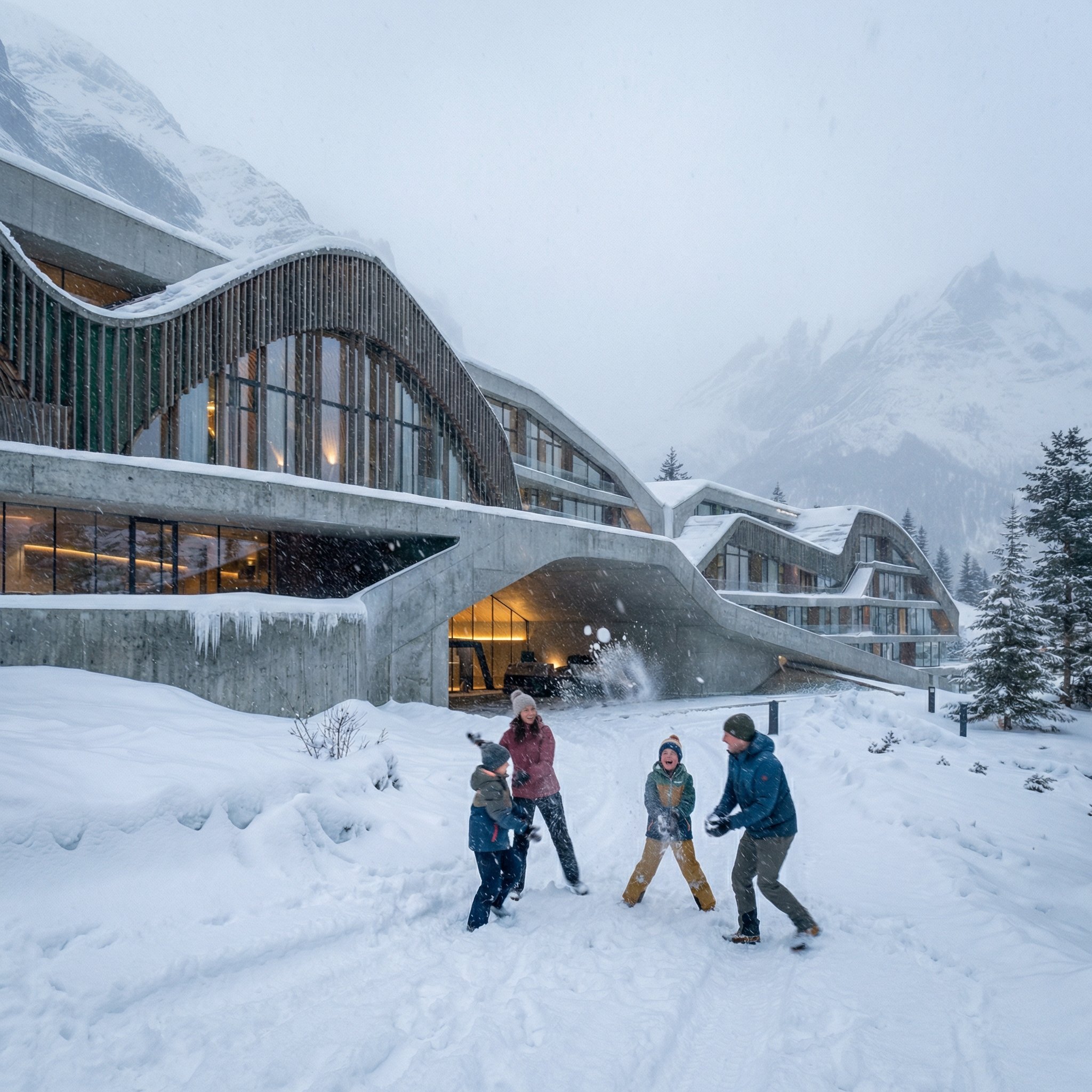
Paths appear lightly across the surface, not imposed but discovered. Movement feels intuitive, guided by the land as much as by the building. The scale of the architecture reveals itself gradually, never overwhelming, always unfolding.
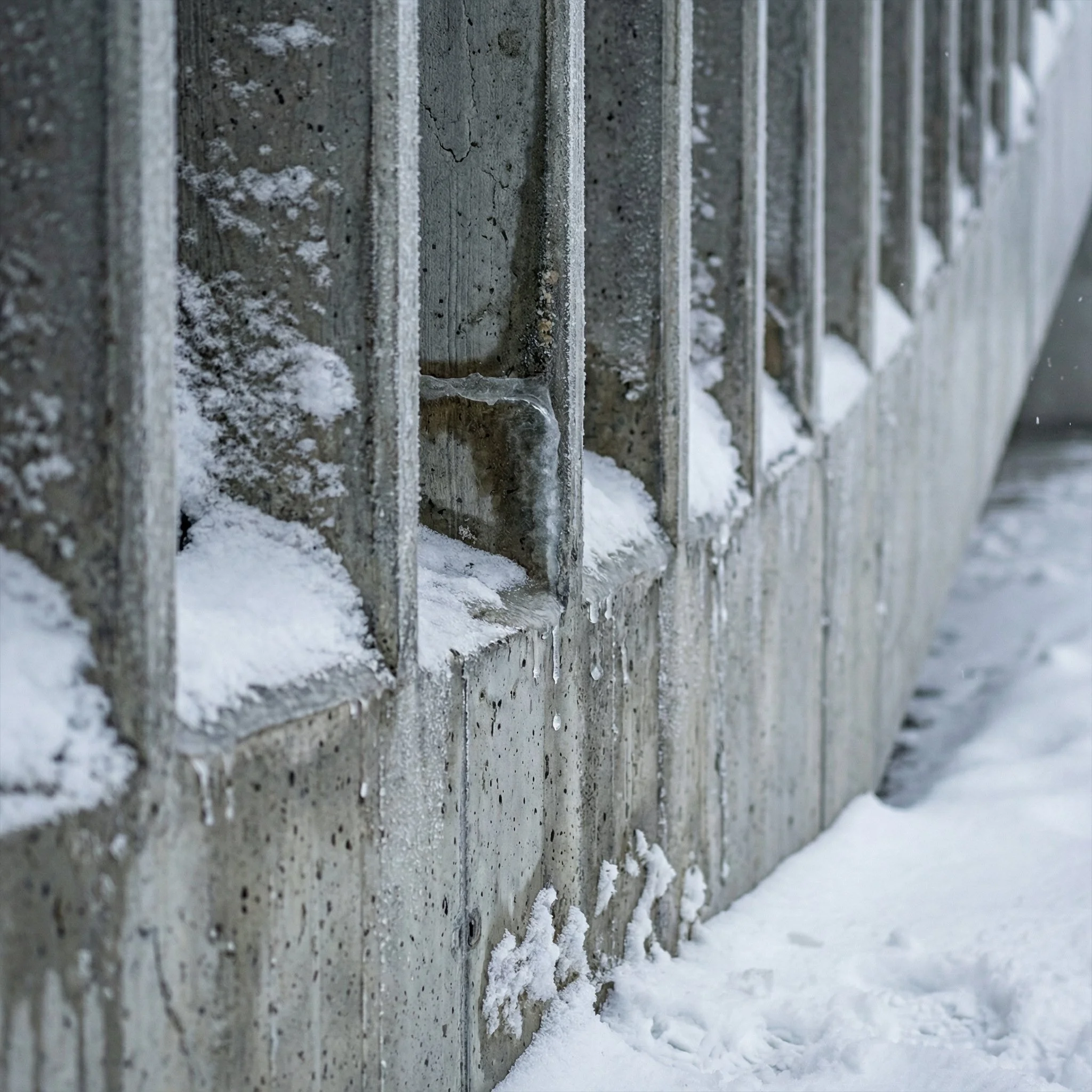
Water finds its way across the surface, settling into the smallest imperfections before freezing in place. What remains is not just ice, but a quiet record of movement, temperature, and time. The material does not resist these forces; it accepts them, allowing the climate to become visible, almost readable, on its skin.
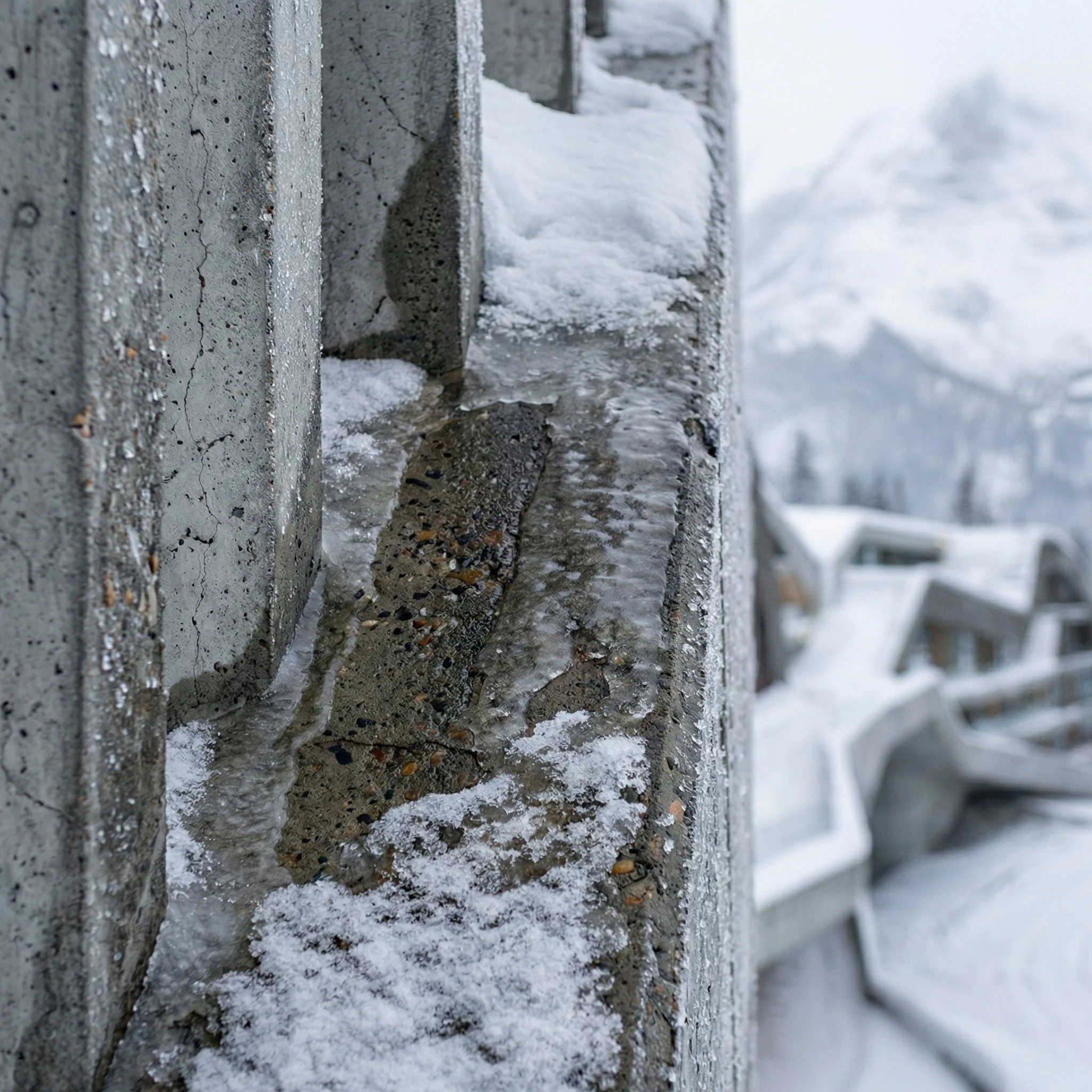
Time leaves its traces slowly, almost imperceptibly. Surfaces shift, textures deepen, and small marks accumulate. These changes are not signs of decay, but of presence. The building continues to evolve, shaped by the same conditions it was designed to engage with.
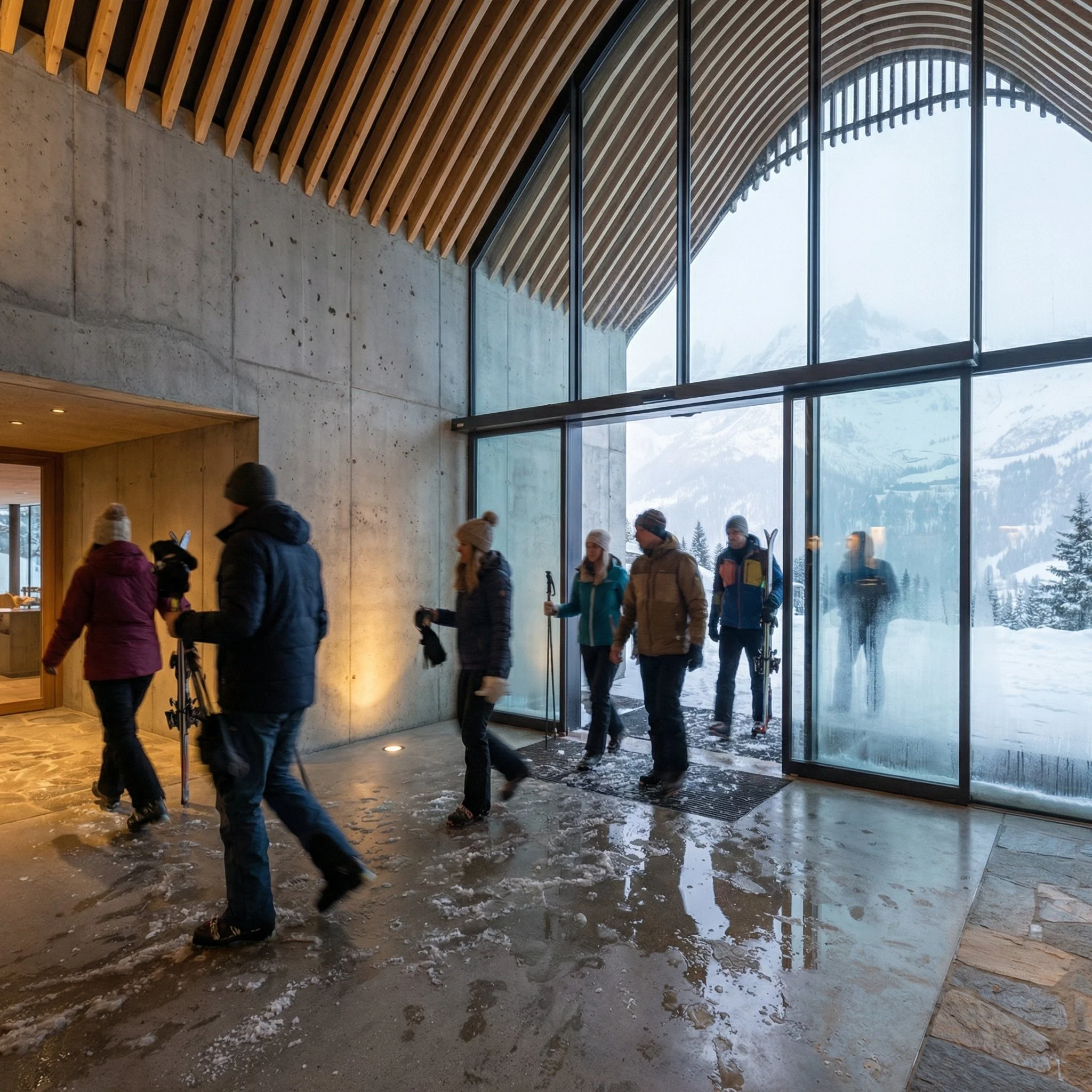
The act of entering is not immediate. You arrive carrying the outside with you, snow still clinging to your body, cold still present in your breath. The building does not erase this instantly. Instead, it absorbs it slowly, allowing a transition that feels gradual, almost human in its pace.
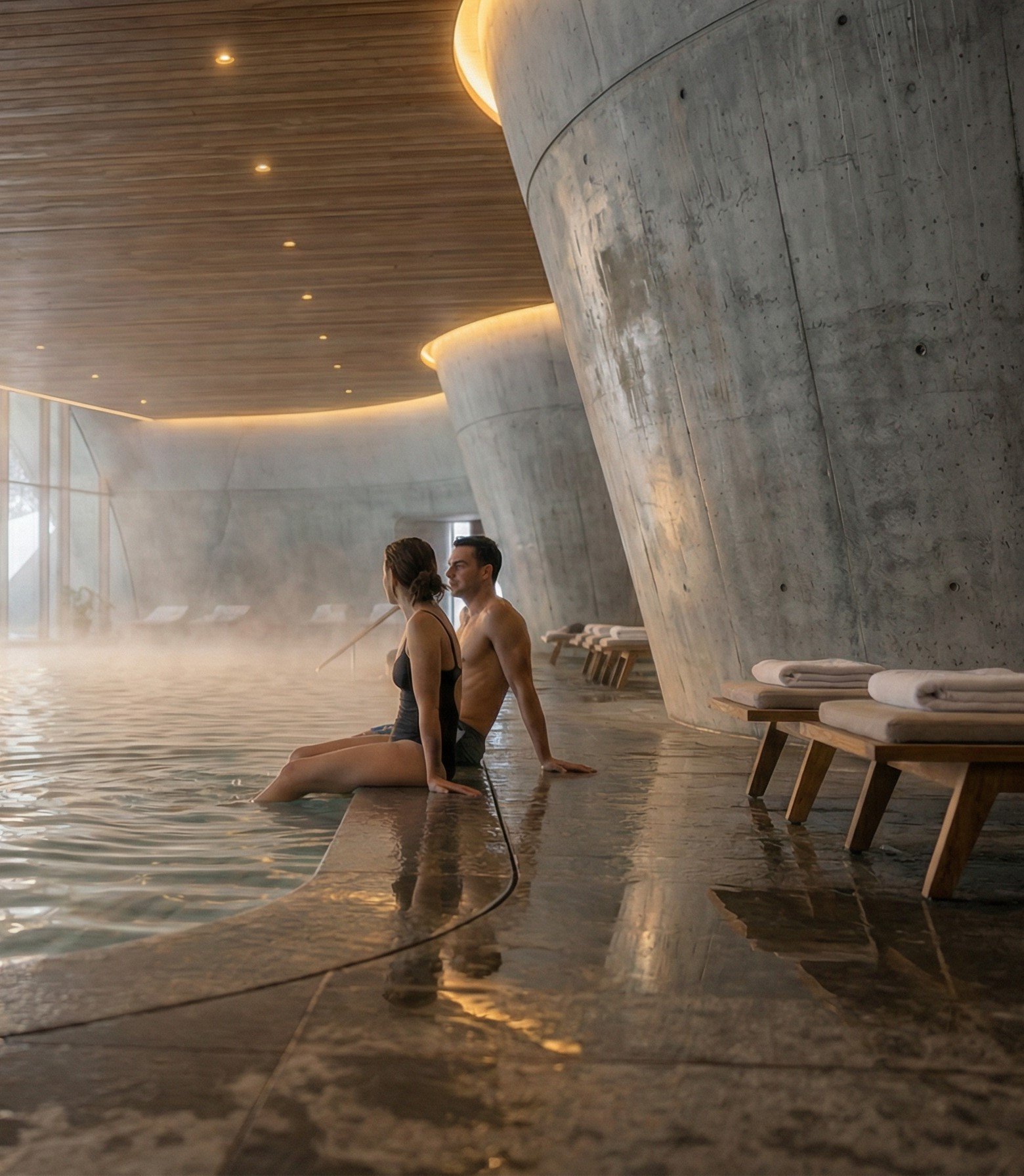
Warm water surrounds the body as steam begins to soften the air. The contrast is not abrupt, but unfolding. The memory of the cold lingers just enough to make the warmth more tangible, more real. Here, temperature is not just a condition, but an experience that reshapes perception.
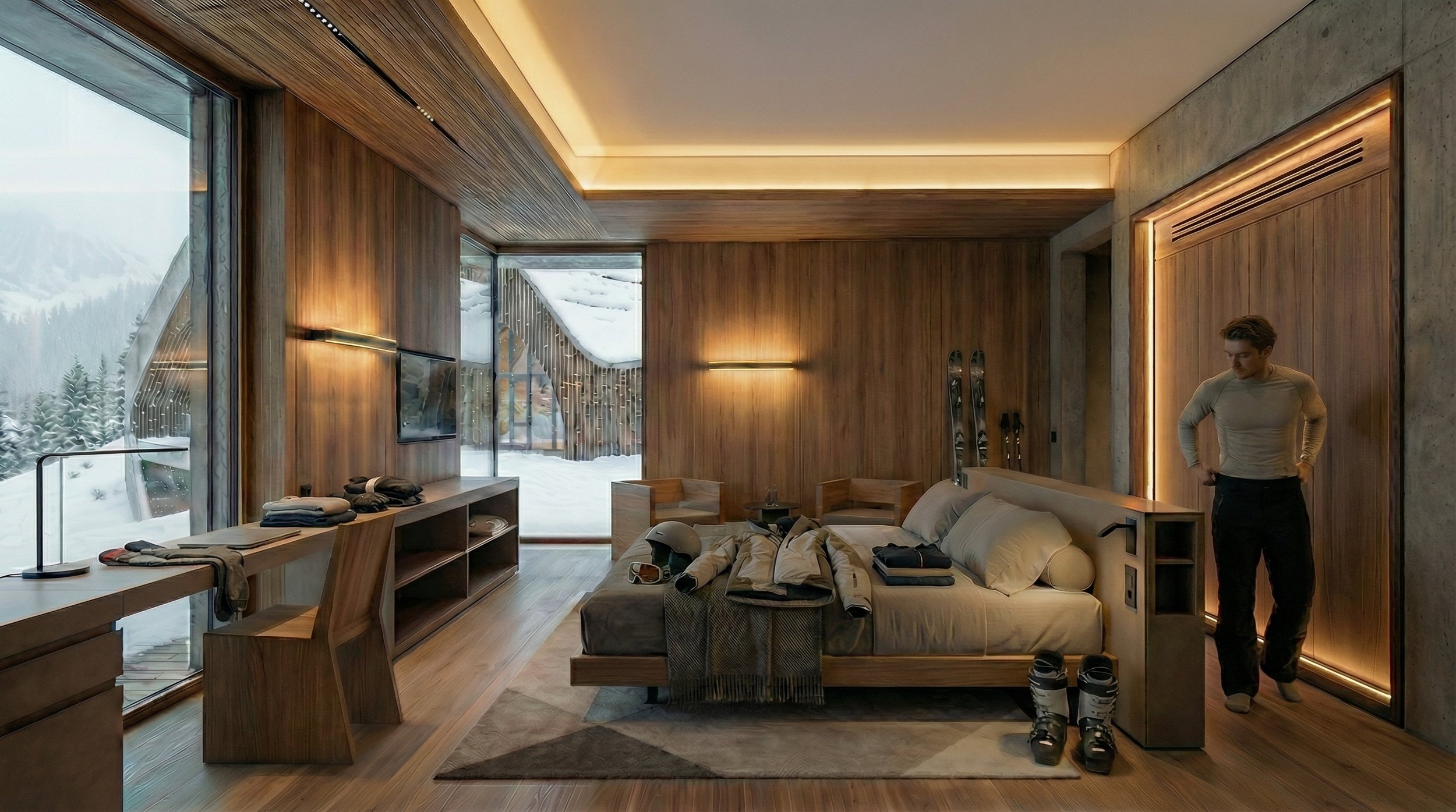
The room offers a sense of quiet that is not empty, but full. Light moves gently across surfaces, touching materials that feel warm and grounded. It becomes a place where the body can slow down, where the outside world fades without disappearing completely.
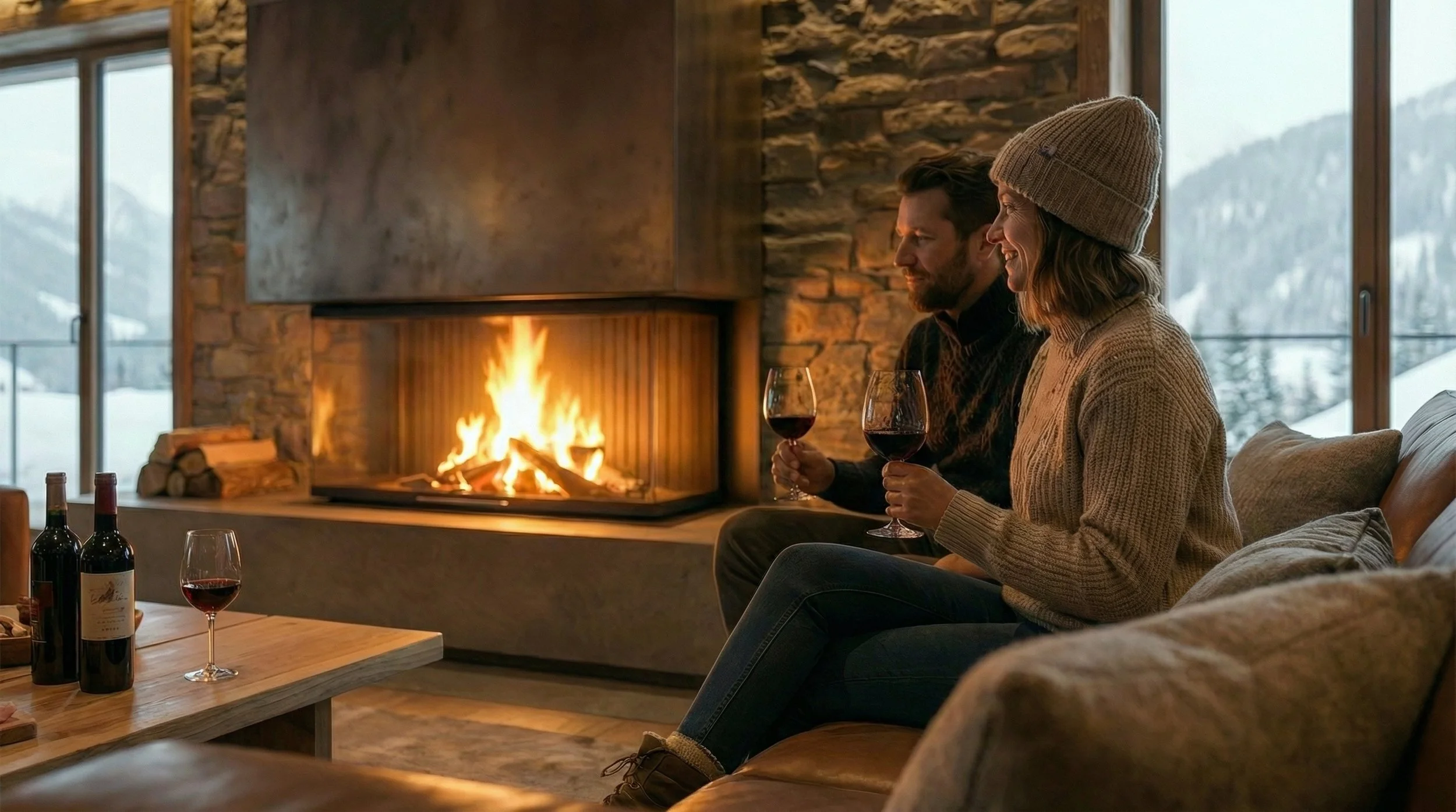
Fire gathers people without asking them to gather. It creates a center, not through design alone, but through presence. Conversations emerge slowly, carried by warmth and proximity. The space feels shared, not because it is programmed to be, but because it naturally becomes so.