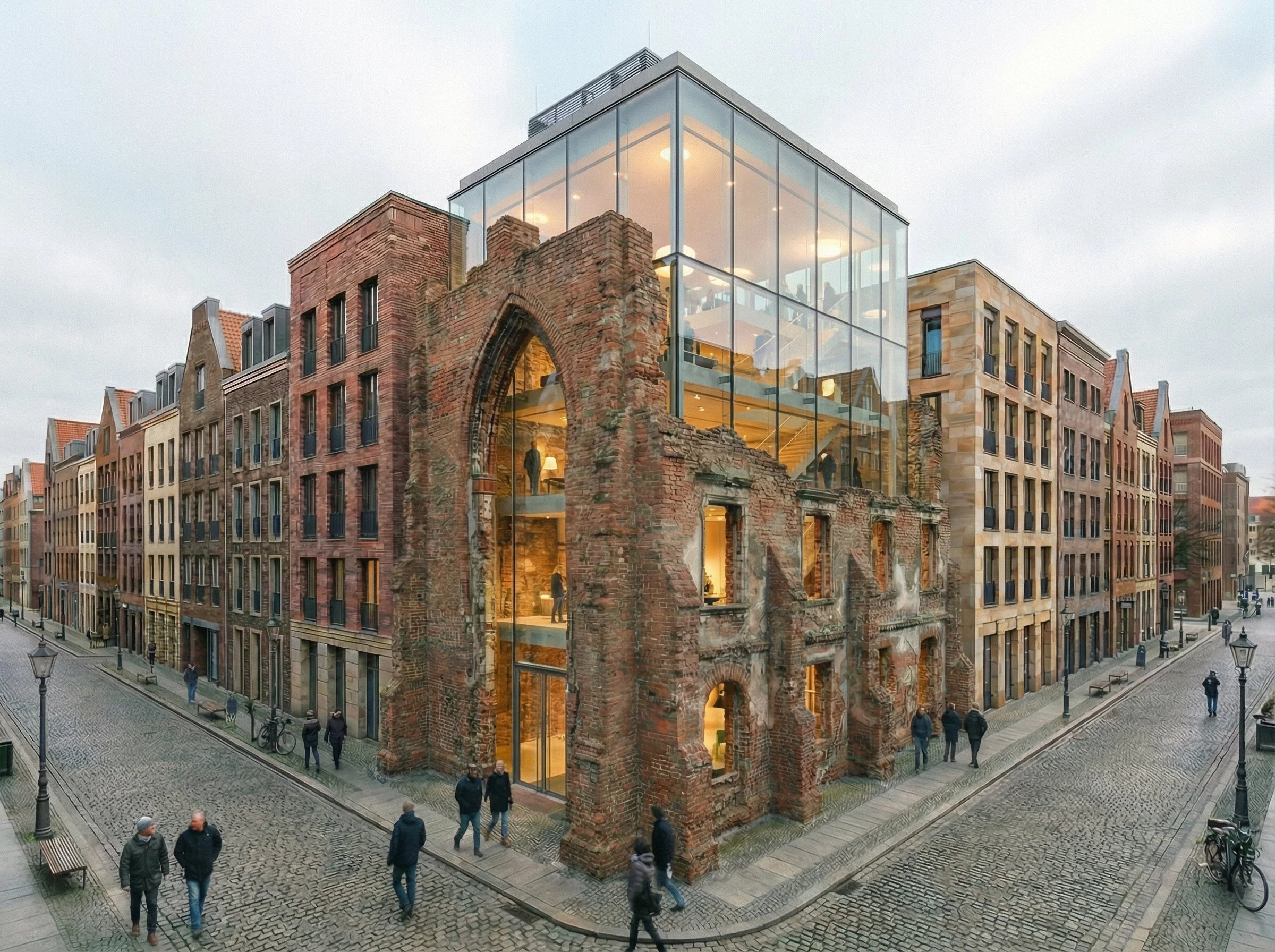
adaptive reuse building
This adaptive reuse project treats the existing façade as the main driver of the design. Rather than restoring or replacing it, the proposal works through its layers, openings and structural traces—allowing the building to evolve while retaining its memory.
A new architectural system is inserted within and behind the preserved shell. It does not imitate the old, but establishes a clear dialogue with it. Voids and framed openings transform the façade into a porous threshold, reconnecting interior and exterior.
Material contrast reinforces this relationship. Weathered brick carries time, while contemporary elements—glass, steel and timber—introduce clarity and lightness.
Old and new are not opposed, but interwoven—forming a continuous reading of the building as both relic and living structure.
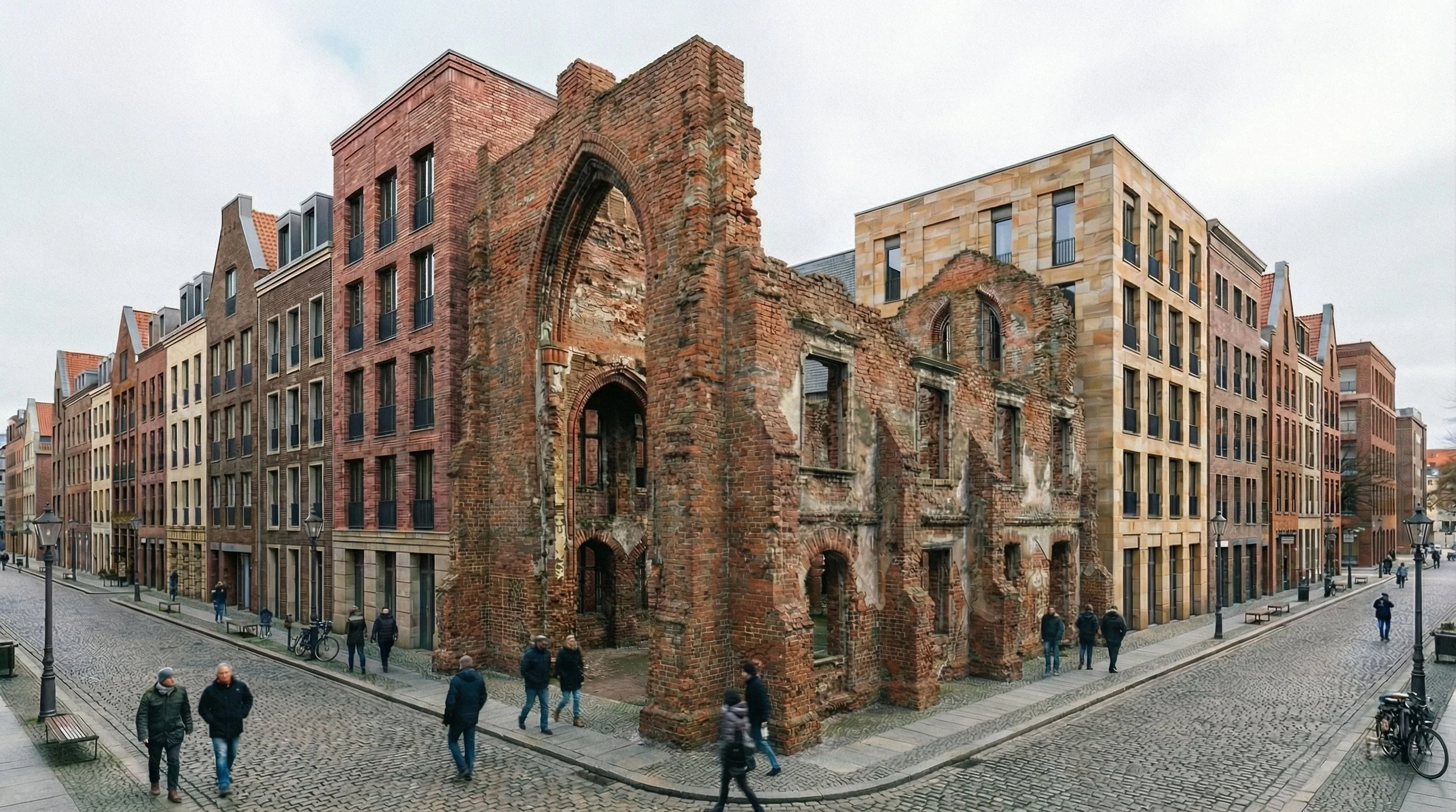
The building stands as a fragment of time, exposed and incomplete, yet still defining the space around it. Its worn brick carries traces of what once was, shaping the street not through function, but through presence. Even in its ruined state, it continues to act as an anchor within the urban fabric.
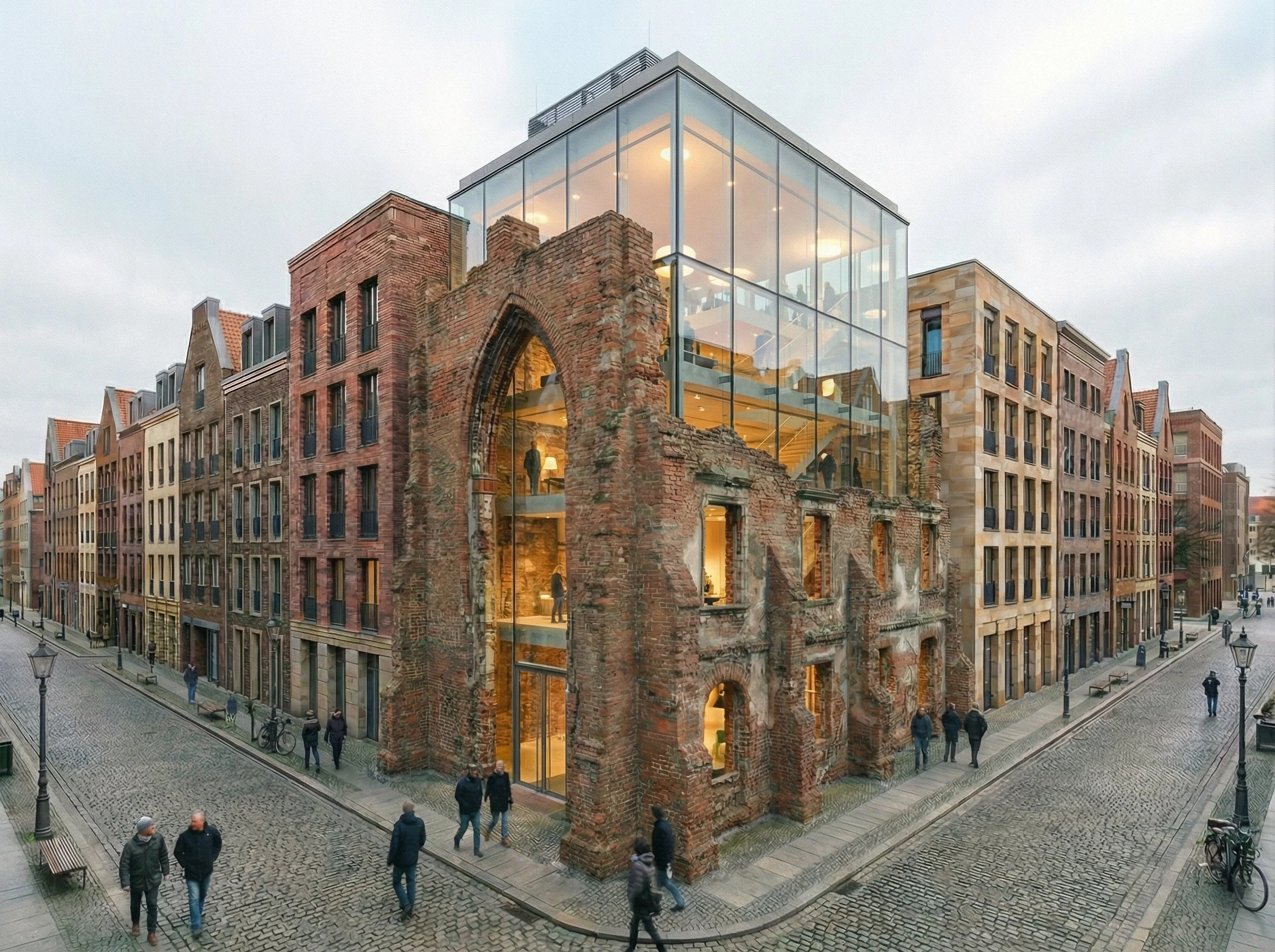
A new structure settles gently behind the existing façade, not attempting to repair it, but to inhabit it. The transparency of the glass reveals life within, allowing the old walls to frame a new interior condition. The building begins to breathe again, not by erasing its past, but by allowing it to coexist with the present.
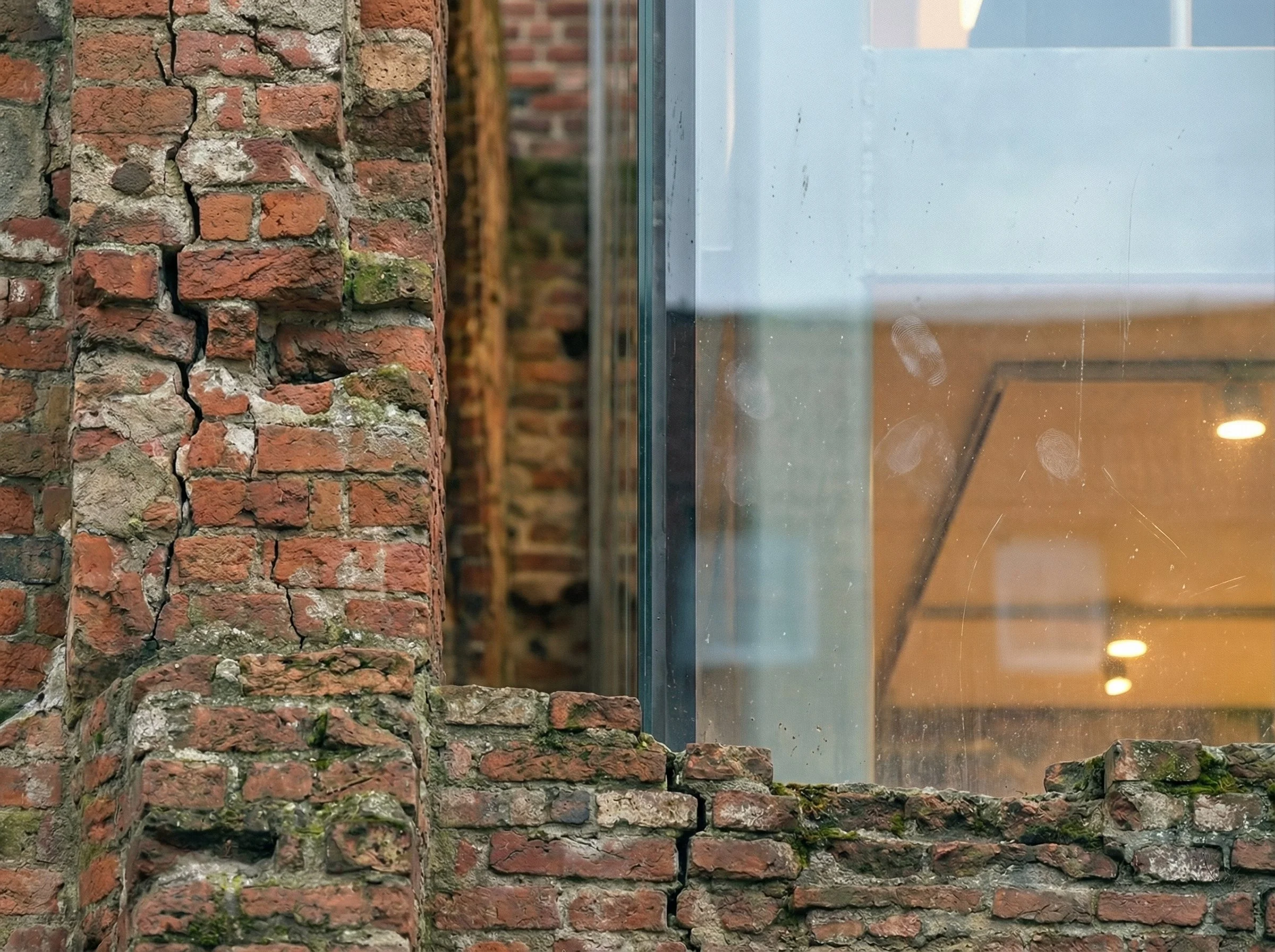
At close range, the dialogue becomes more intimate. Rough, weathered brick meets a smooth glass surface that reflects and softens its imperfections. The boundary is not abrupt, but negotiated through texture, light, and time.
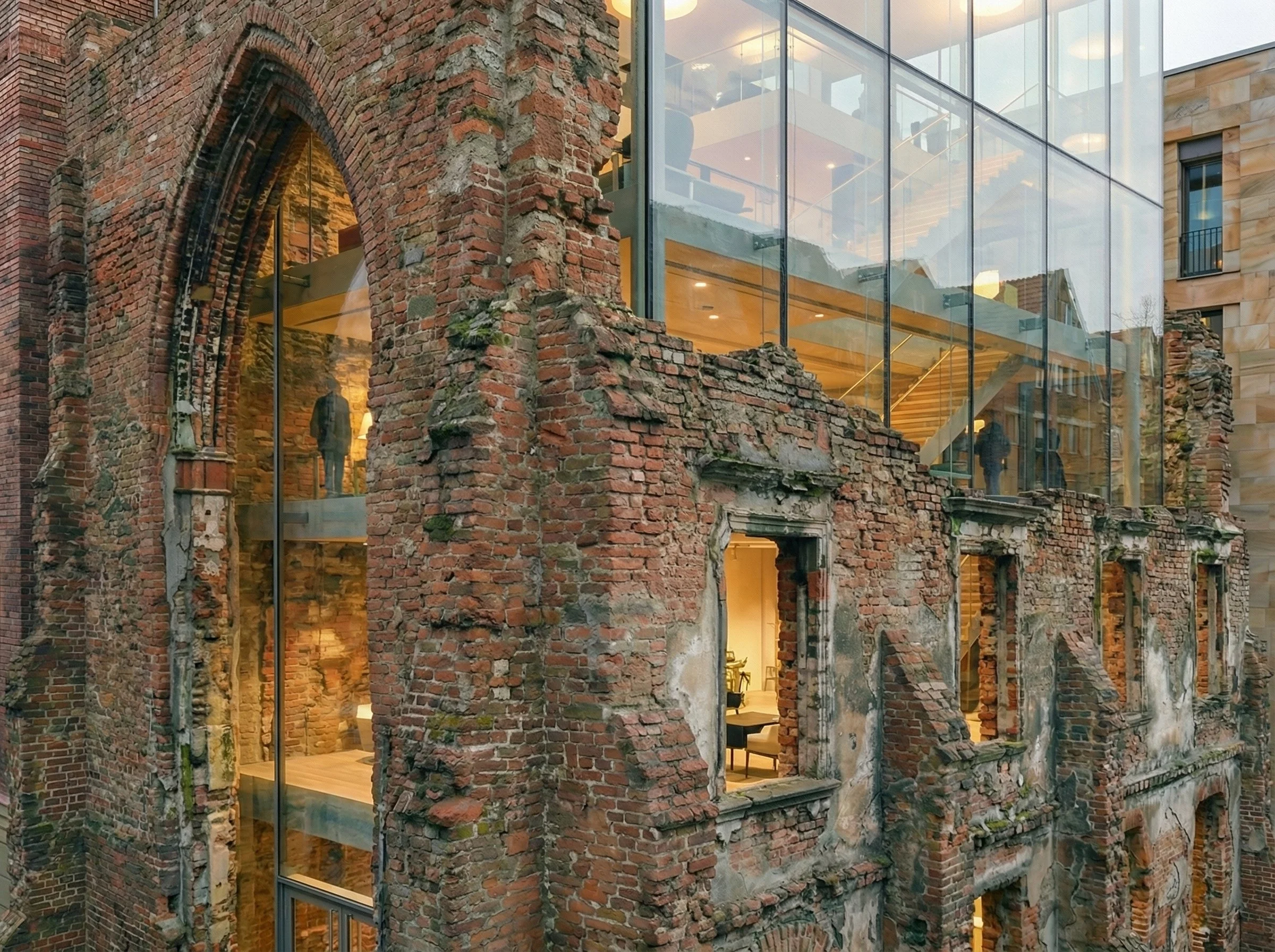
The façade no longer acts as a barrier, but as a layered threshold. Openings become moments of connection, where glimpses of the interior animate the old structure. What was once closed and static now participates in the life of the building again.
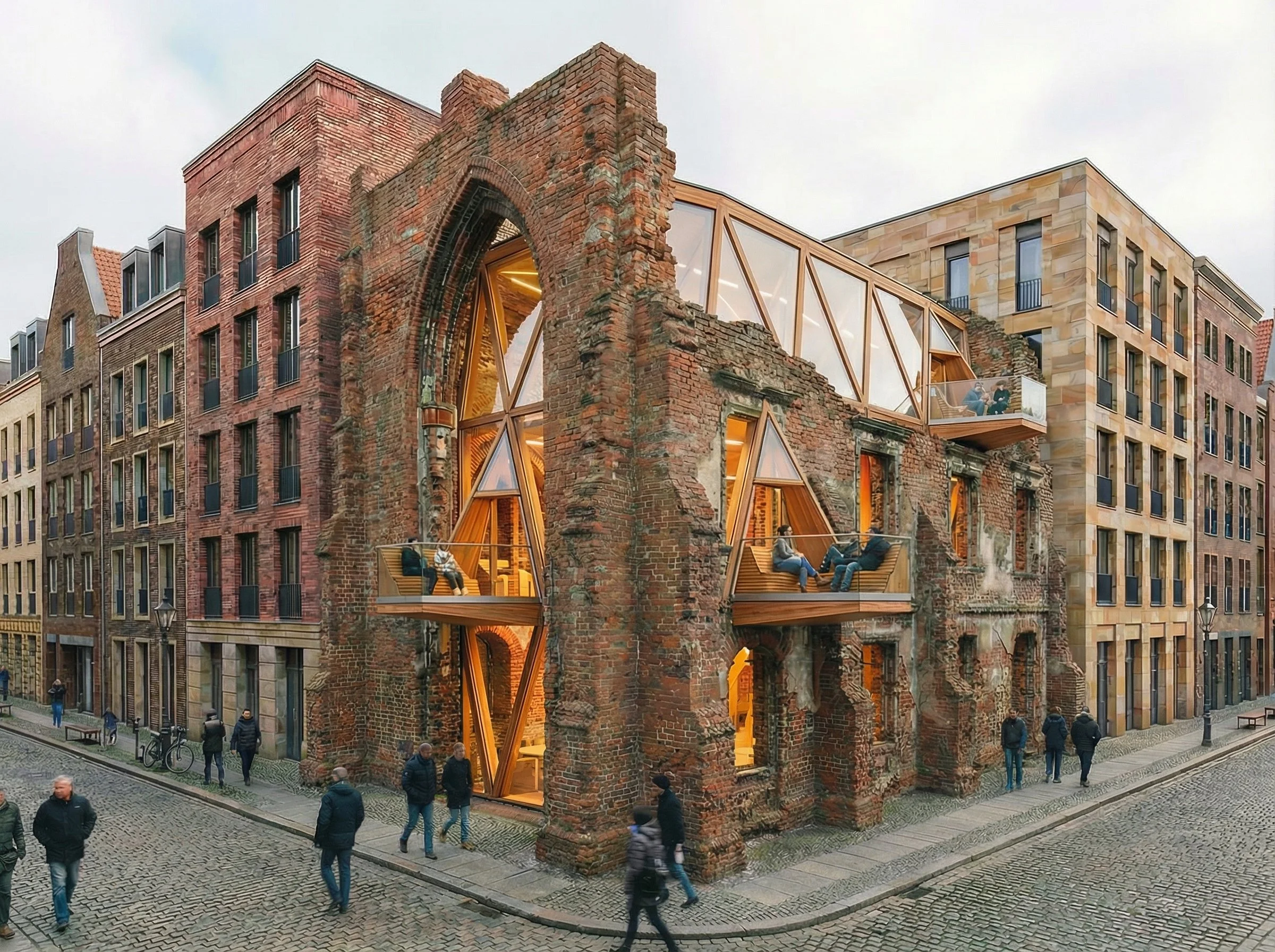
The intervention introduces a warmer, more tactile layer. Timber elements settle into the existing shell, creating spaces that feel both protected and open. The contrast is not only visual, but atmospheric, shifting the experience of the ruin from exposure to inhabitation.
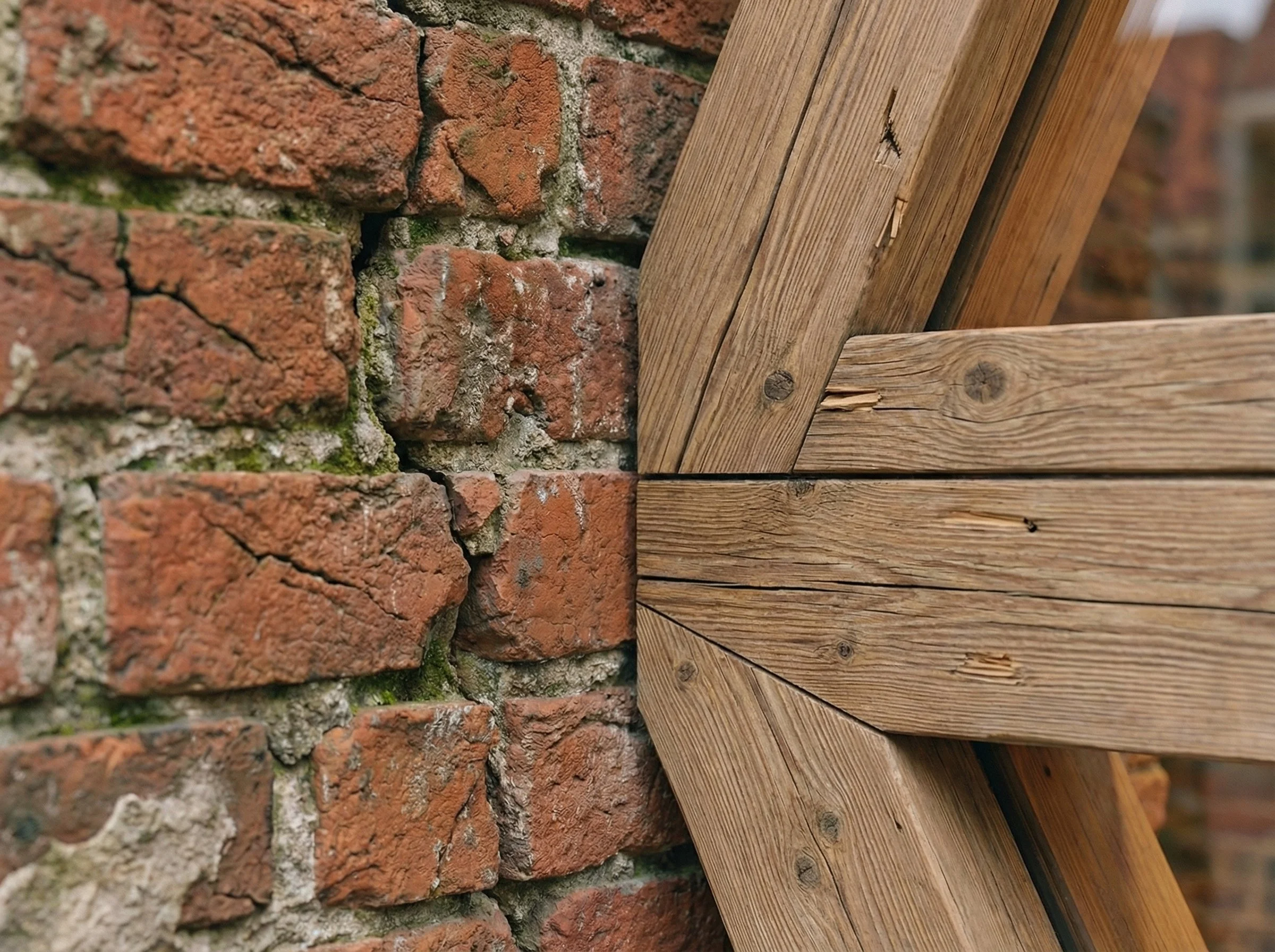
Where timber meets brick, the connection feels almost careful, as if the new structure is aware of the fragility of what it touches. The joint becomes a moment of respect, holding both materials in tension without forcing them into uniformity.
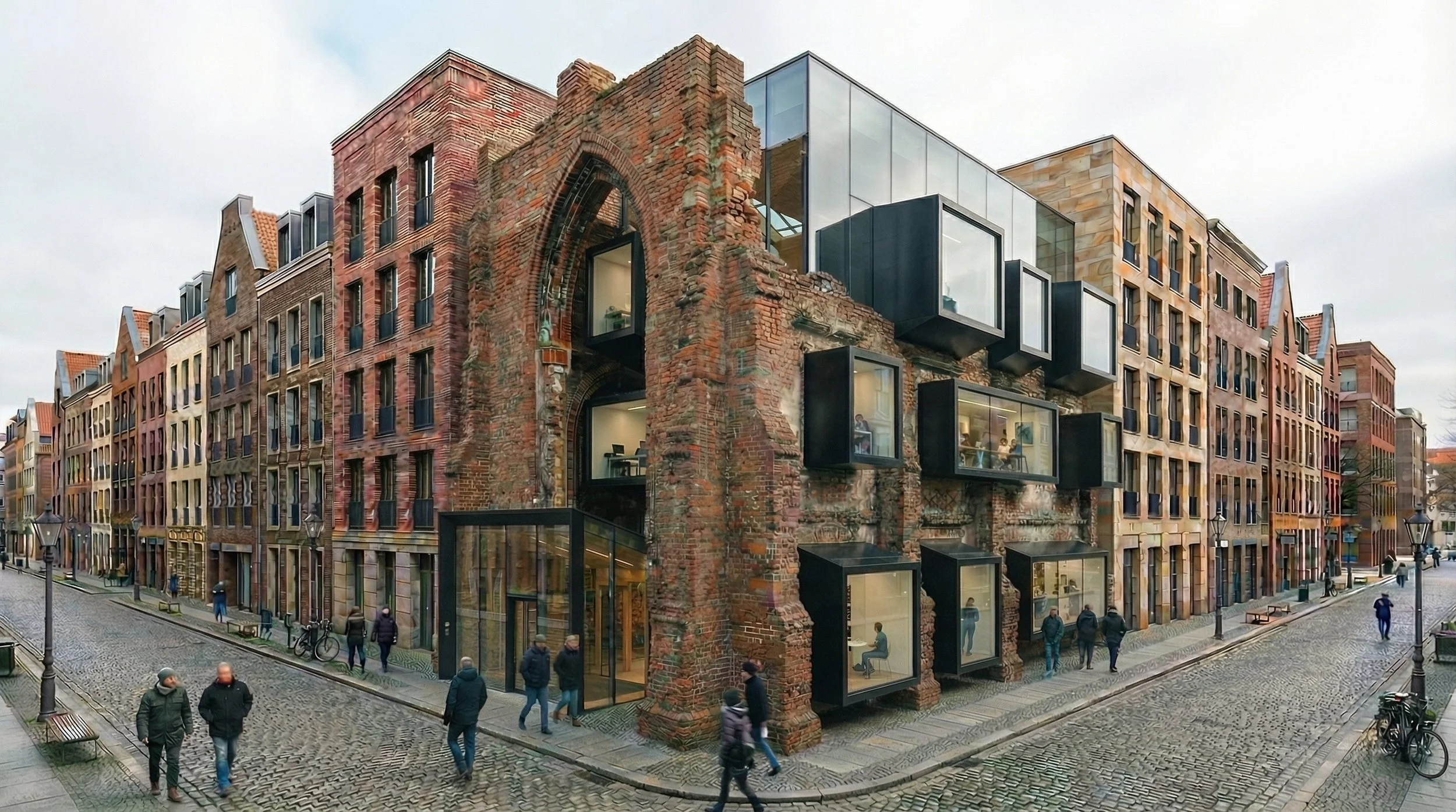
The project explores a more assertive intervention, where volumes extend outward from the existing walls. These elements amplify the openings, transforming them into inhabitable projections. The façade becomes active, no longer only a surface, but a generator of space.
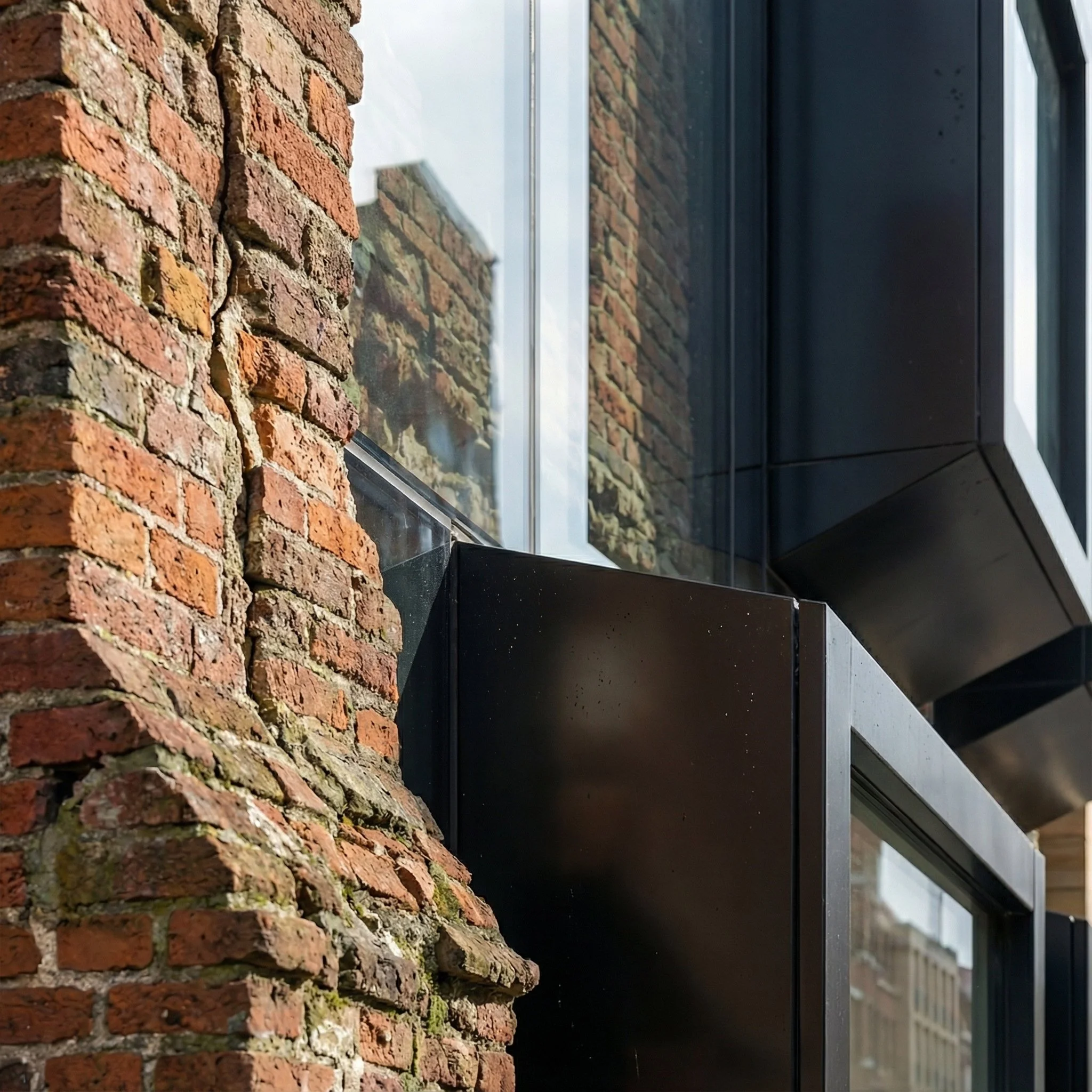
The contrast sharpens at the scale of detail. Dark, precise elements cut through the irregularity of the brick, establishing a clear distinction between past and present. Rather than blending, the two conditions define each other.
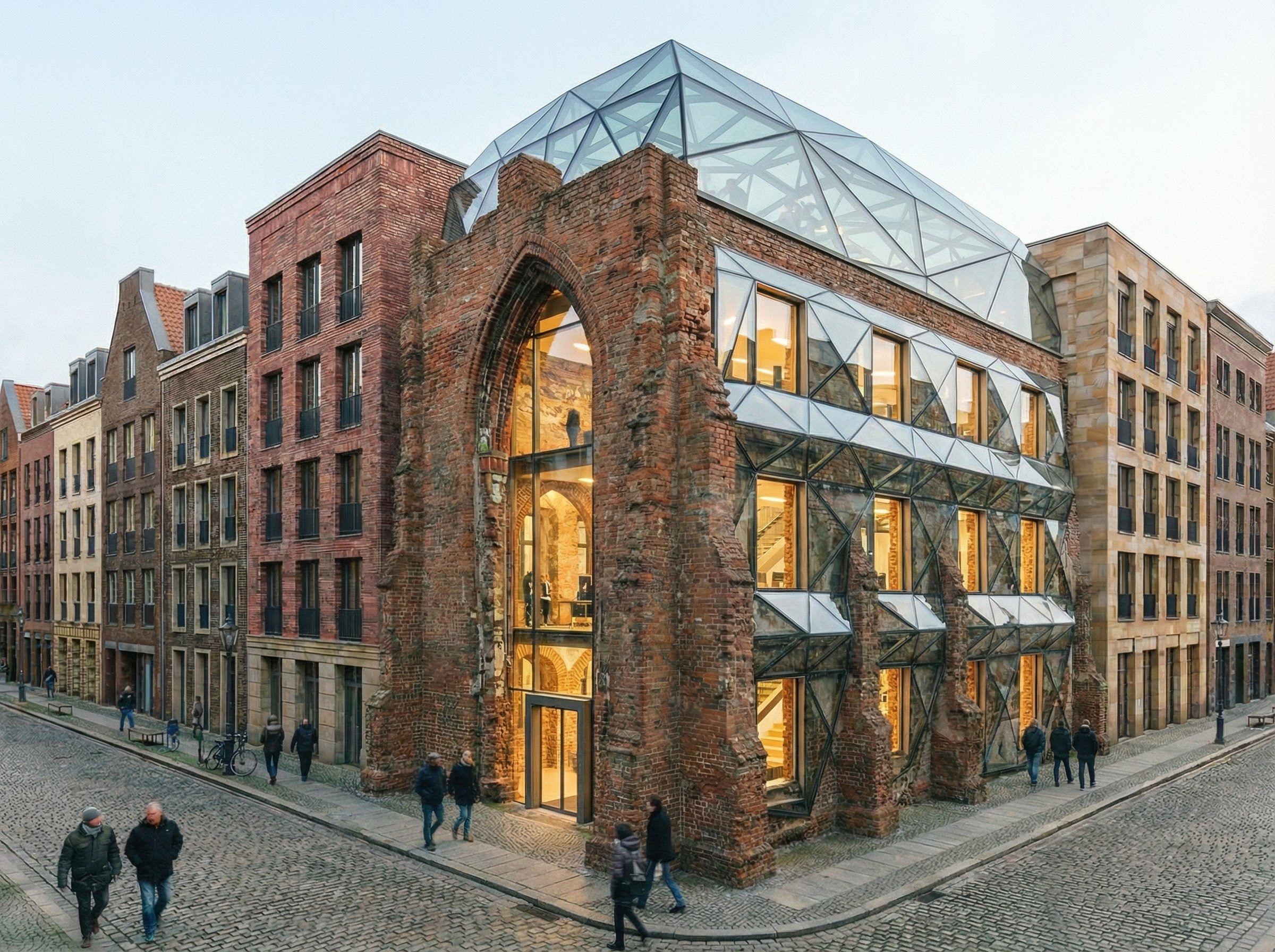
A new layer envelops the building, holding the existing structure within a continuous system. The glass does not hide the ruin, but protects and frames it, allowing it to remain visible while extending its life. The building becomes both artifact and inhabitable space at once.
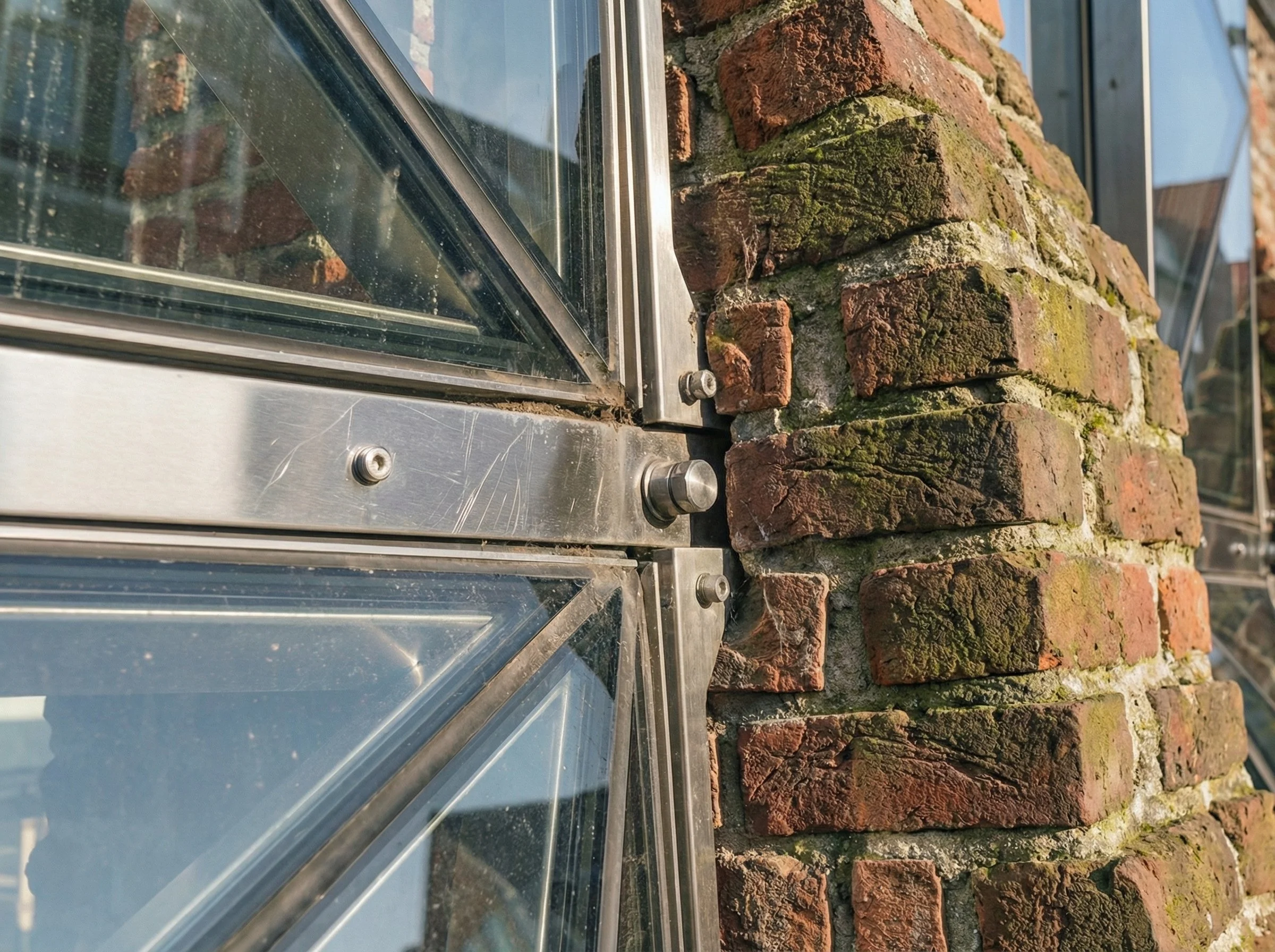
Reflections blur the boundary between inside and outside, old and new. The surface captures fragments of the surroundings while revealing the texture behind it. The façade becomes a shifting condition, never fully one or the other.
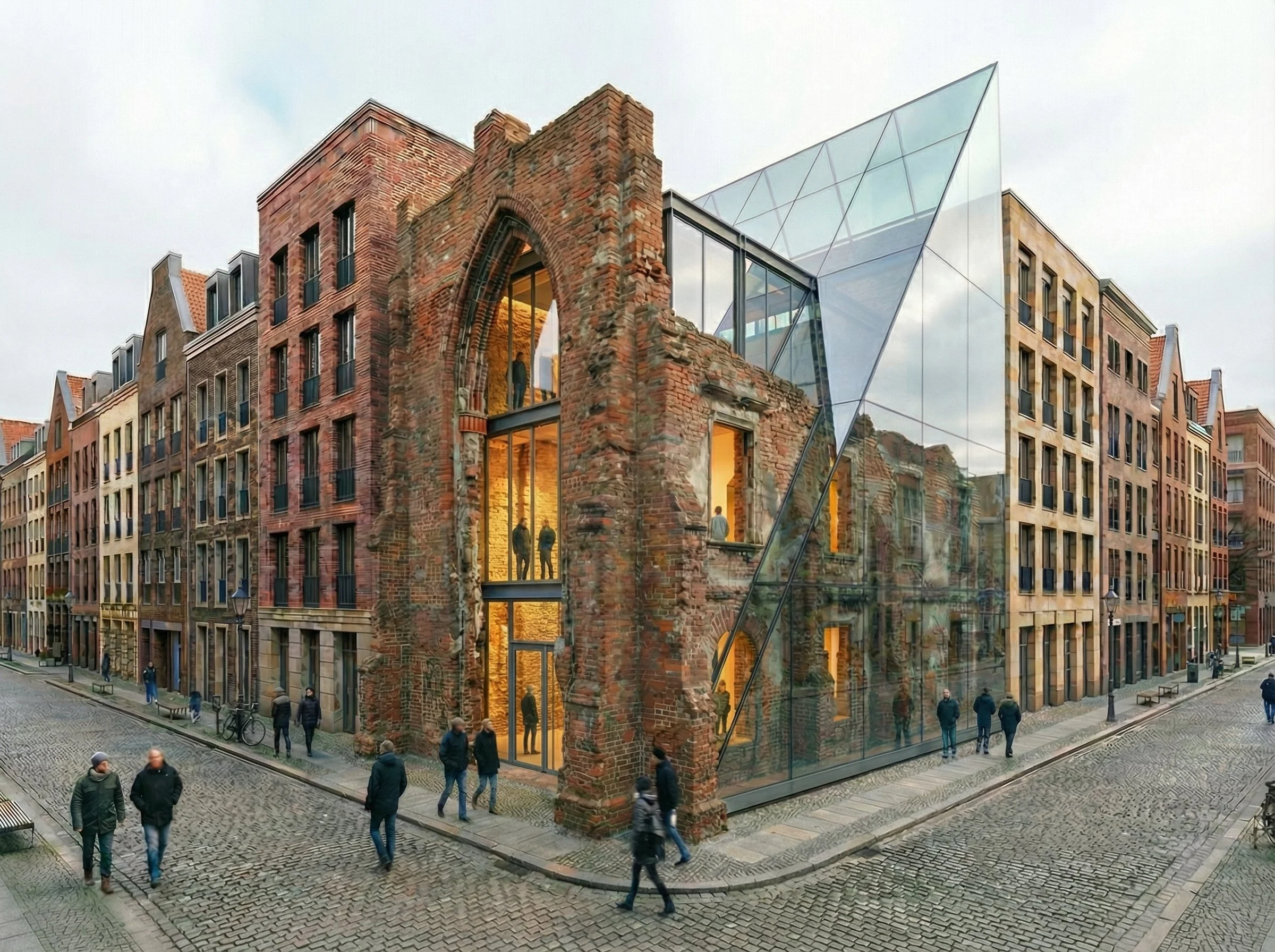
The intervention takes on a more dynamic form, introducing a geometry that contrasts with the weight of the existing structure. The new volume appears almost temporary, as if it could move or change, while the old remains grounded. Together, they create a tension between permanence and transformation.
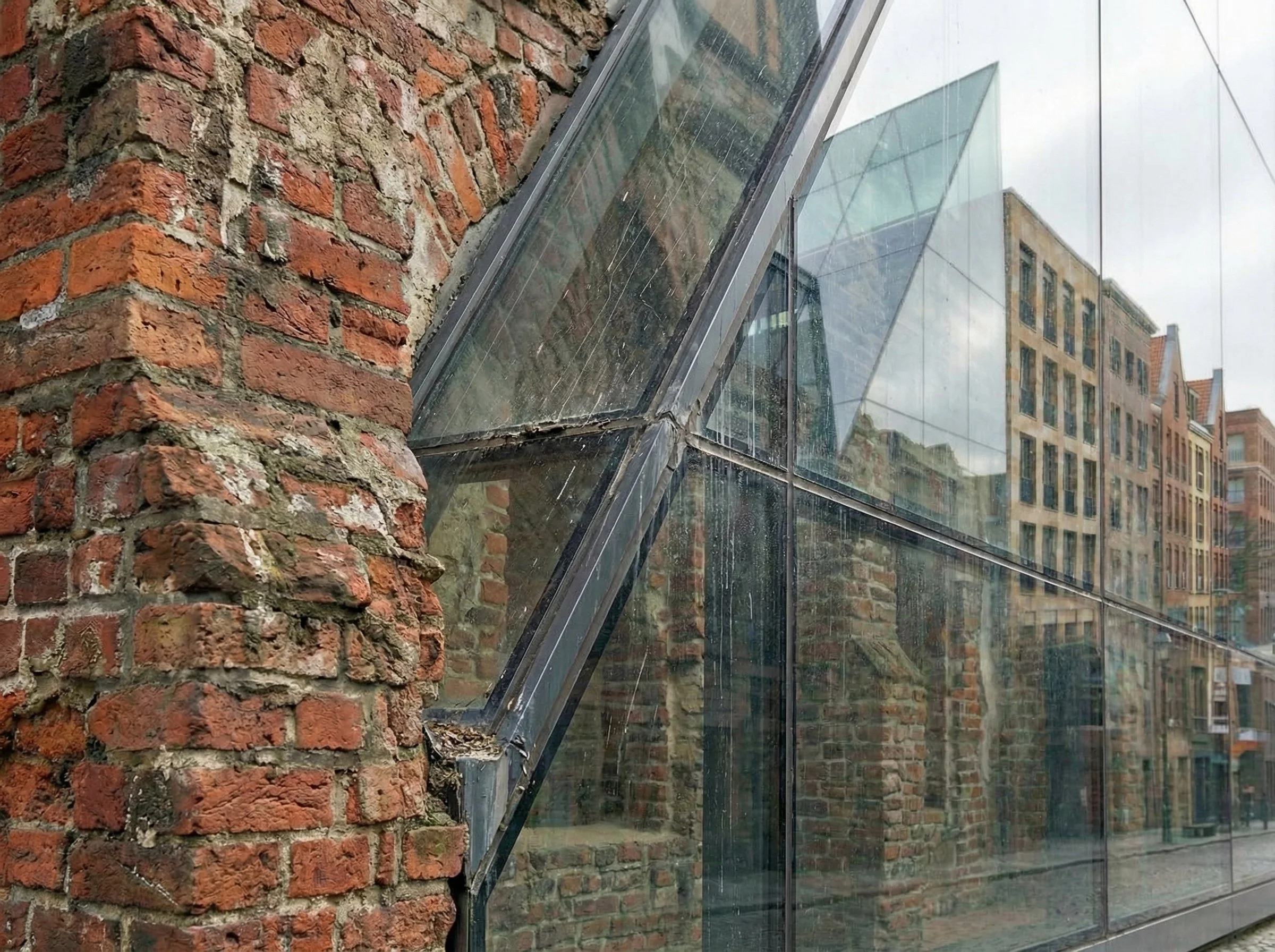
At the smallest scale, the project becomes a study of precision meeting imperfection. Clean joints and engineered connections sit against eroded surfaces, making time visible not as something lost, but as something continuously present.