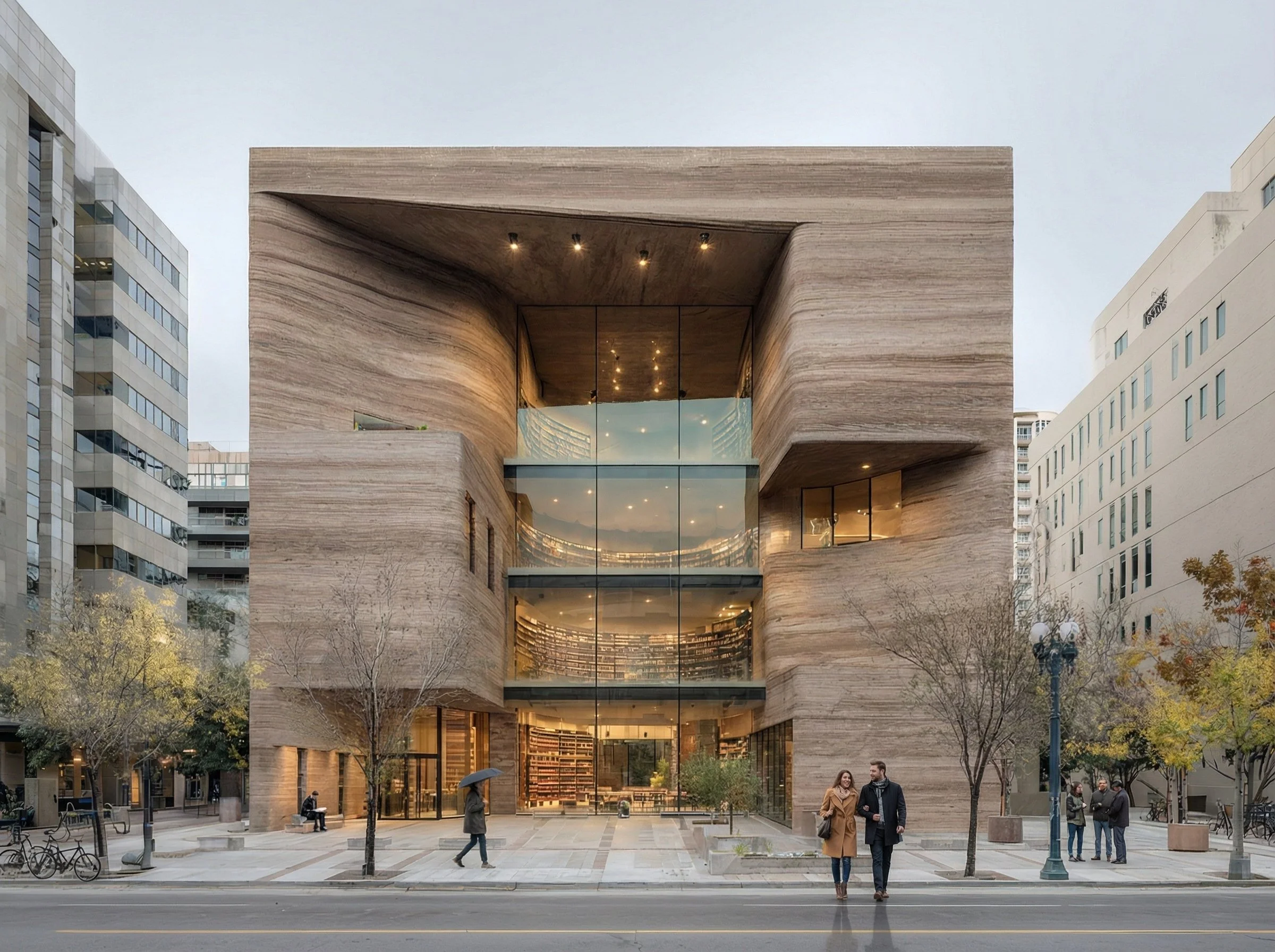
THE EARTHEN LIBRARY
This project explores the spatial potential of contrast through the combination of rammed earth and glass, framing the library as both a place of grounding and openness. The heavy, tactile presence of earth defines enclosure, silence, and permanence, while glass introduces light, transparency, and visual continuity with the city.
Rather than treating the library as a static container of books, the project approaches it as a spatial sequence shaped by material transitions, light conditions, and changing atmospheres. Movement through the building becomes a gradual shift between compression and release, opacity and transparency, introspection and connection.
The result is a library that balances weight and clarity, creating an environment where material, light, and spatial experience come together to support focus, reflection, and collective presence.
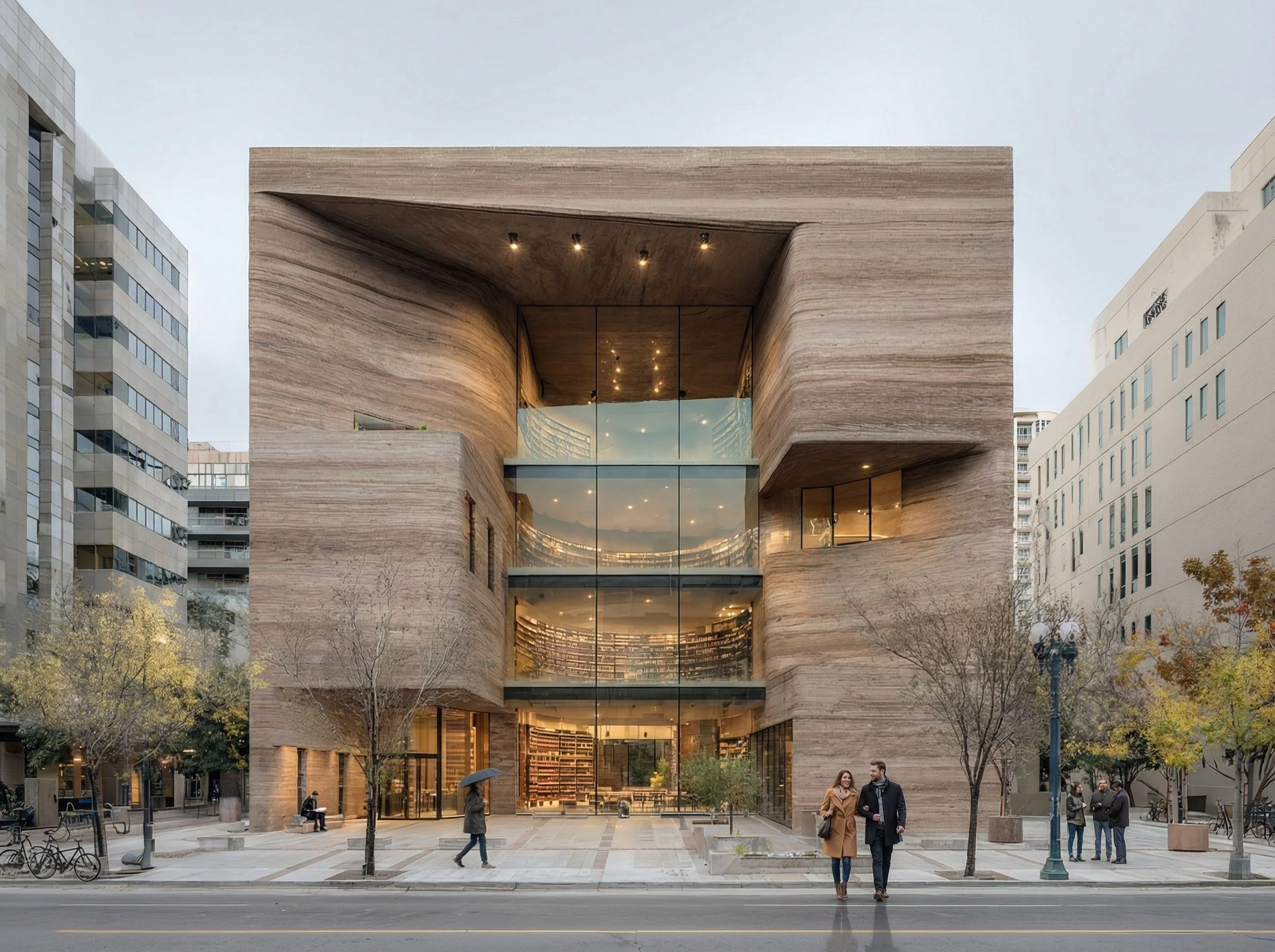
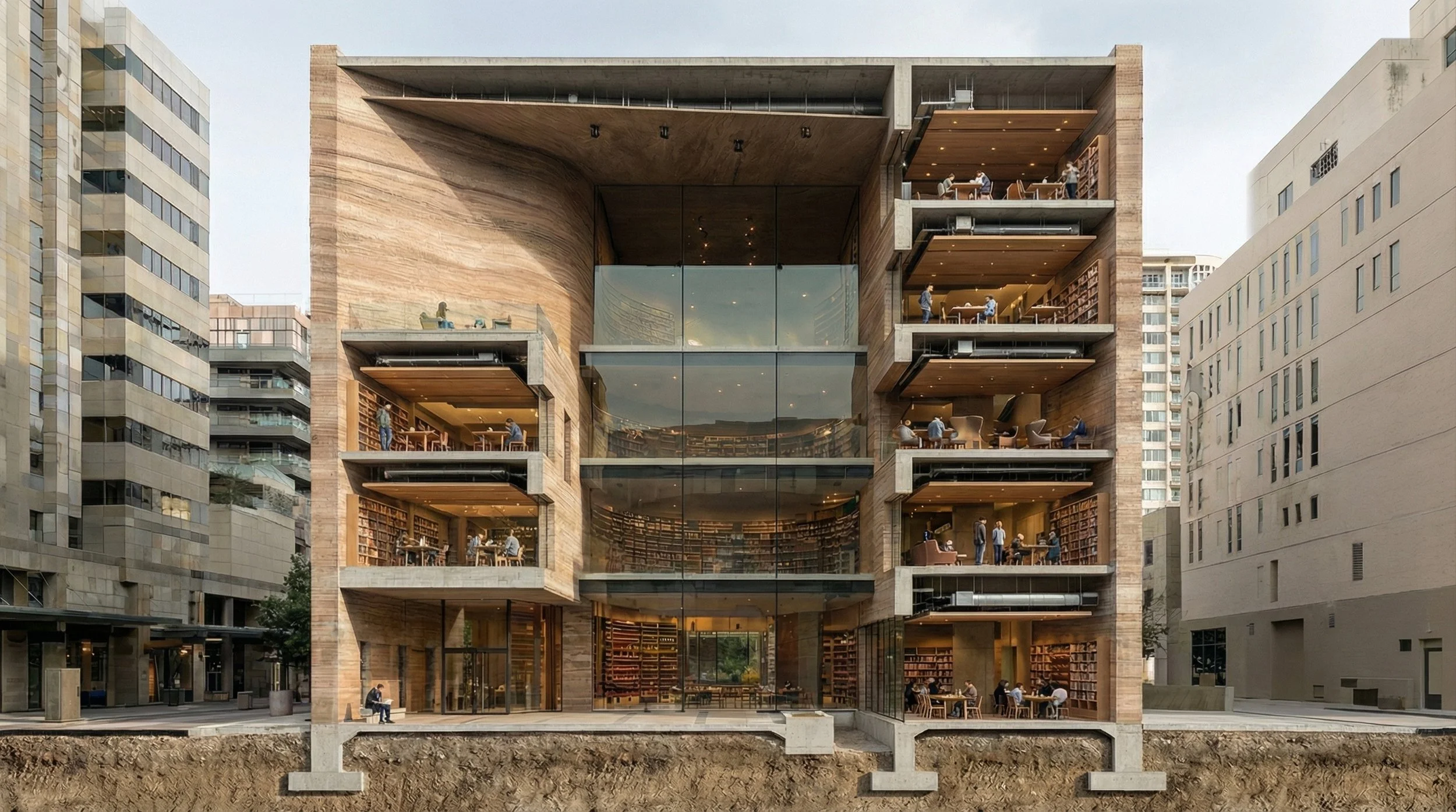
A monolithic presence shaped by rammed earth, carved to create depth and entry. The building balances mass and openness through a central glass void.
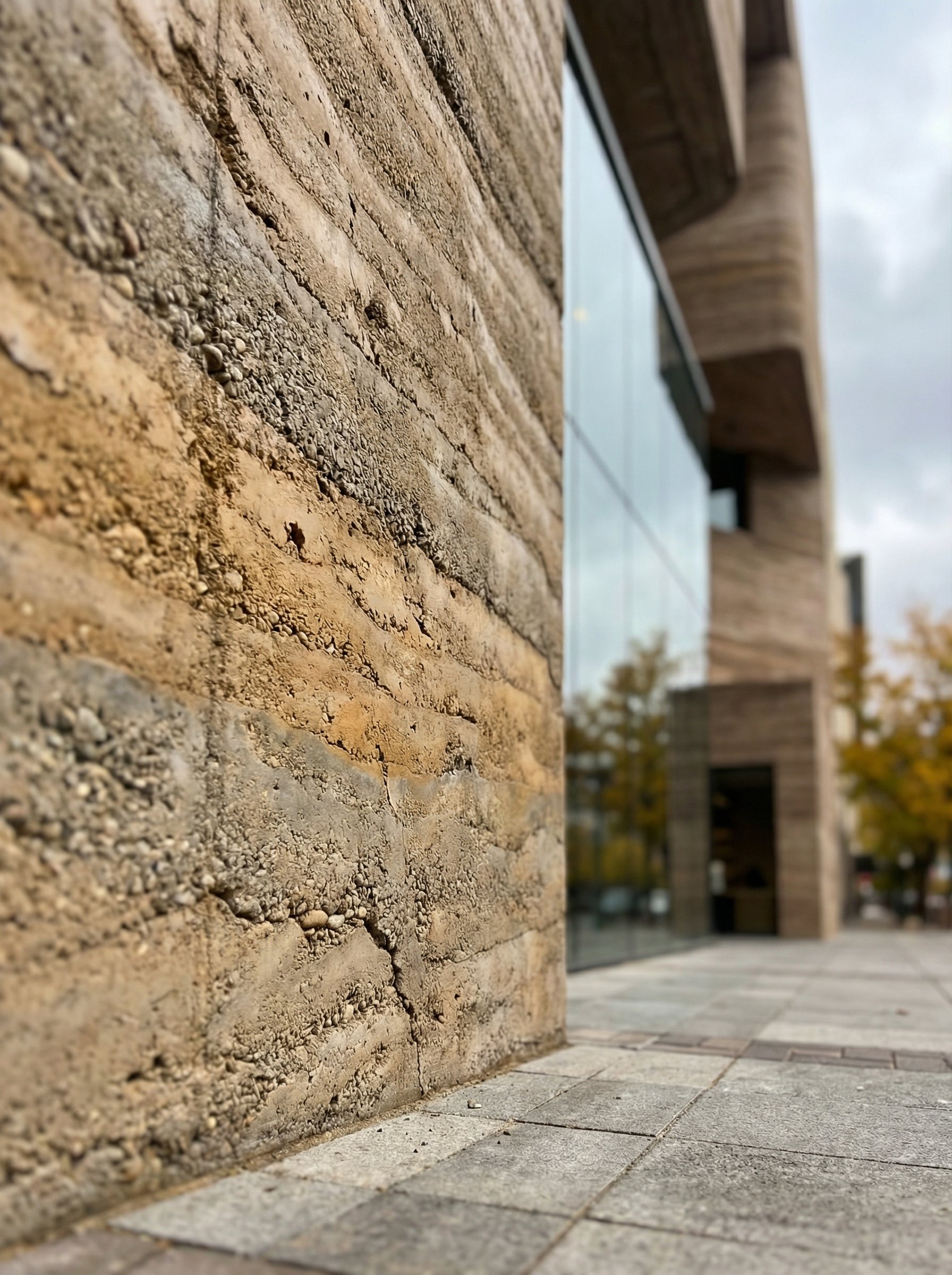
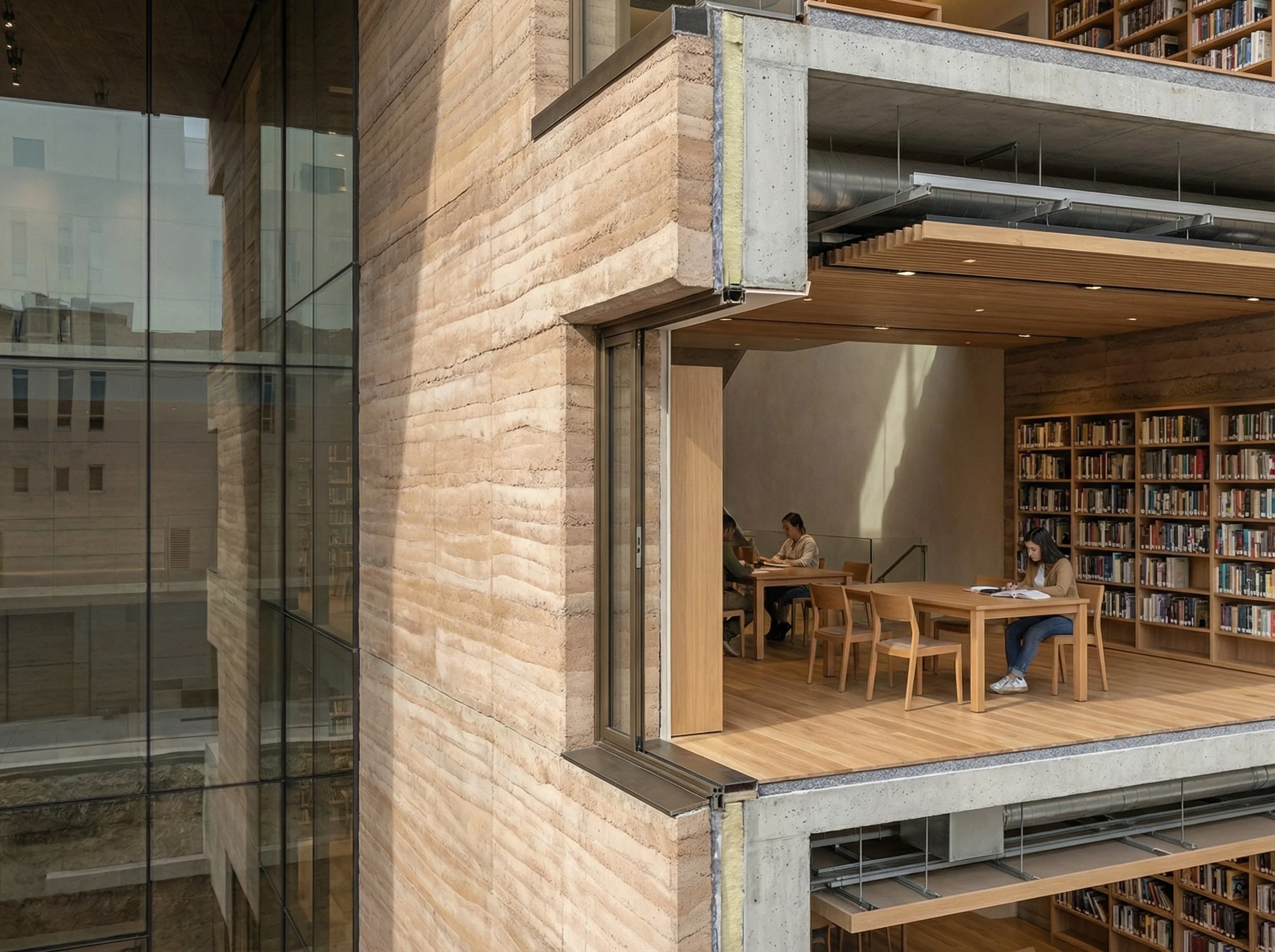
The tactile quality of rammed earth reveals layers of time and construction. Material becomes both structure and expression.
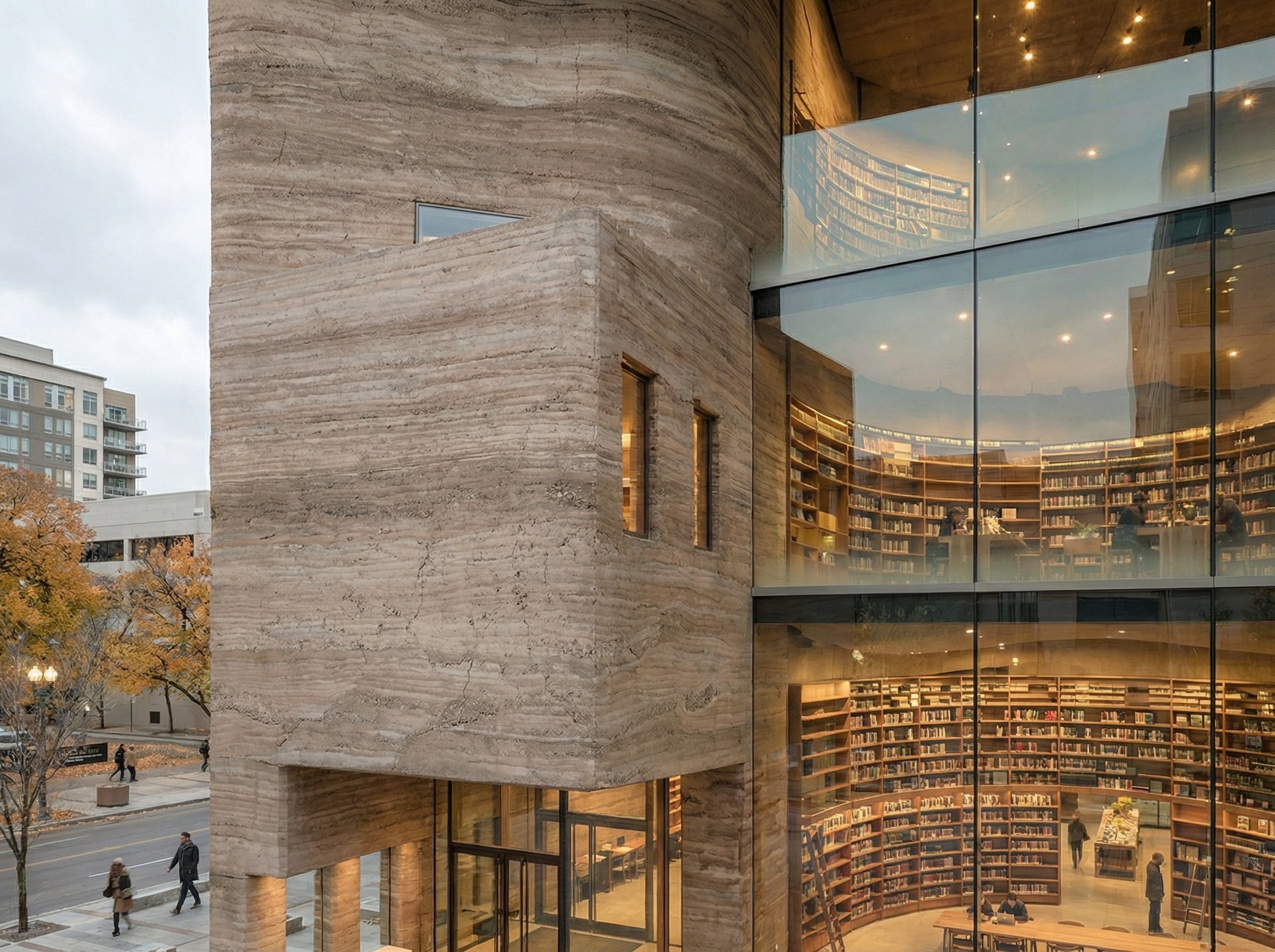
Transparency exposes the interior life of the library. The contrast between earth and glass defines the building’s spatial identity.
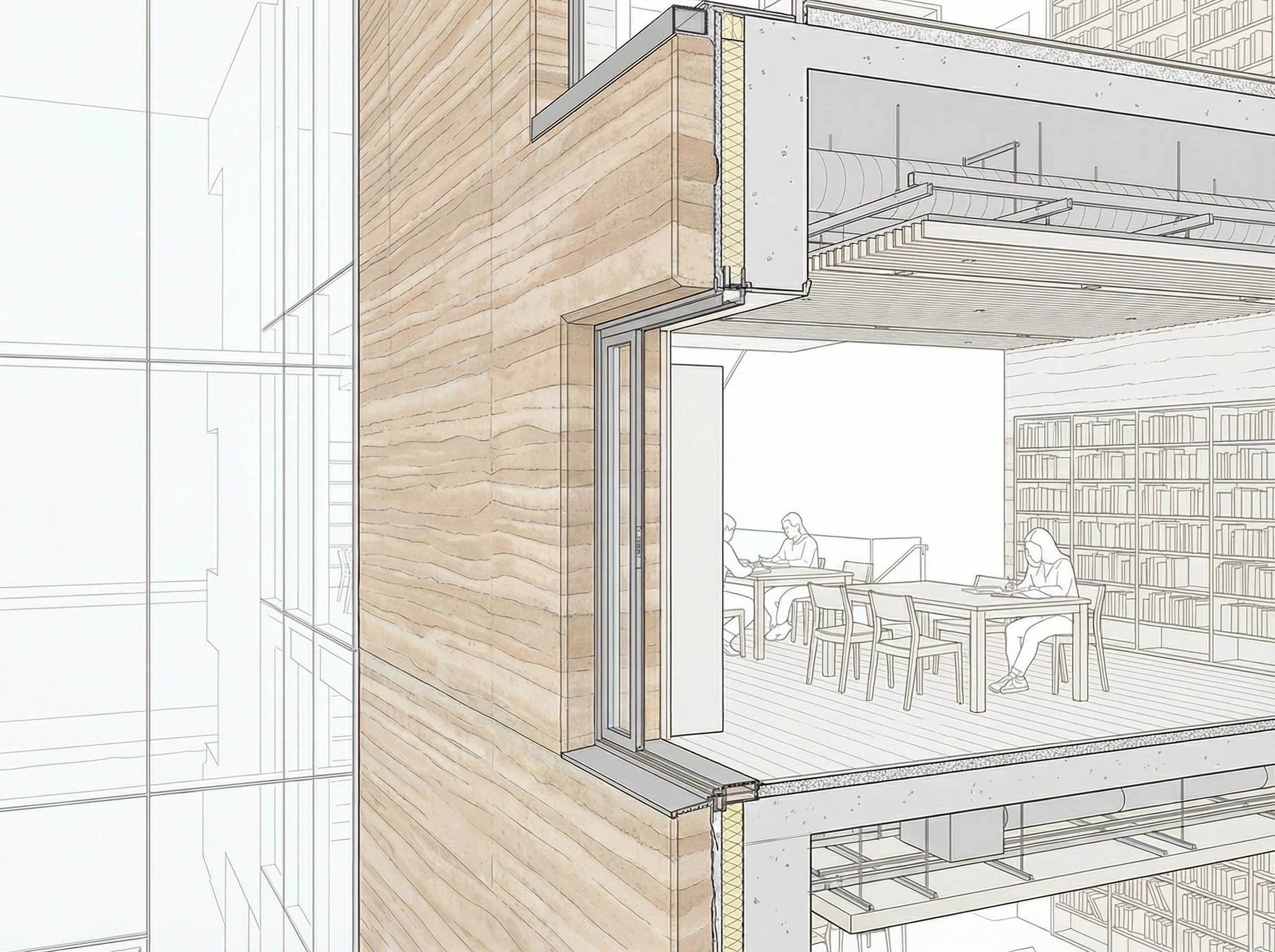
The construction reveals the layered relationship between structure, insulation, and interior space. Material logic directly informs spatial experience.
The building is organised as a vertical sequence of reading spaces. Voids and terraces create visual connections across levels.
Transparency exposes the interior life of the library. The contrast between earth and glass defines the building’s spatial identity.
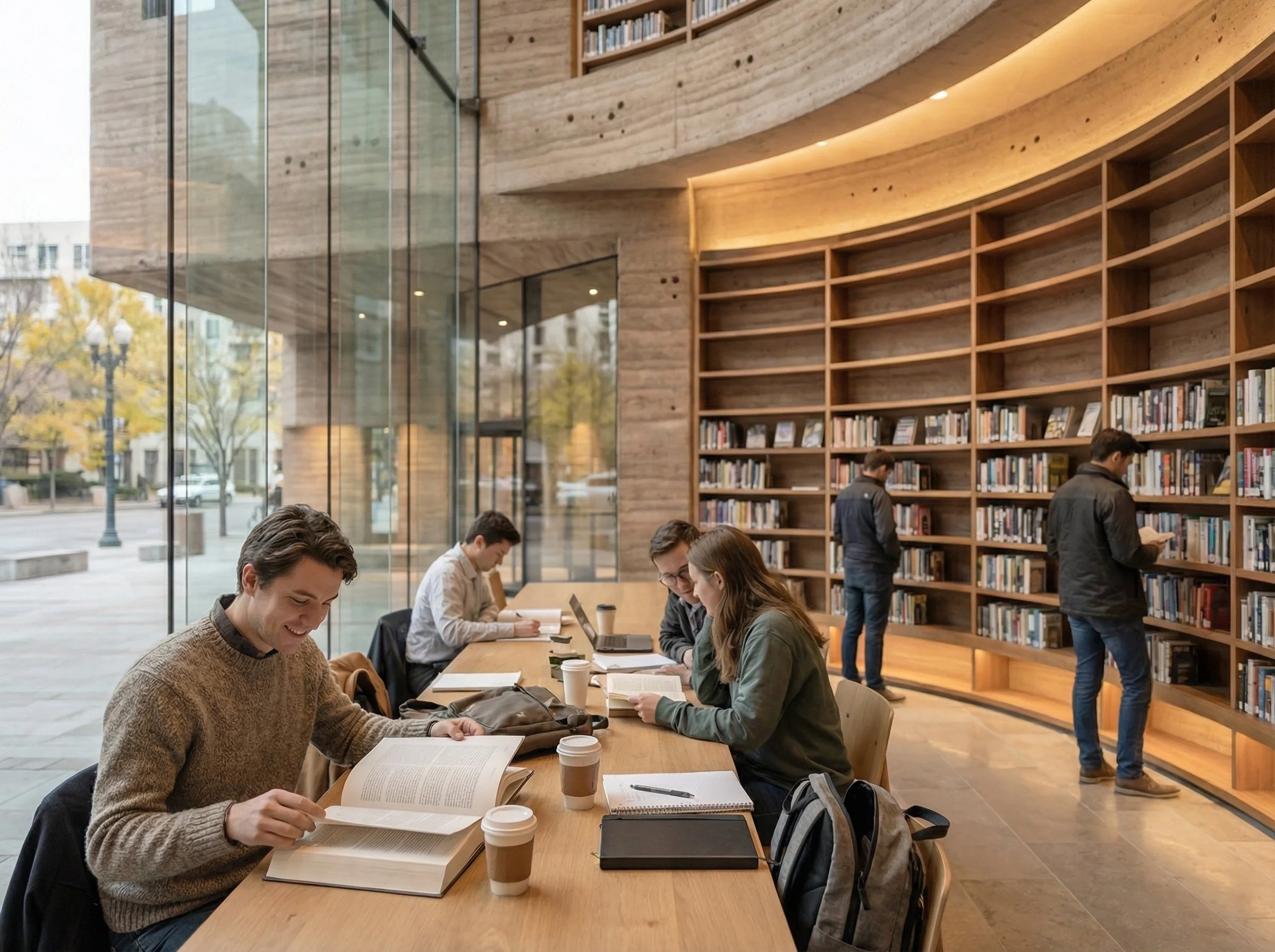
Light enters through controlled openings, creating sharp contrasts and shadows. Glass frames the relationship between interior and exterior.
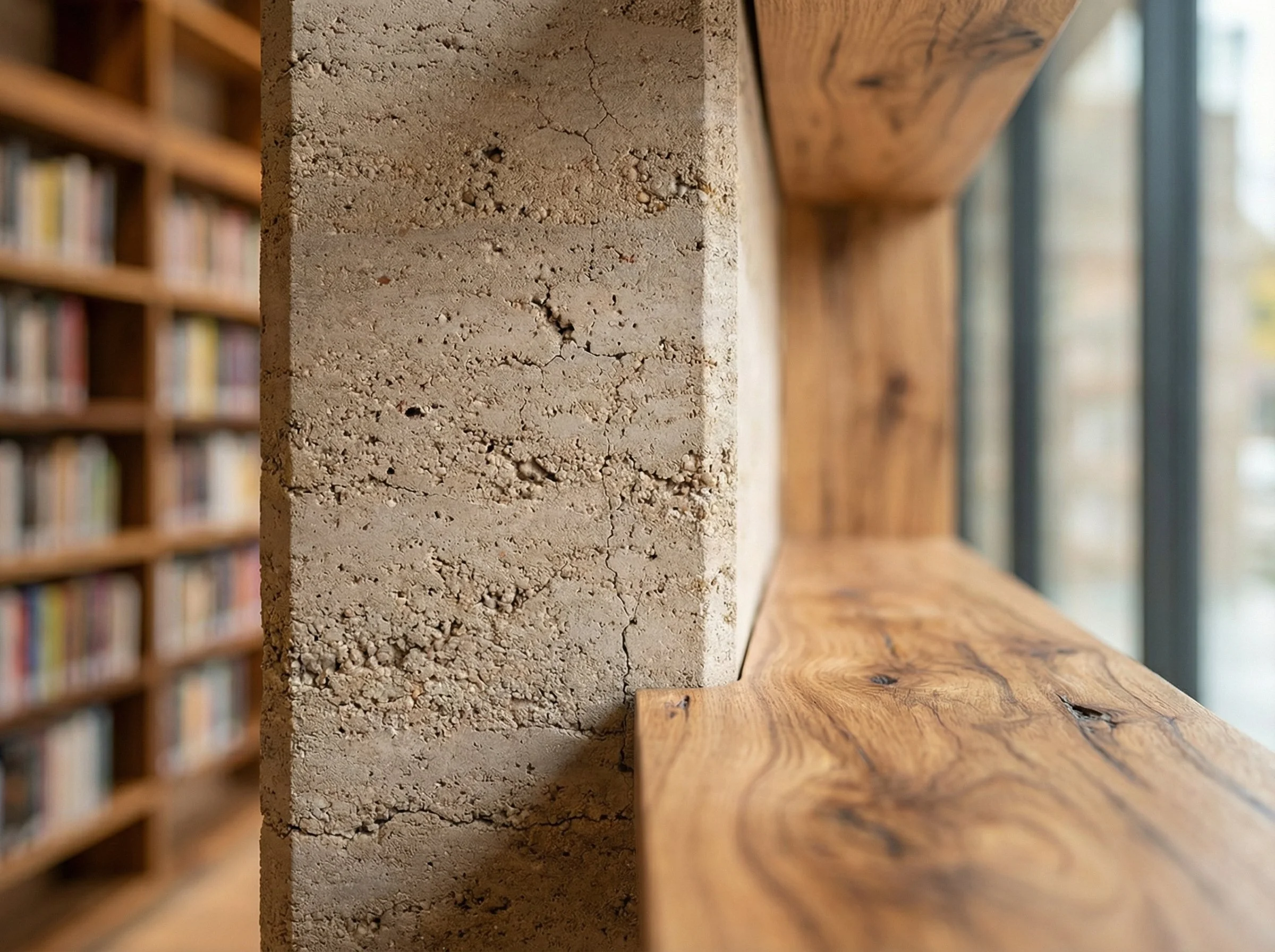
Material transitions are expressed through junctions rather than hidden. Each element retains its own identity while contributing to the whole.
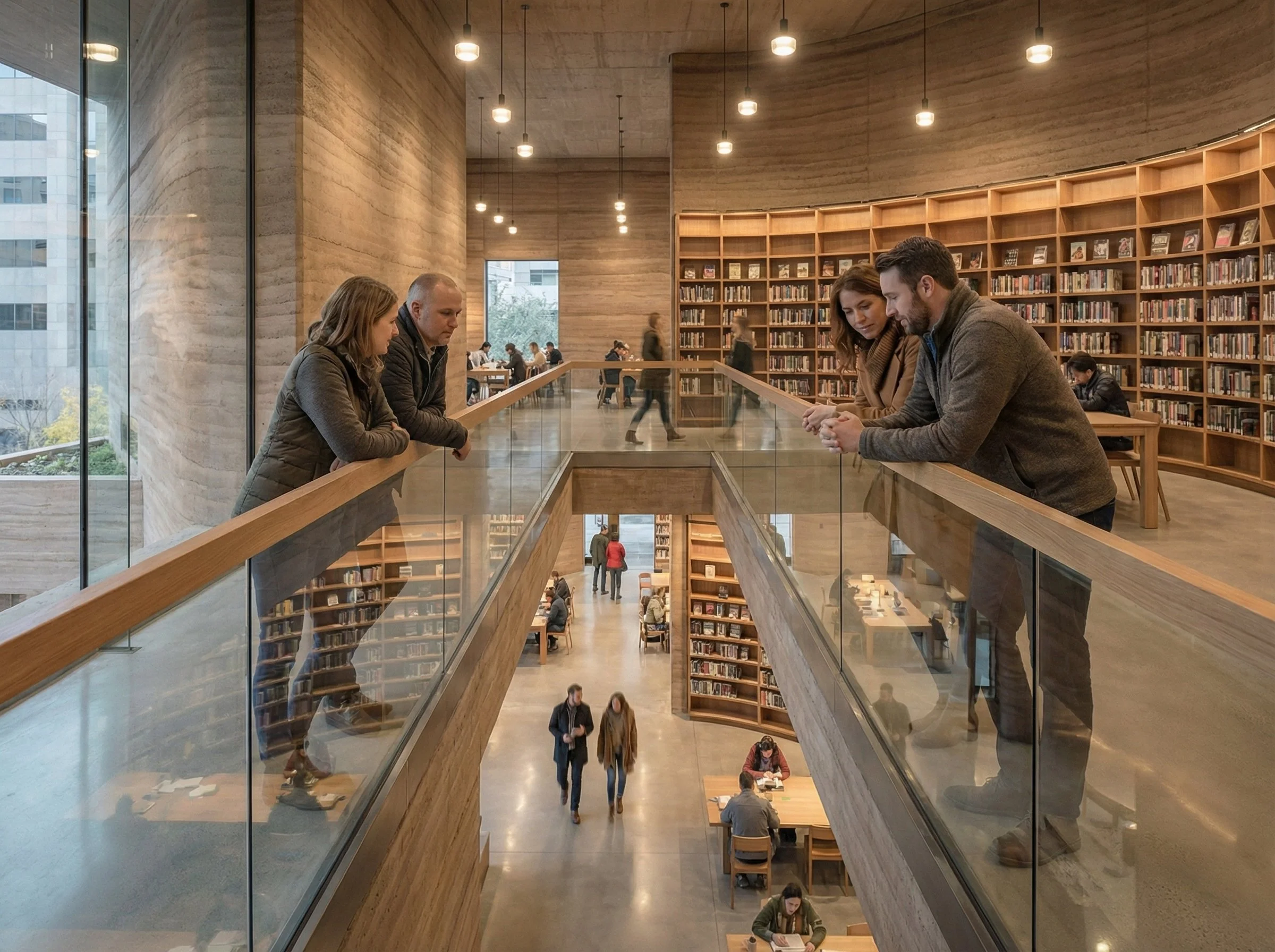
Circulation becomes a spatial experience, allowing users to observe and be observed. Movement reinforces the collective nature of the library.
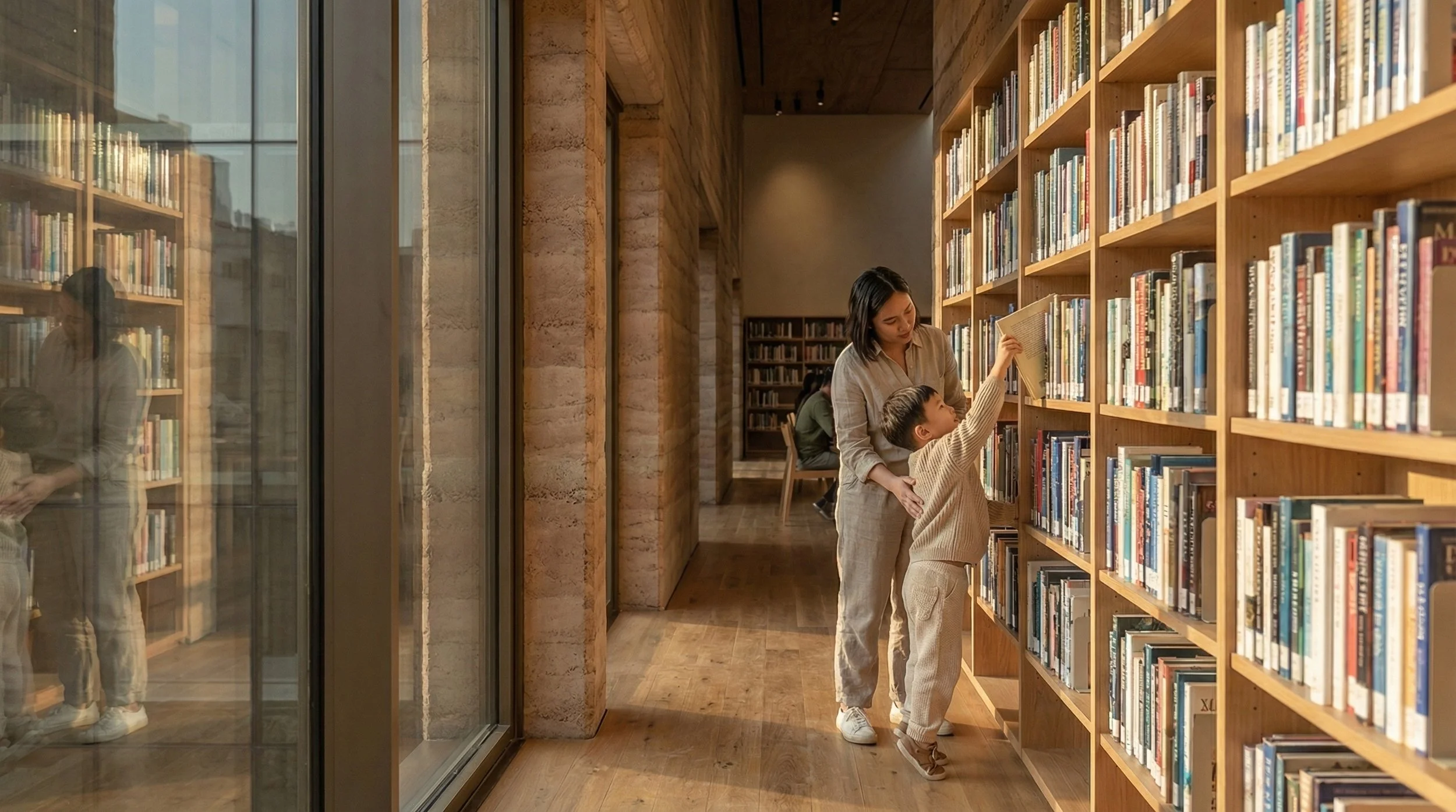
The library supports both individual discovery and shared learning. Interaction with books becomes a physical and spatial act.