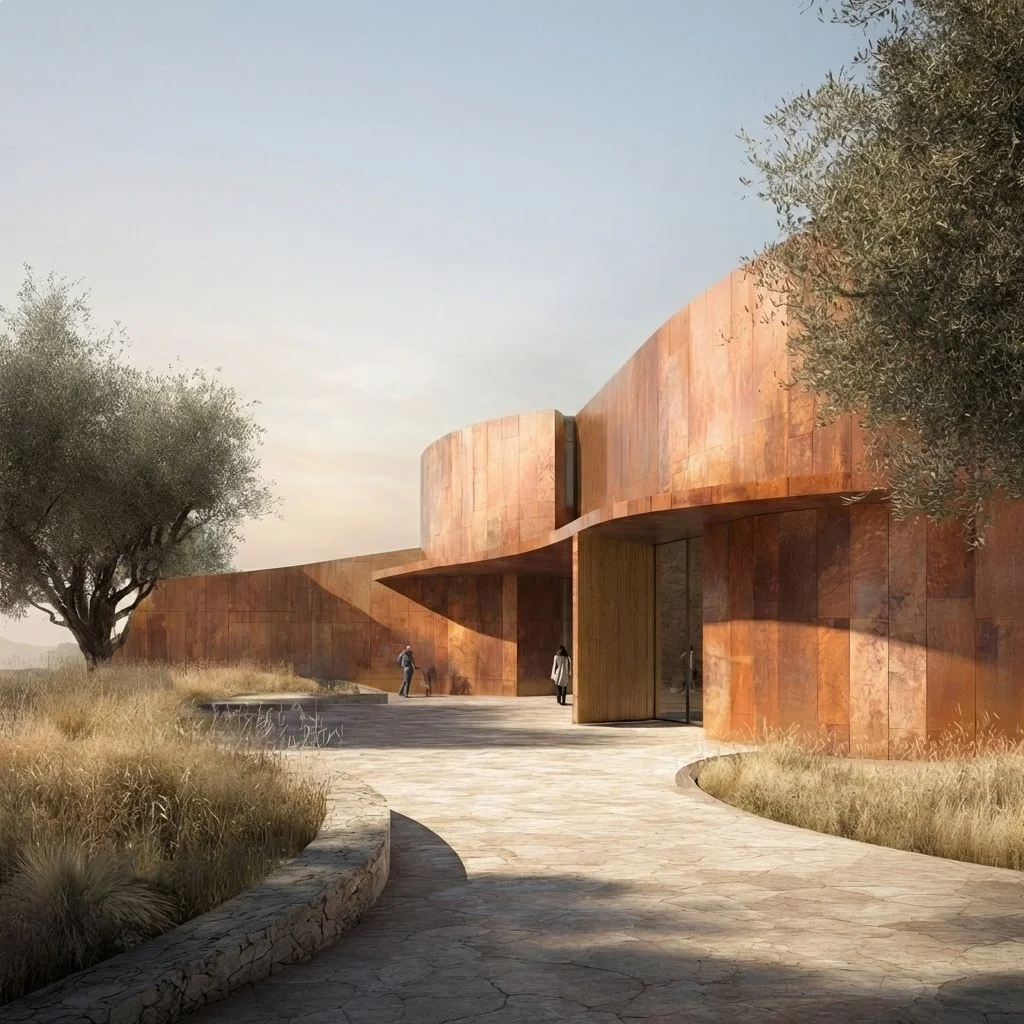
Cognitive Museum
Cognitive design is not about form. It’s about mental states.
In this project, I designed the museum not as a sequence of exhibition spaces, but as a mental journey by orchestrating material, light, form and sensory cues.
The space is structured according to the visitor’s mental state. Each zone becomes part of this narrative.
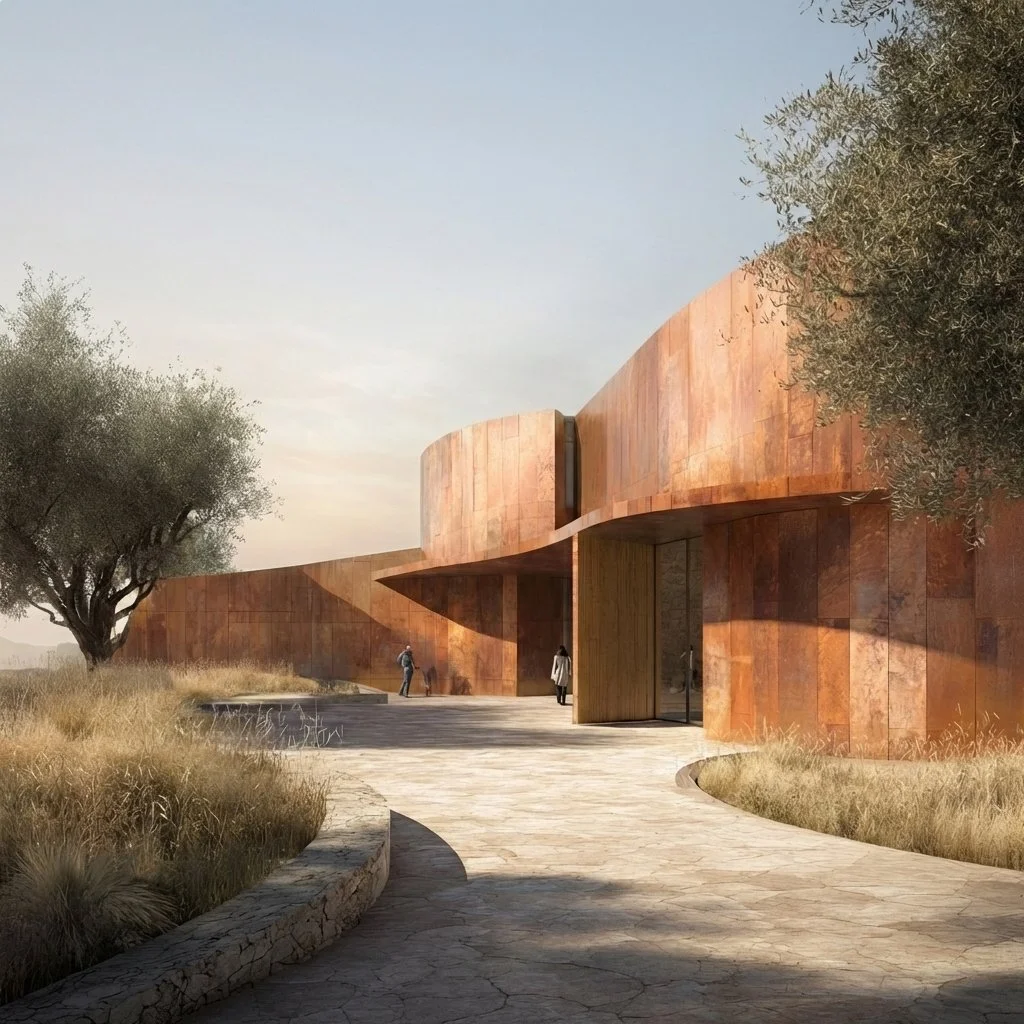
Cognitive design is not about form. It’s about mental states. In this project, I designed the museum not as a sequence of exhibition spaces, but as a mental journey by orchestrating material, light, form and sensory cues.
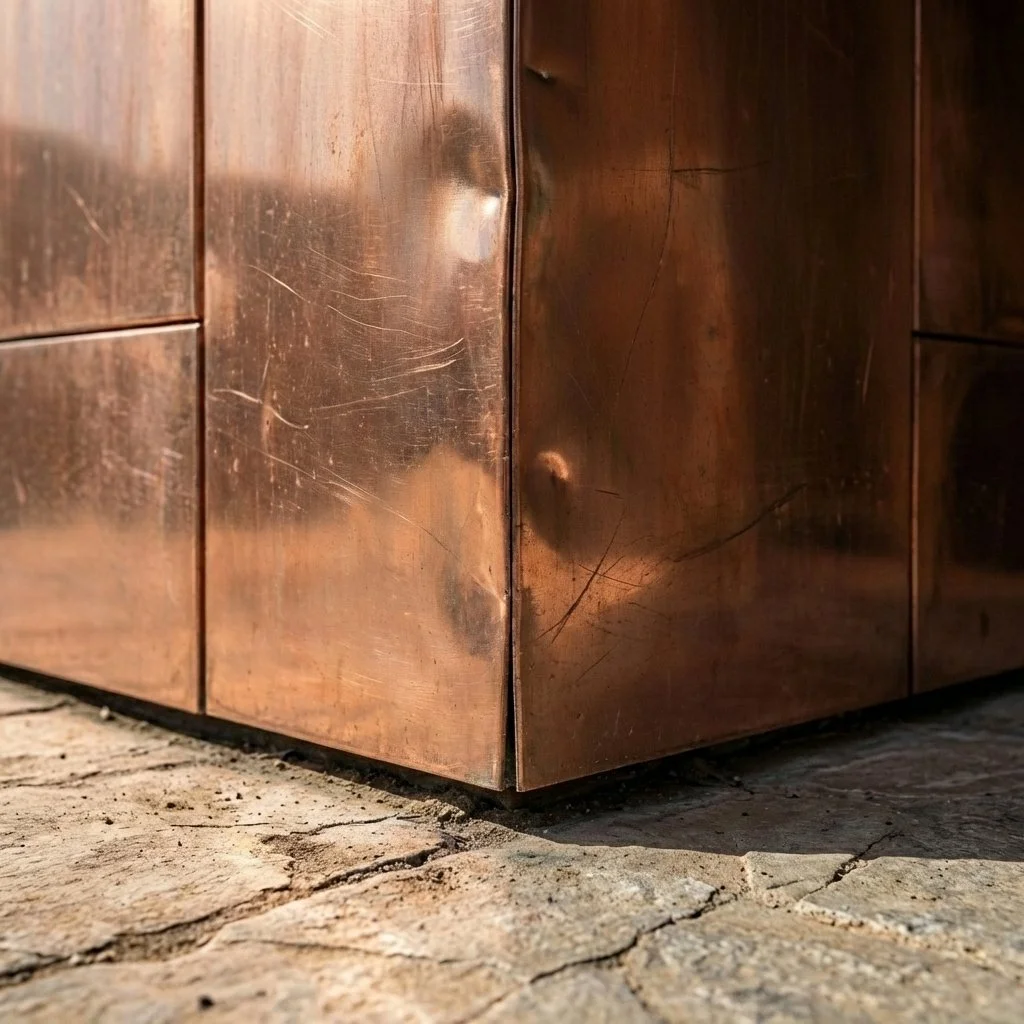
The space is structured according to the visitor’s mental state. Each zone becomes part of this narrative:
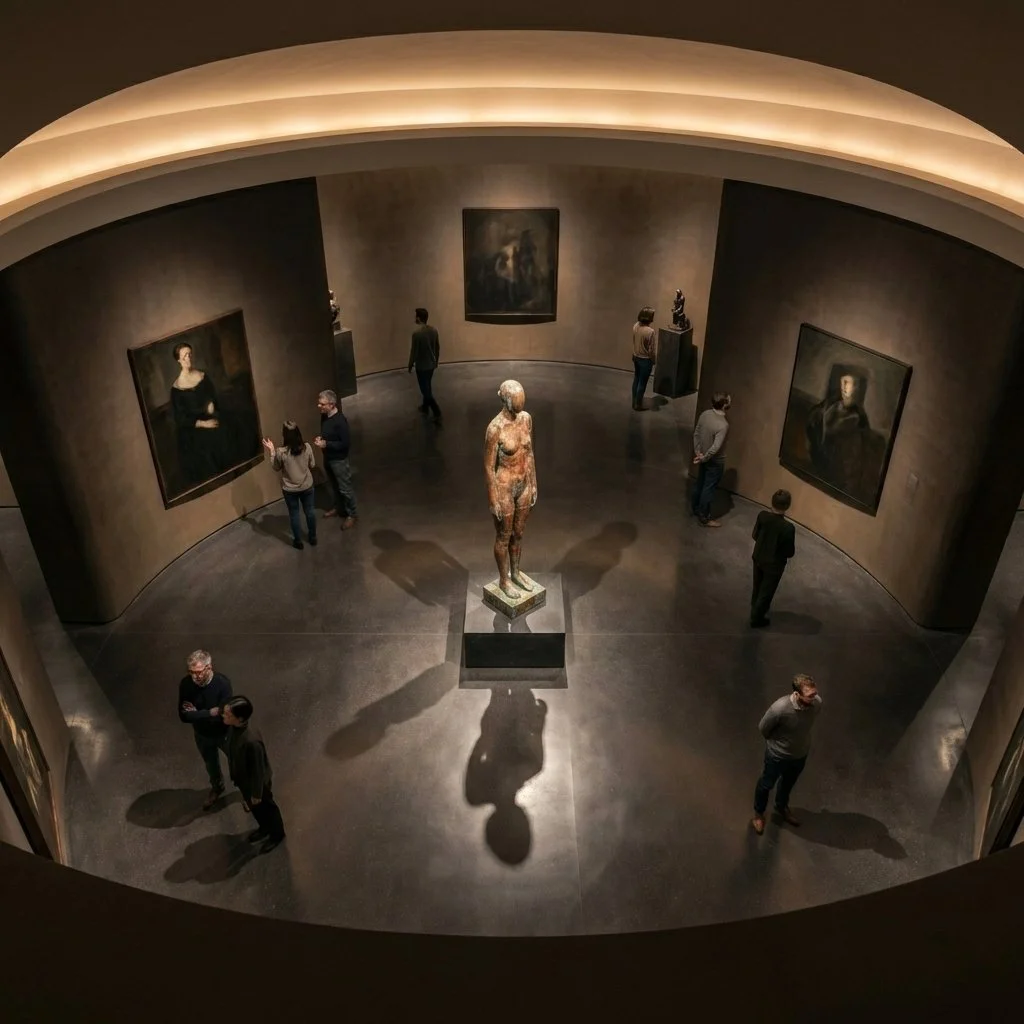
Decompression Zone Curved corners, controlled direct lighting, and strong use of shadow.
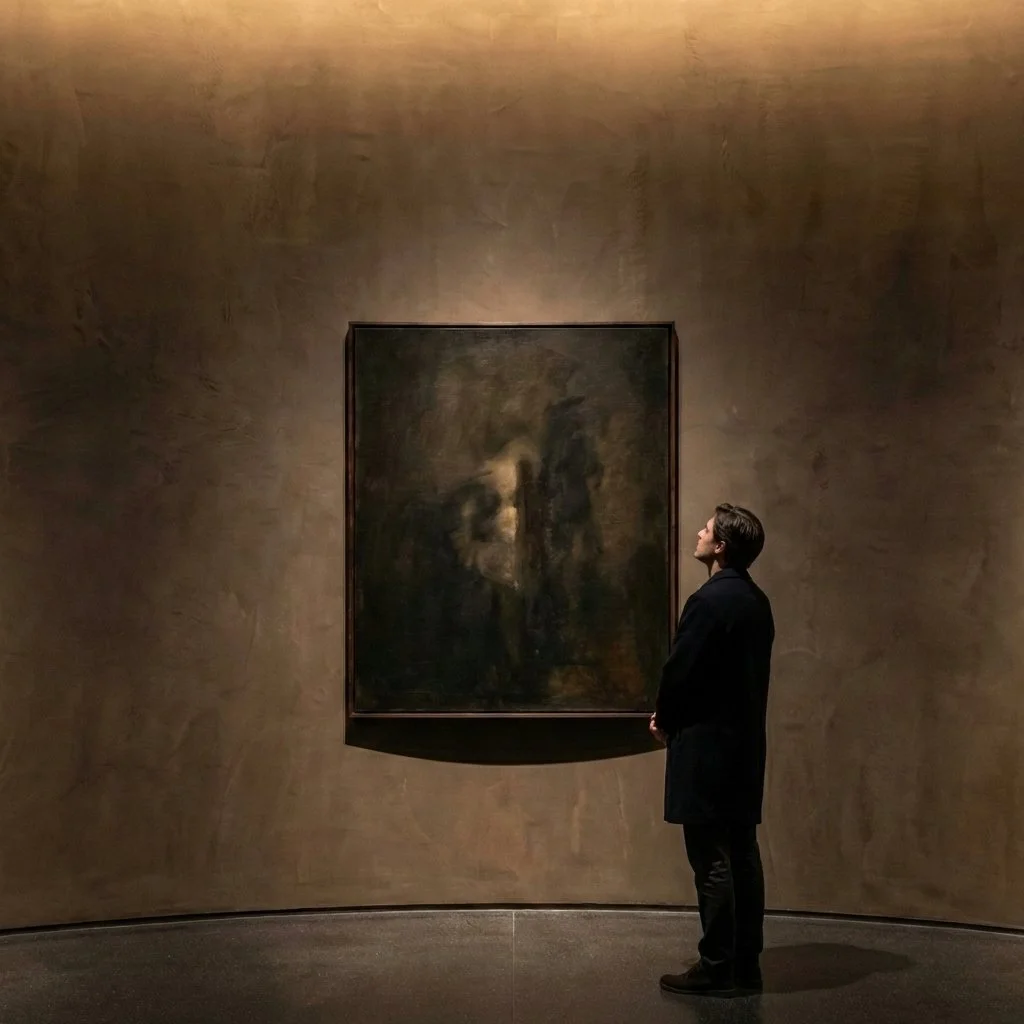
Dark and warm tones. Experience: Detachment from the outside world, slowing down, mental release.
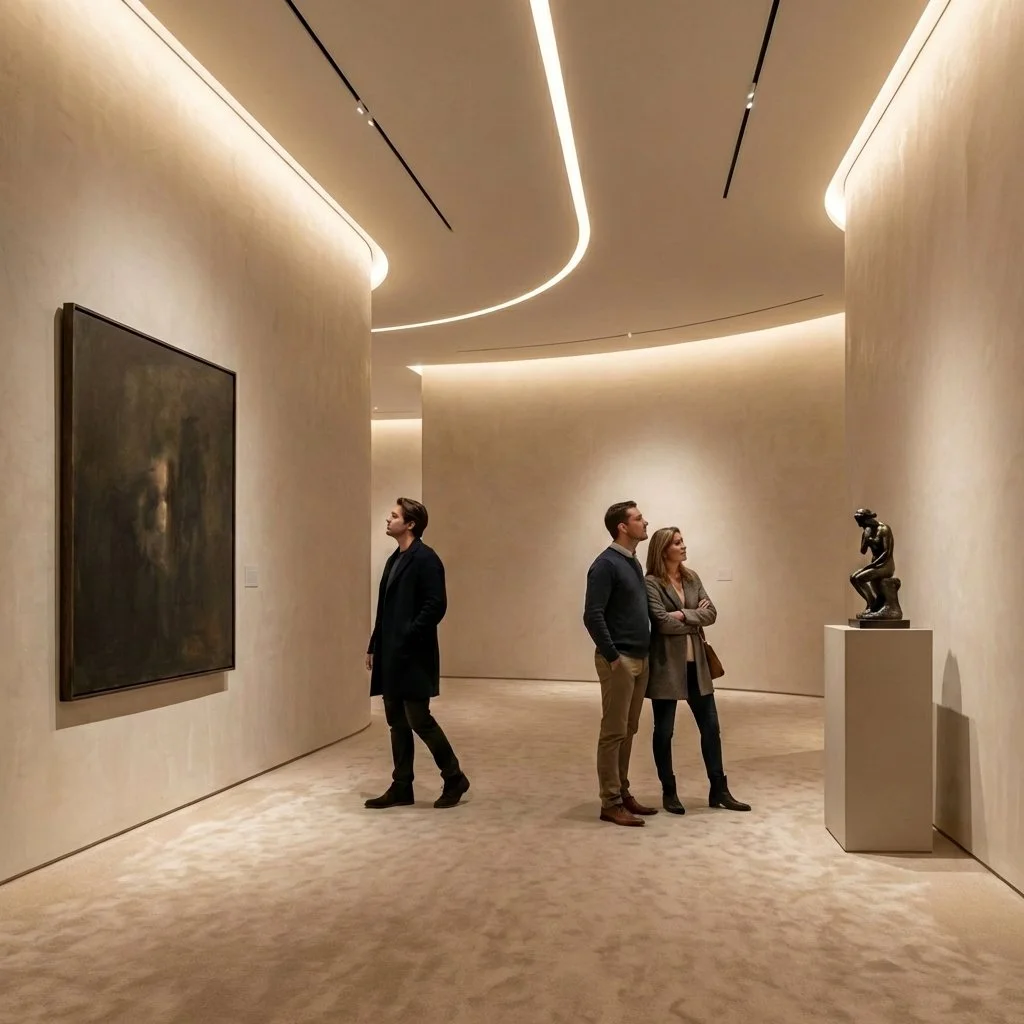
Orientation Zone Lighter surfaces, guiding light, and legible circulation.
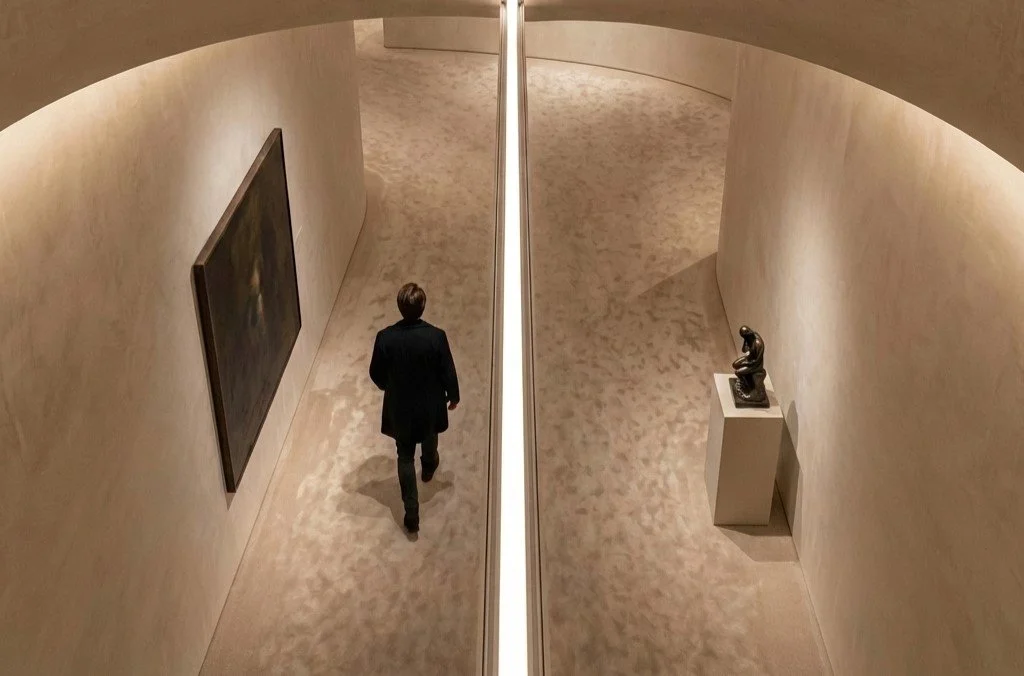
The relationship between floor and walls makes the space easy to read. A lighter, neutral color palette.
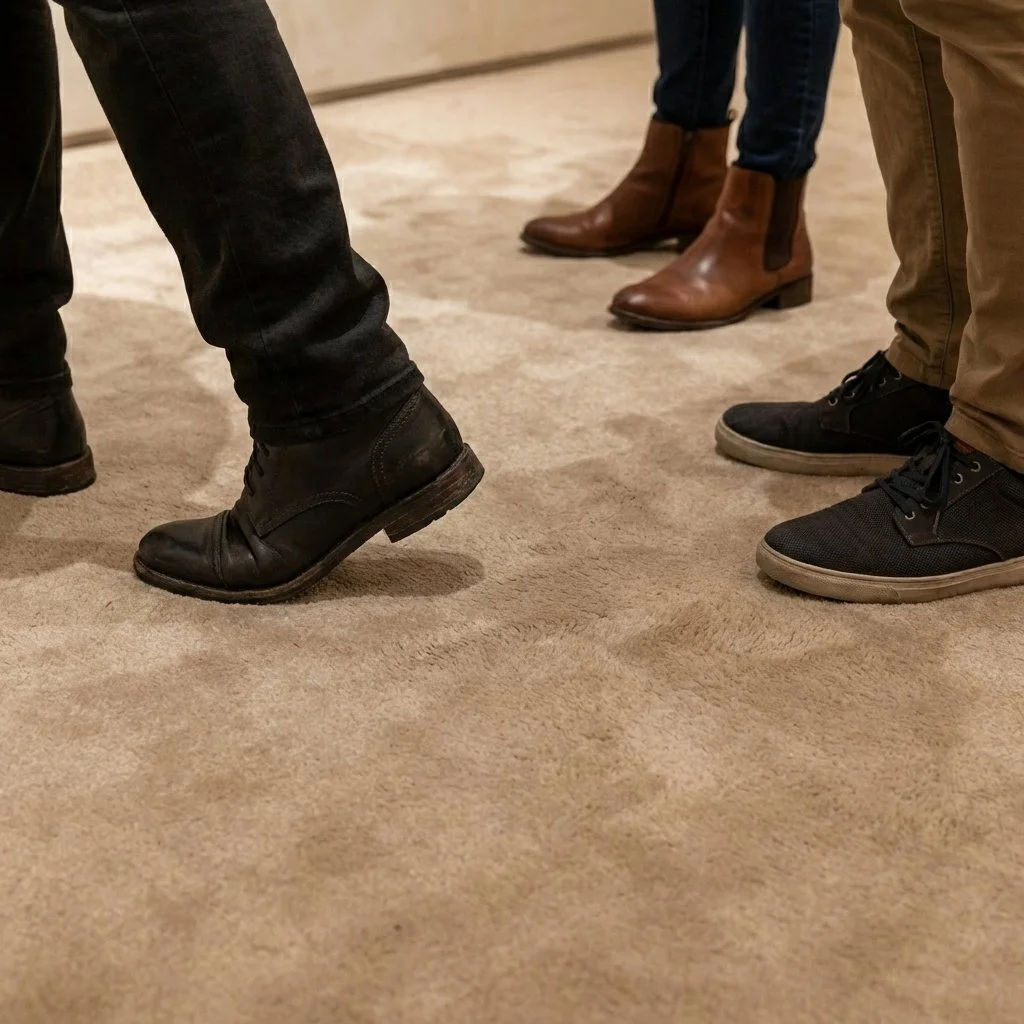
Experience: Orientation, awareness, understanding the space.
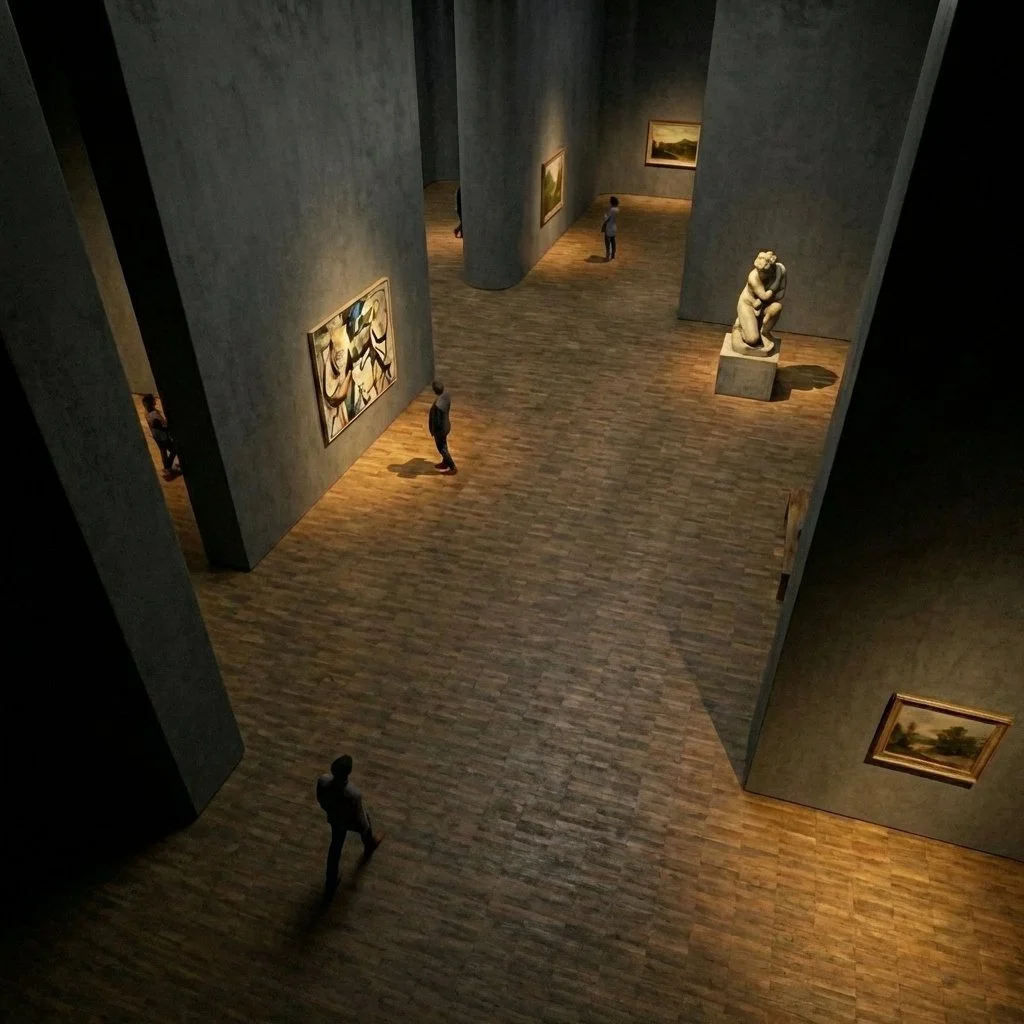
Absorption Zone Sharp, straight corners; dark grey walls; sparsely placed artworks. Single, backless seating elements.
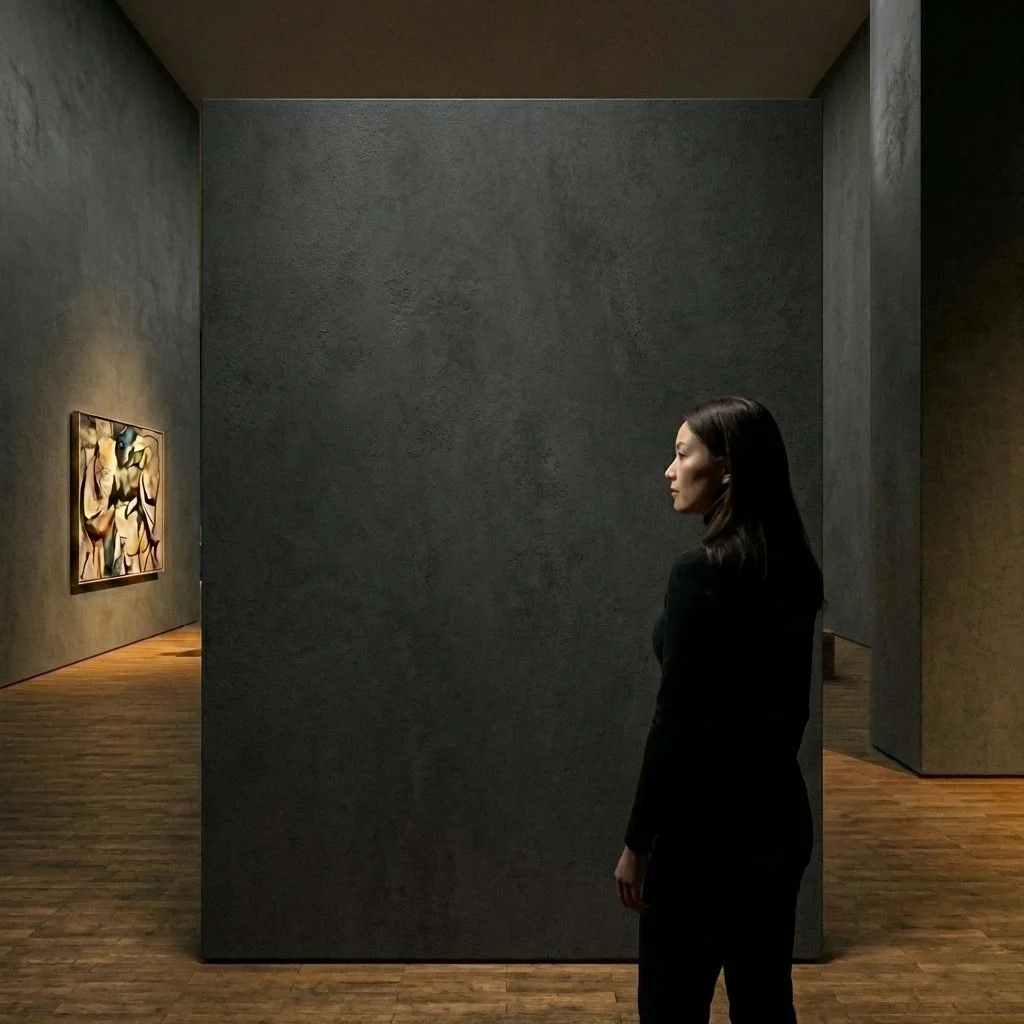
Here, corners are not only form, but a guiding tool.

Experience: Individual pause, focus, deep concentration.
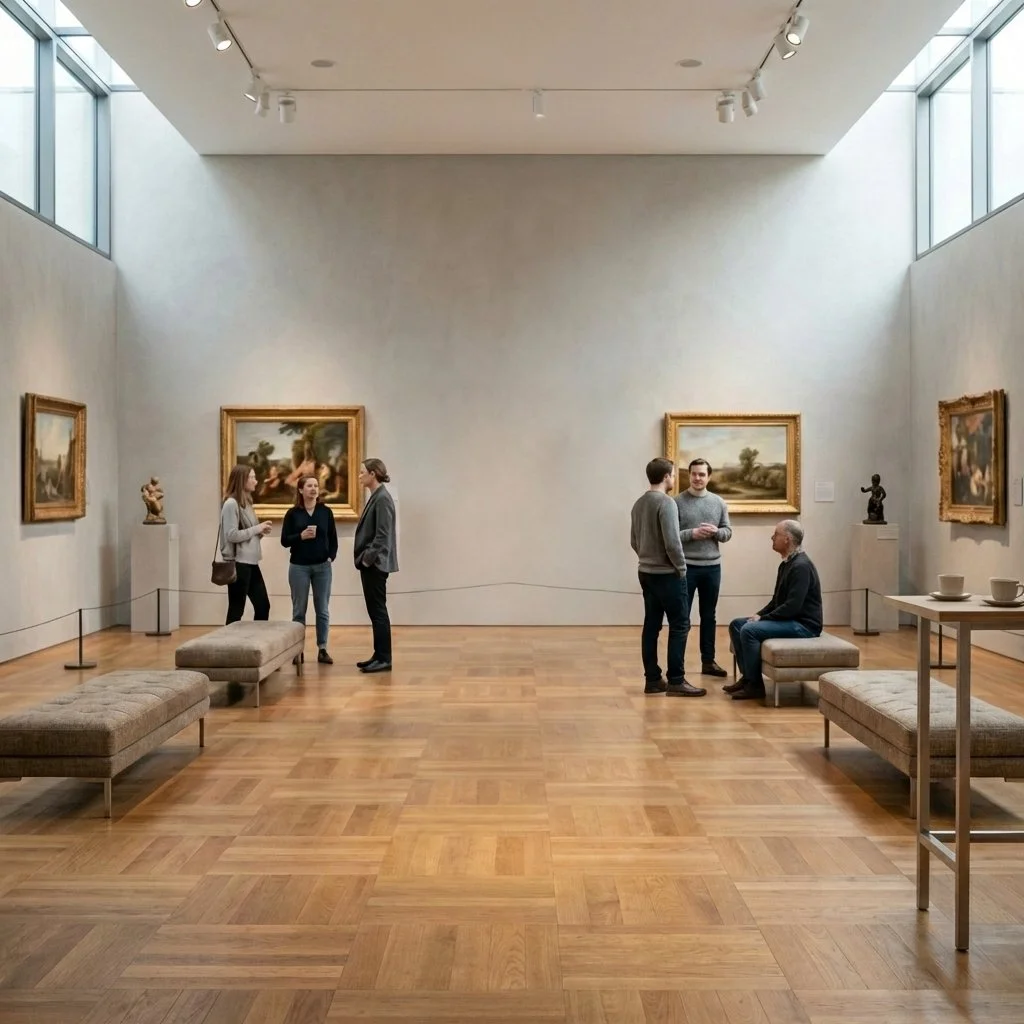
Reset Zone Daylight, softer textures. Standing social interaction, with artworks and social exchange coexisting. Experience: Release, relaxation, rebalancing.
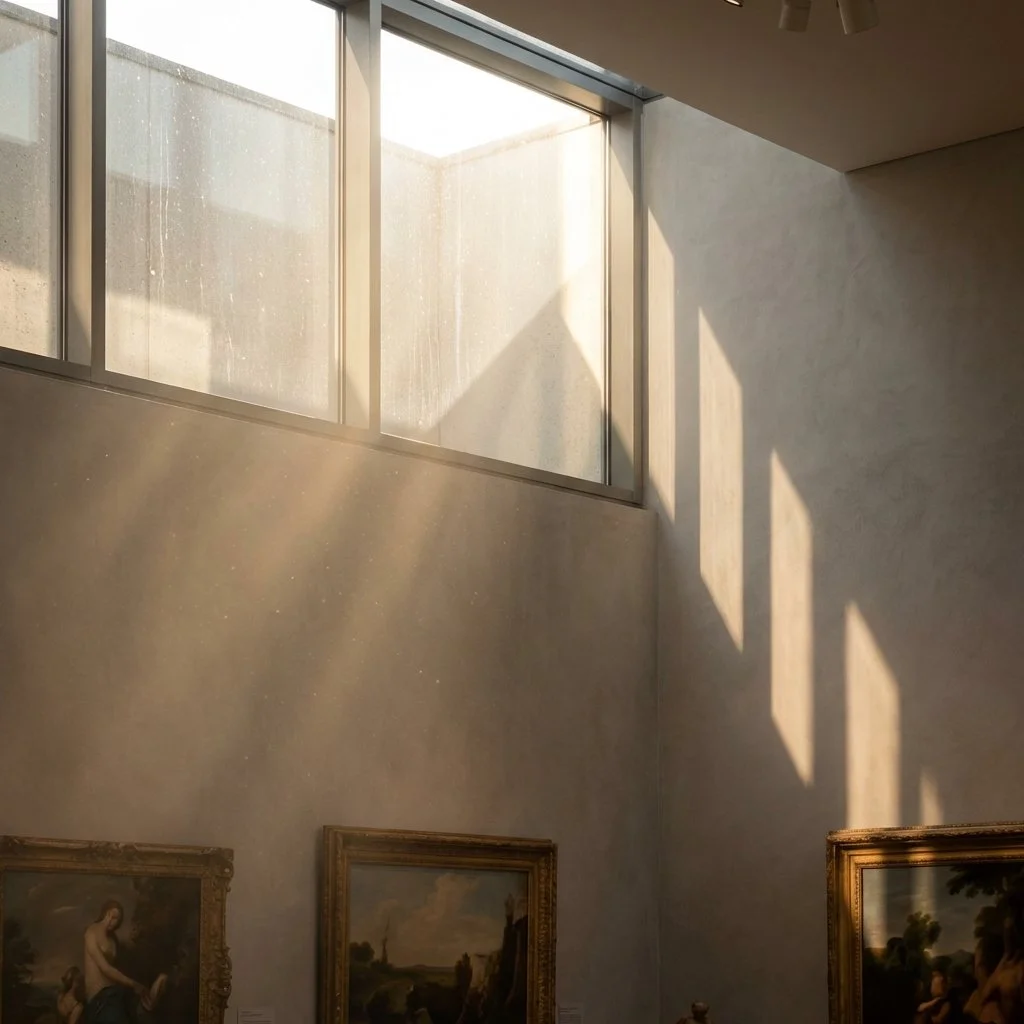
Same museum. Same exhibition. But at every step, a different mental state. A good experience begins not with what you show, but with how you make people feel.