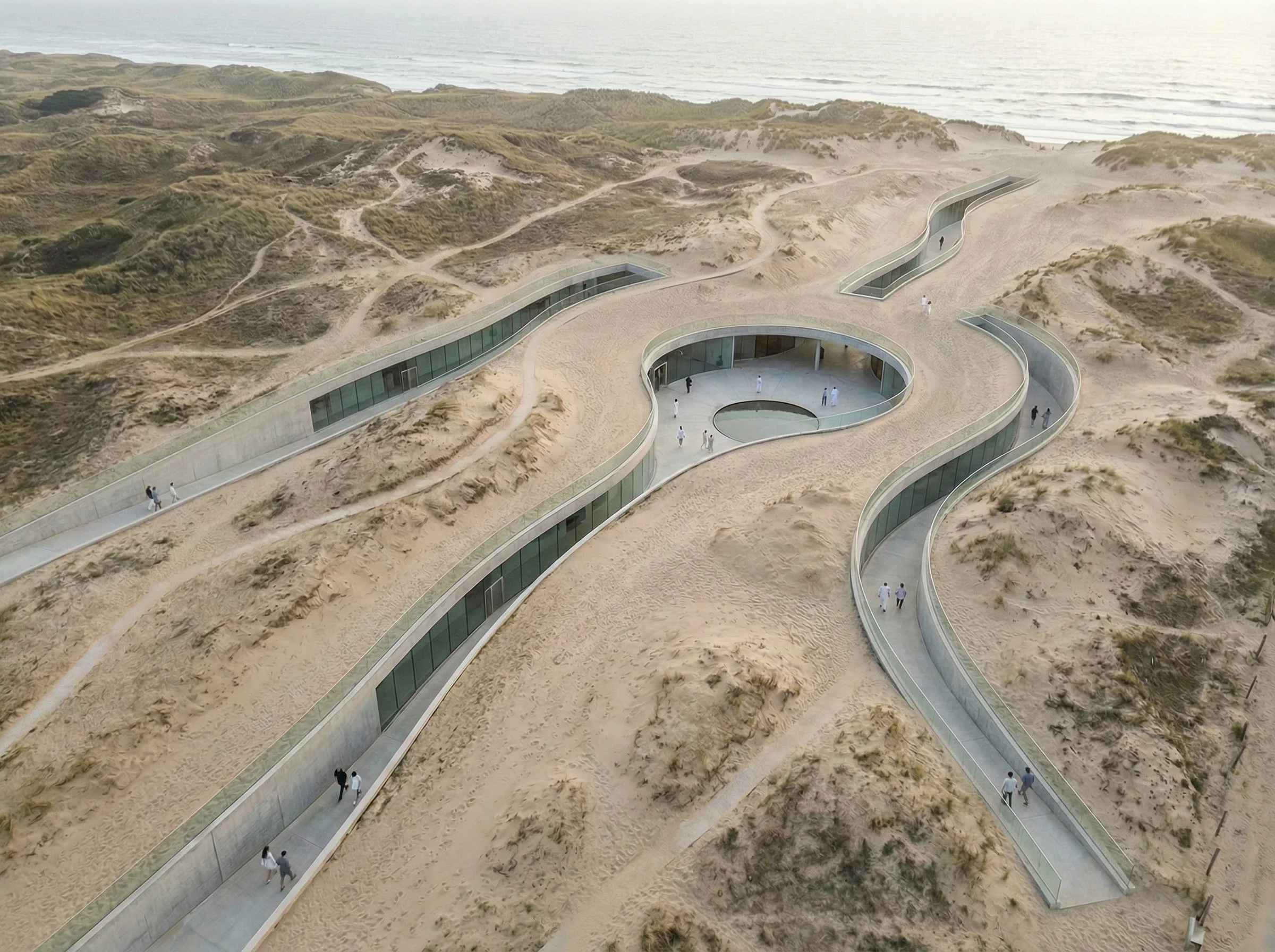
carved museum
Sunken architecture.
Sunken experience.
Sunken museum.
Architecture does not simply define space—it choreographs movement.
The project unfolds as a continuous sequence, where attention is constantly redirected:
to the sky above, to the rise and descent of the ramp, to the exhibitions embedded along the path, to raw concrete, to sand, to shifting material transitions.
The building disappears into the landscape, allowing the terrain to guide both form and experience. Circulation becomes the primary spatial driver, transforming movement into a curated journey rather than a functional necessity.
This is not a building placed on the land.
It is an experience carved into it.
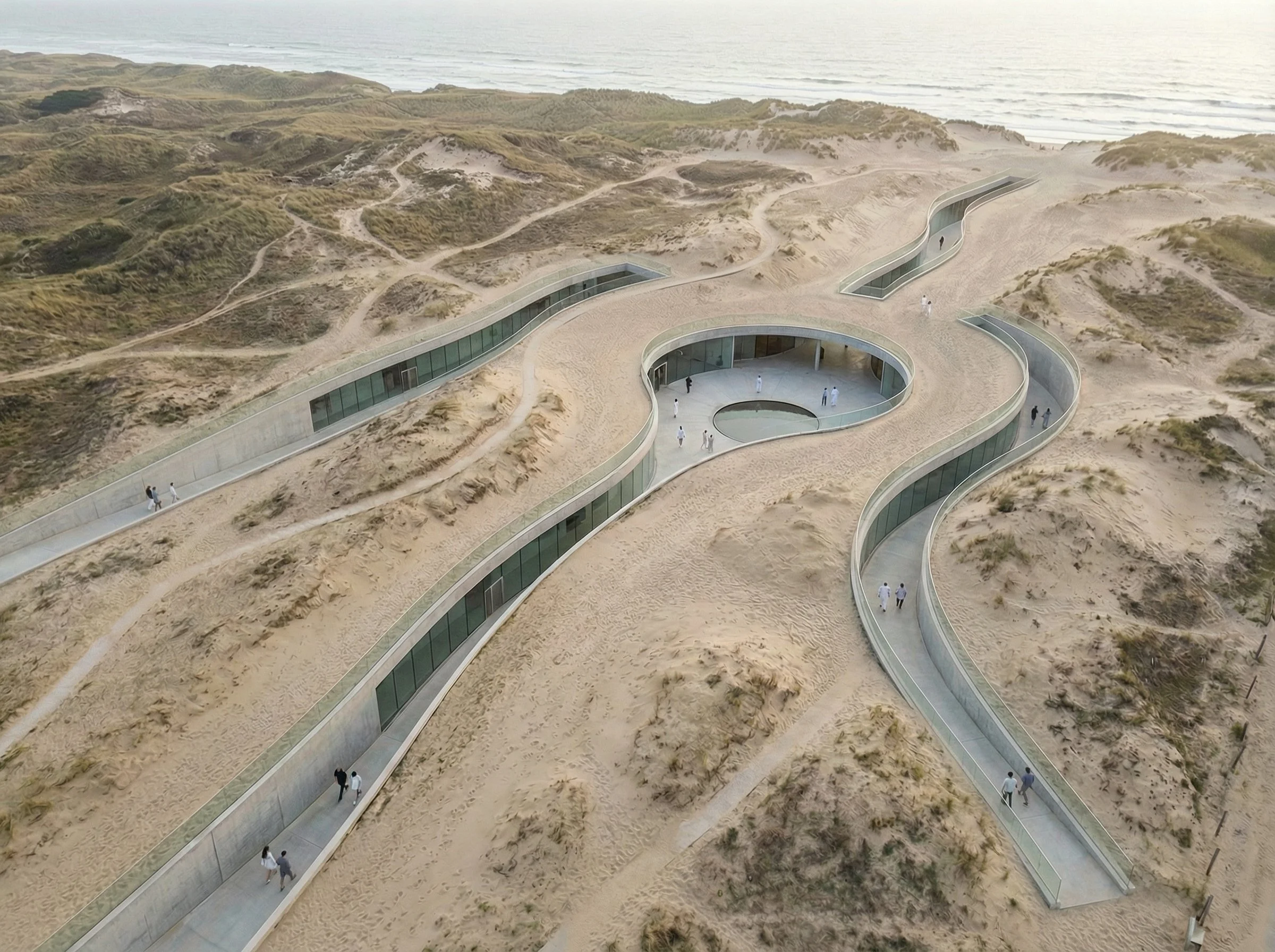
From above, the project reads less as a building and more as a trace carved into the landscape. It follows the logic of the terrain, allowing the dunes to guide its form. What emerges is not an object placed on the ground, but a spatial gesture that feels embedded within it.
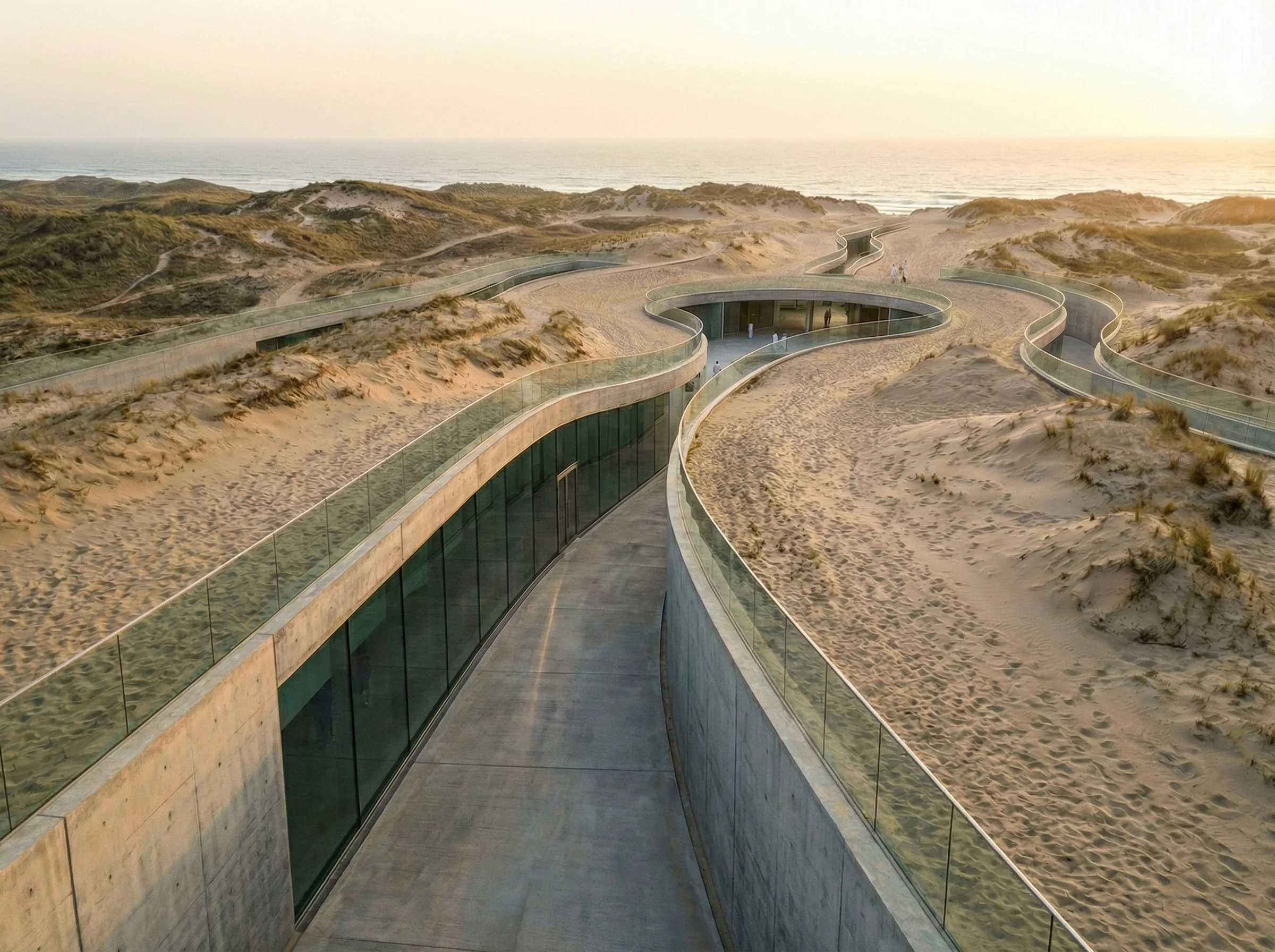
The entrance is not a moment, but a transition. As the ground slowly descends, the horizon begins to fade and the body is gently drawn inward. Movement becomes quieter, more aware, as architecture begins to replace landscape.
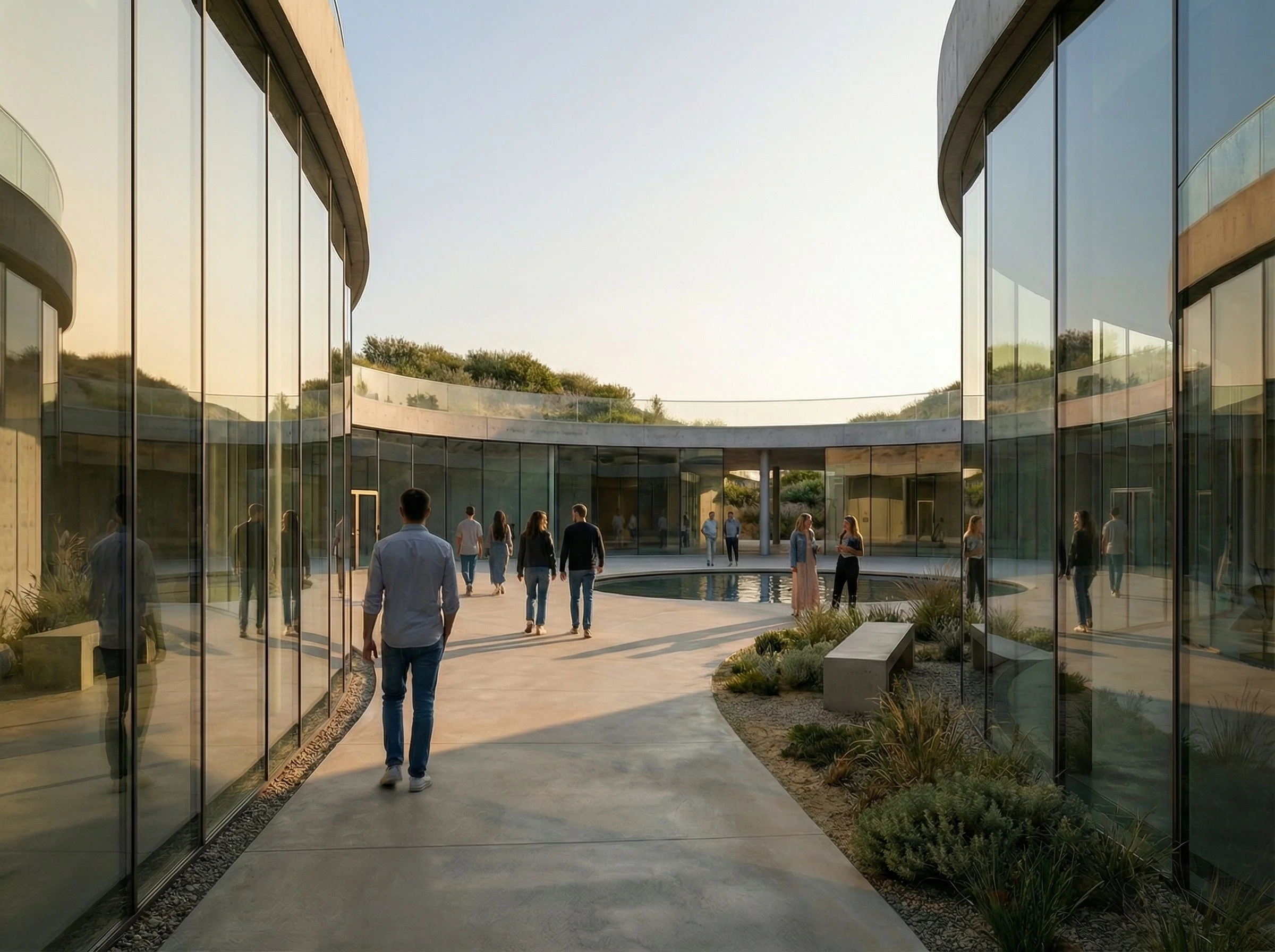
At the center, the space opens again to the sky. This moment of release allows light and air to gather, creating a pause within the continuous sequence. It is a place to slow down, to register where you are within the journey.
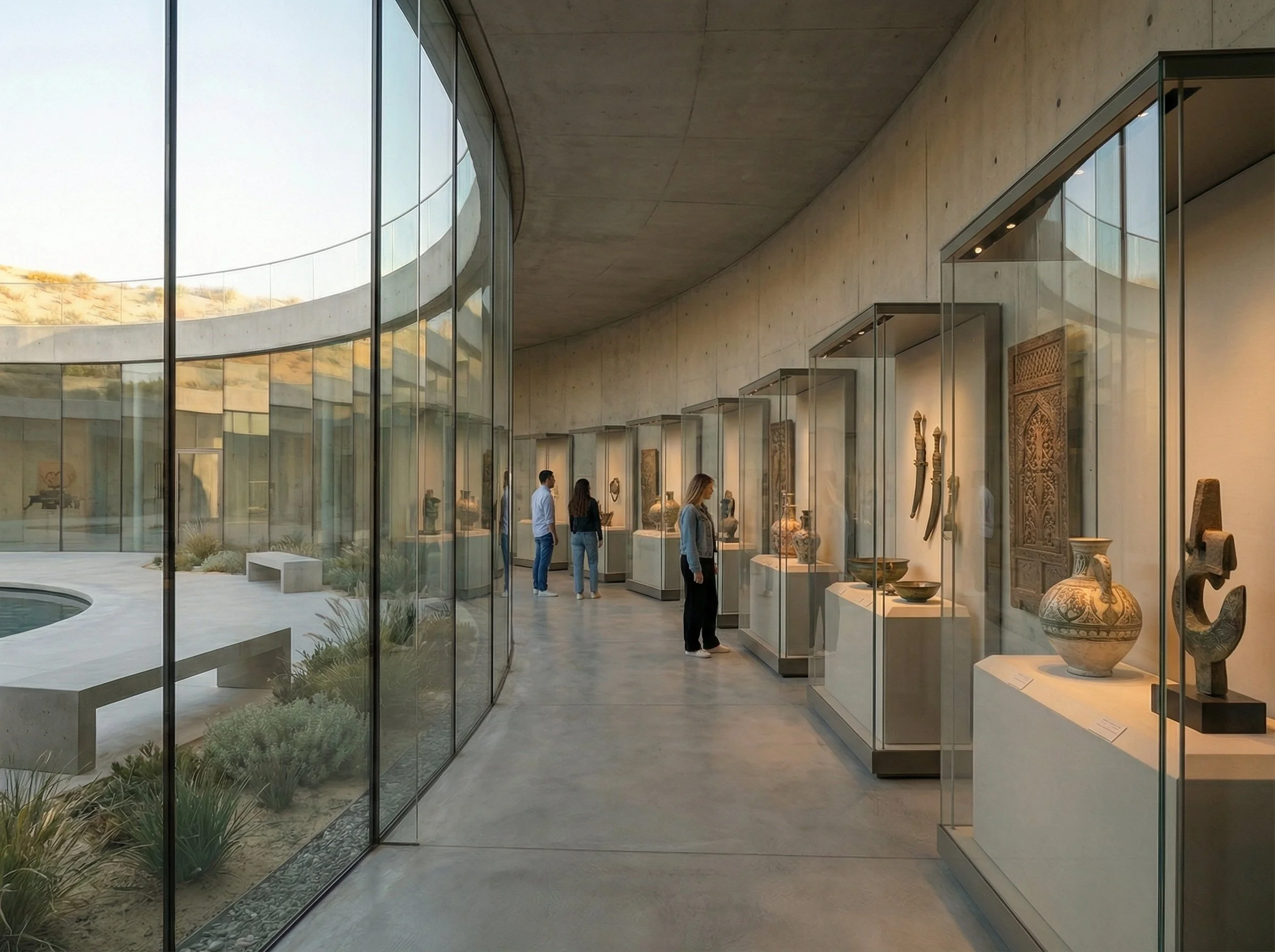
Exhibition unfolds along movement rather than waiting at the end of it. Objects are encountered gradually, embedded within the path. Attention shifts between what is seen and how one moves through space.
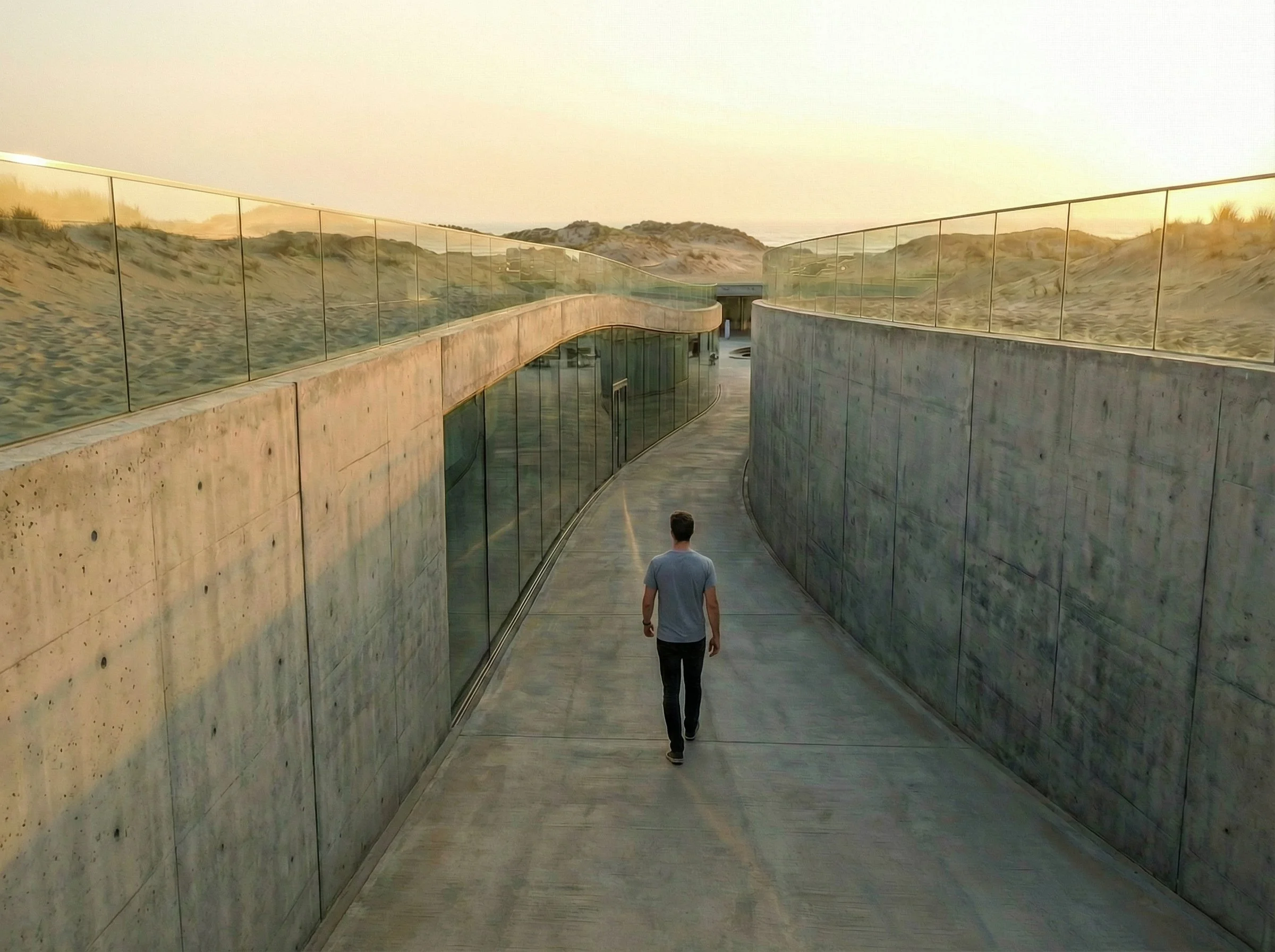
The path extends toward the horizon, stretching both distance and perception. Light traces the curves of the concrete, reinforcing the sense of continuity. The landscape remains present, always guiding the direction forward.
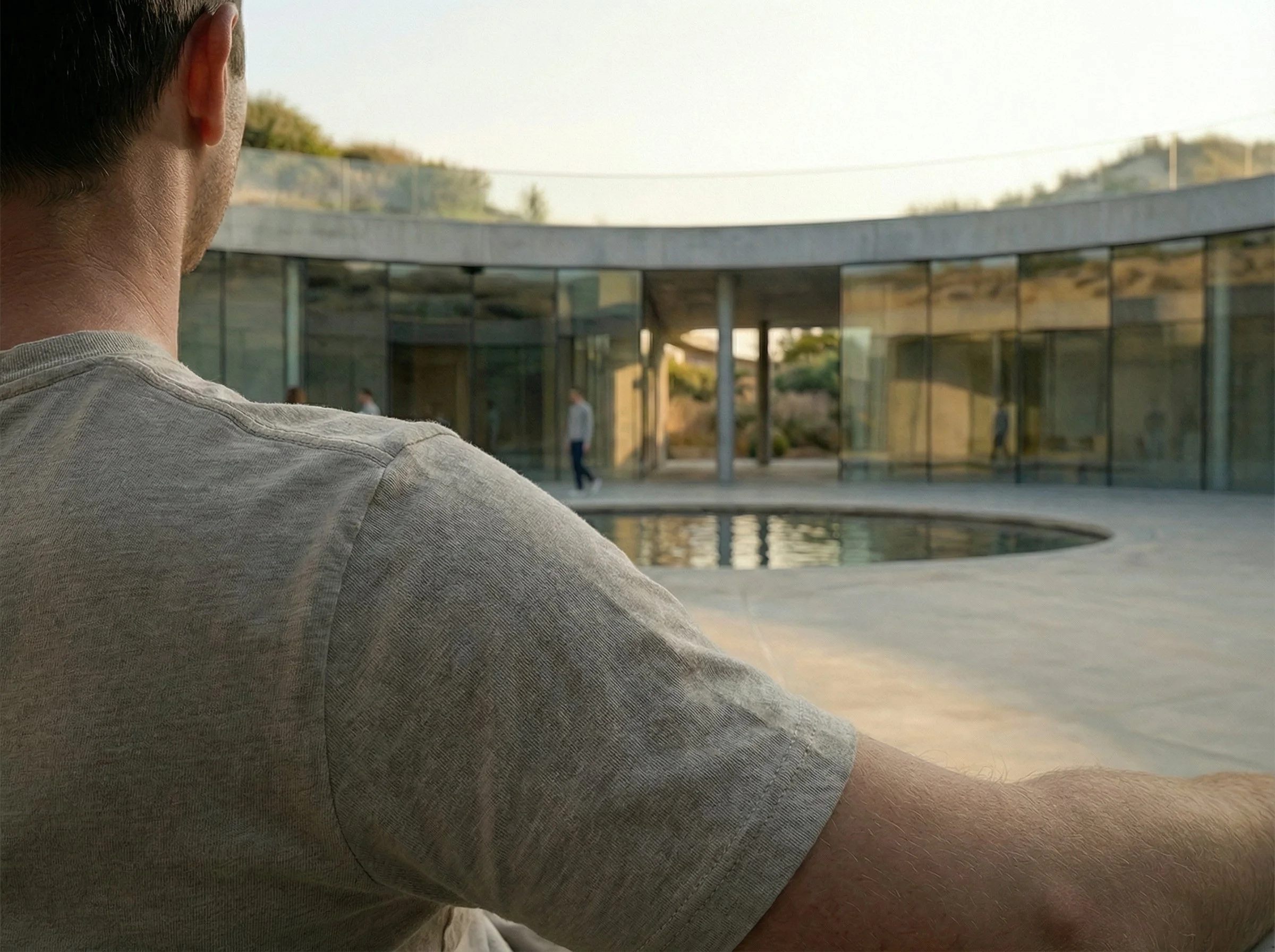
The scale of the space is understood through the body. As people move and gather, the architecture becomes measurable through experience rather than dimension.
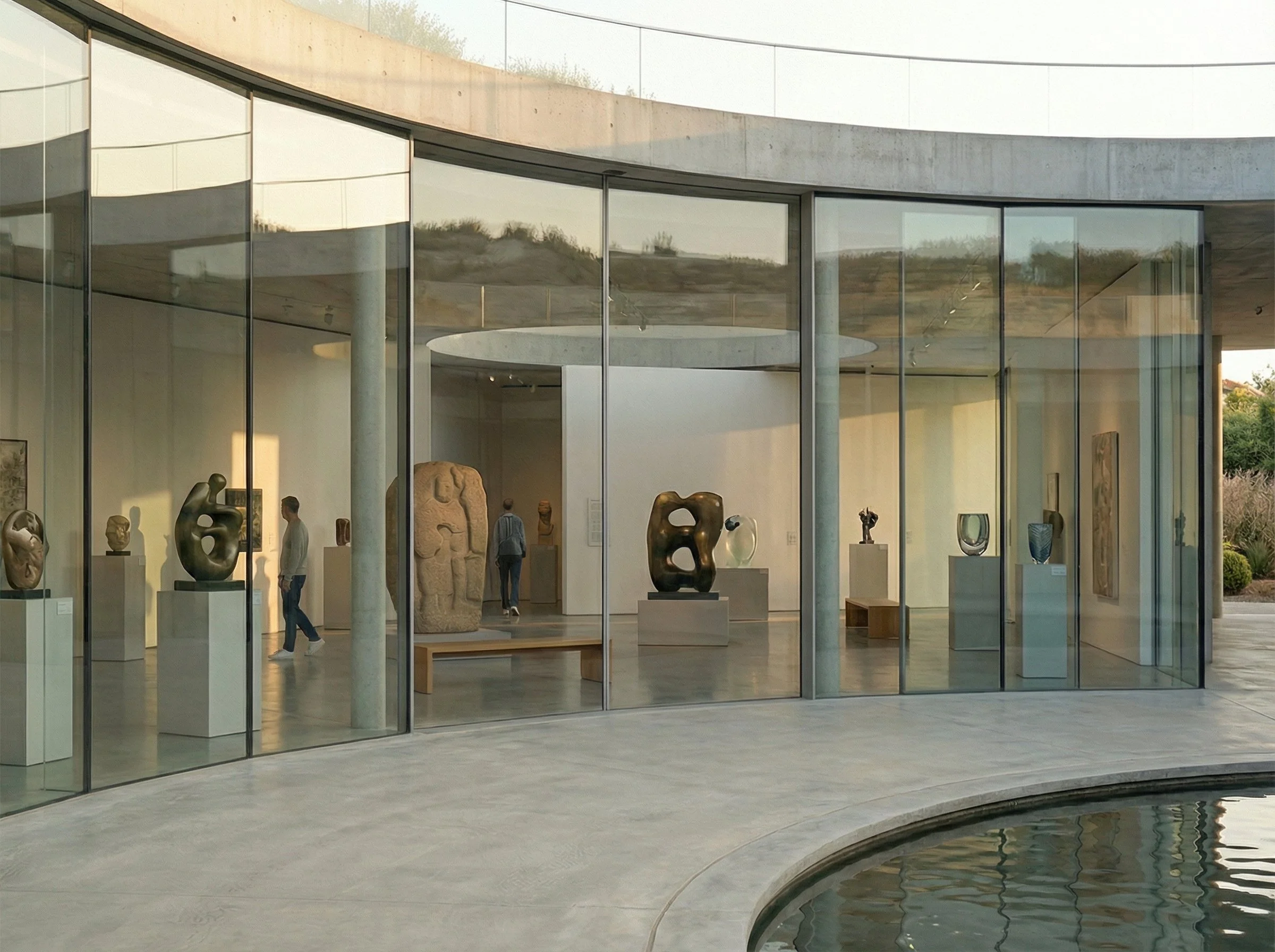
Glass softens the boundary between inside and outside. Reflections, textures, and light overlap, creating a layered condition where the landscape and the interior continuously merge.
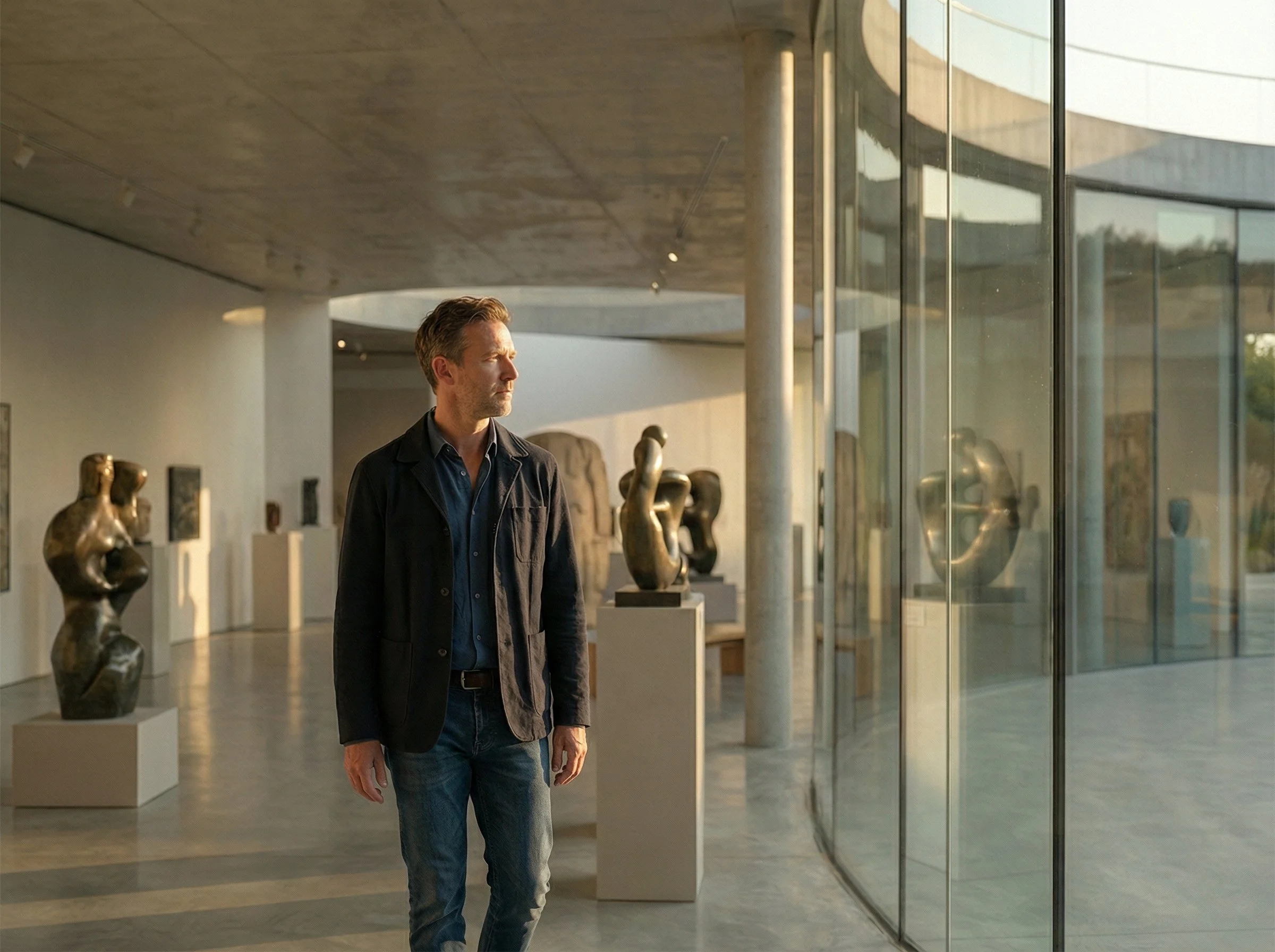
The museum reveals itself in fragments. Each opening offers a partial view, inviting discovery rather than giving everything at once.