Task-based architecture

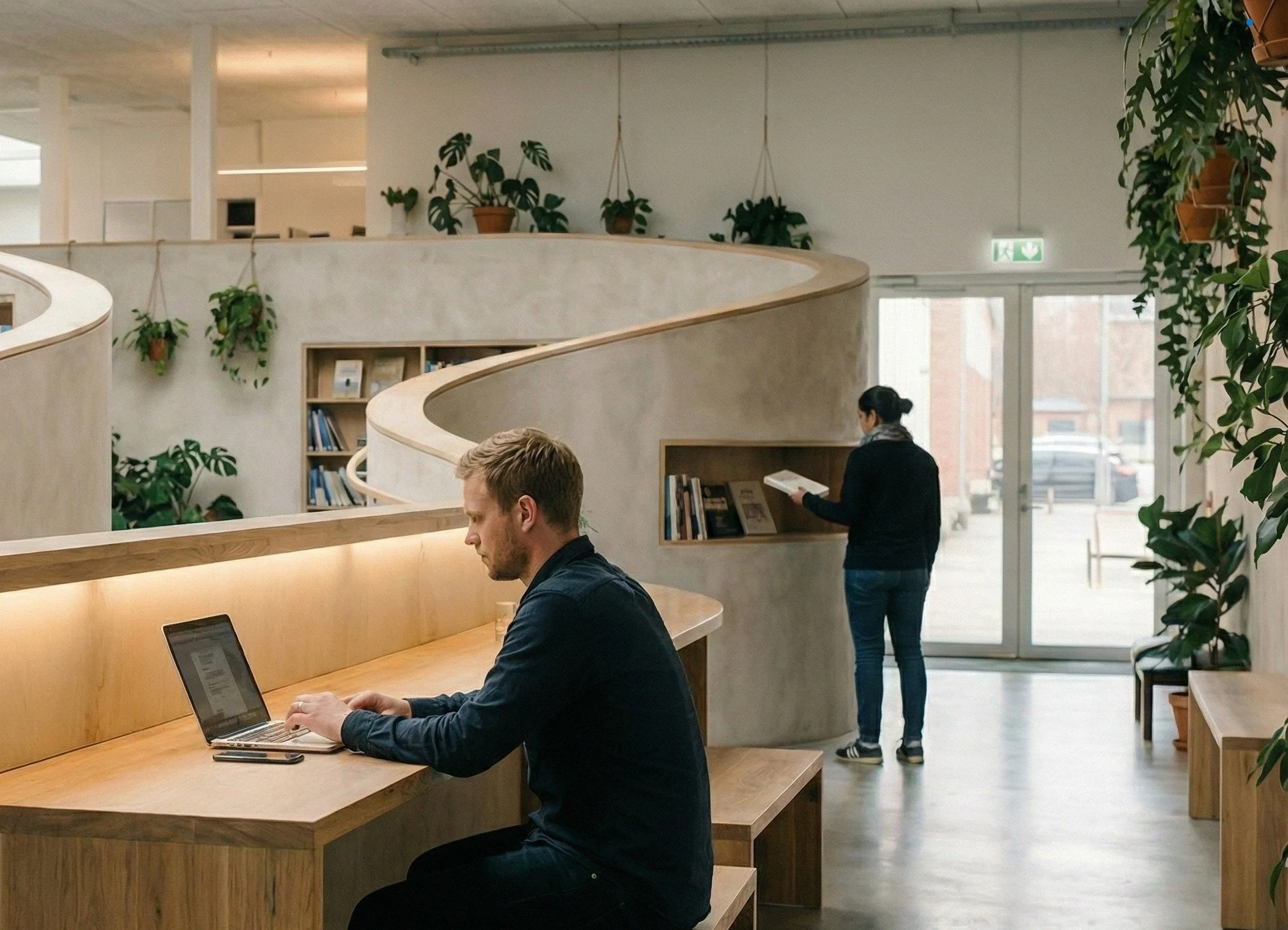
'Task-based activities reduce social anxiety by 25–35% and increase participation rates by over 40%.'
So how can architecture respond to this?
How do we move beyond designing spaces and start designing experiences through tasks and create 'Task-Based Architecture'?
How can we create environments where interaction is not forced but naturally embedded into everyday life, shaping how people move, engage and connect?
There are a few ways to approach this.
The first is 'Task Strips'.
Instead of designing isolated elements, we organize space as a sequence of actions.
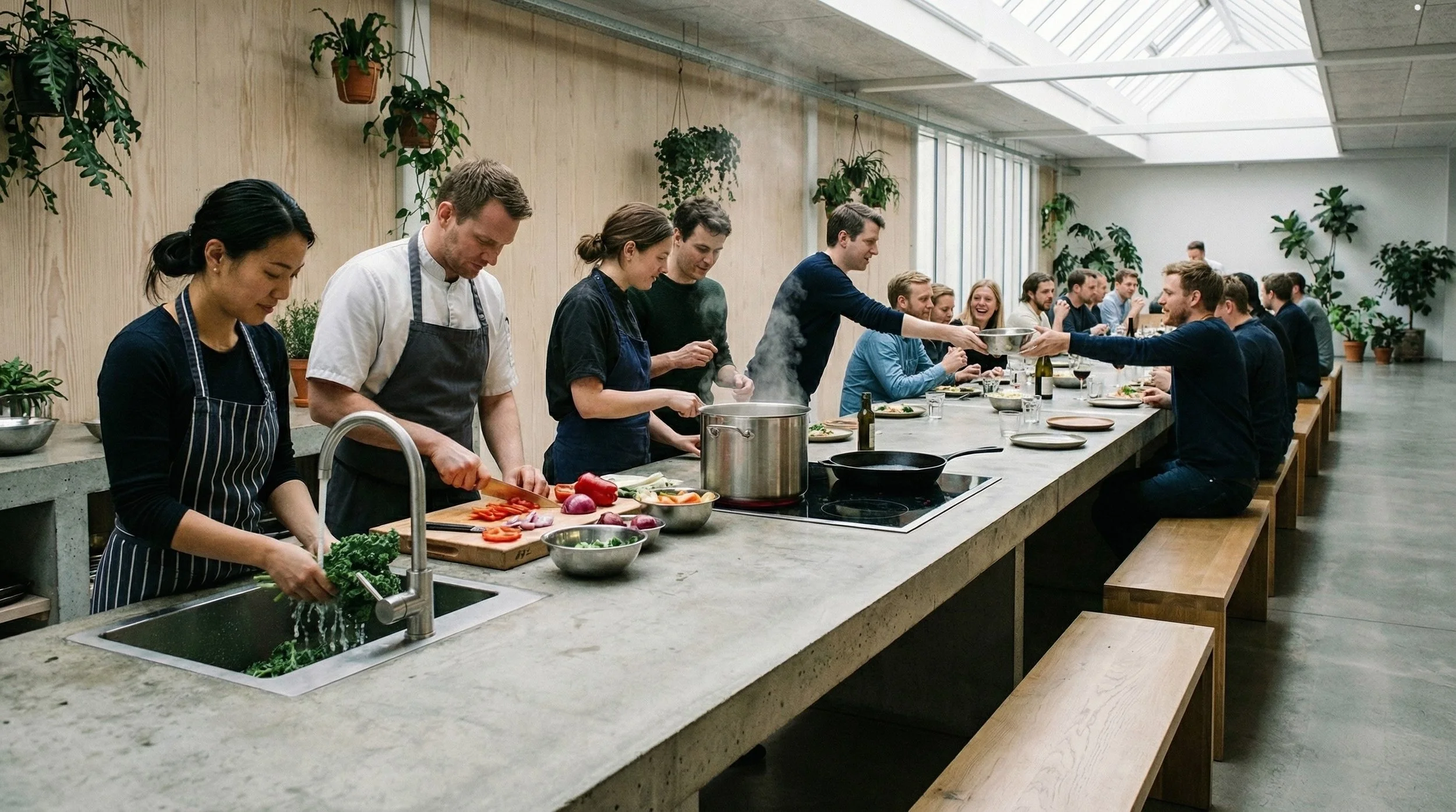
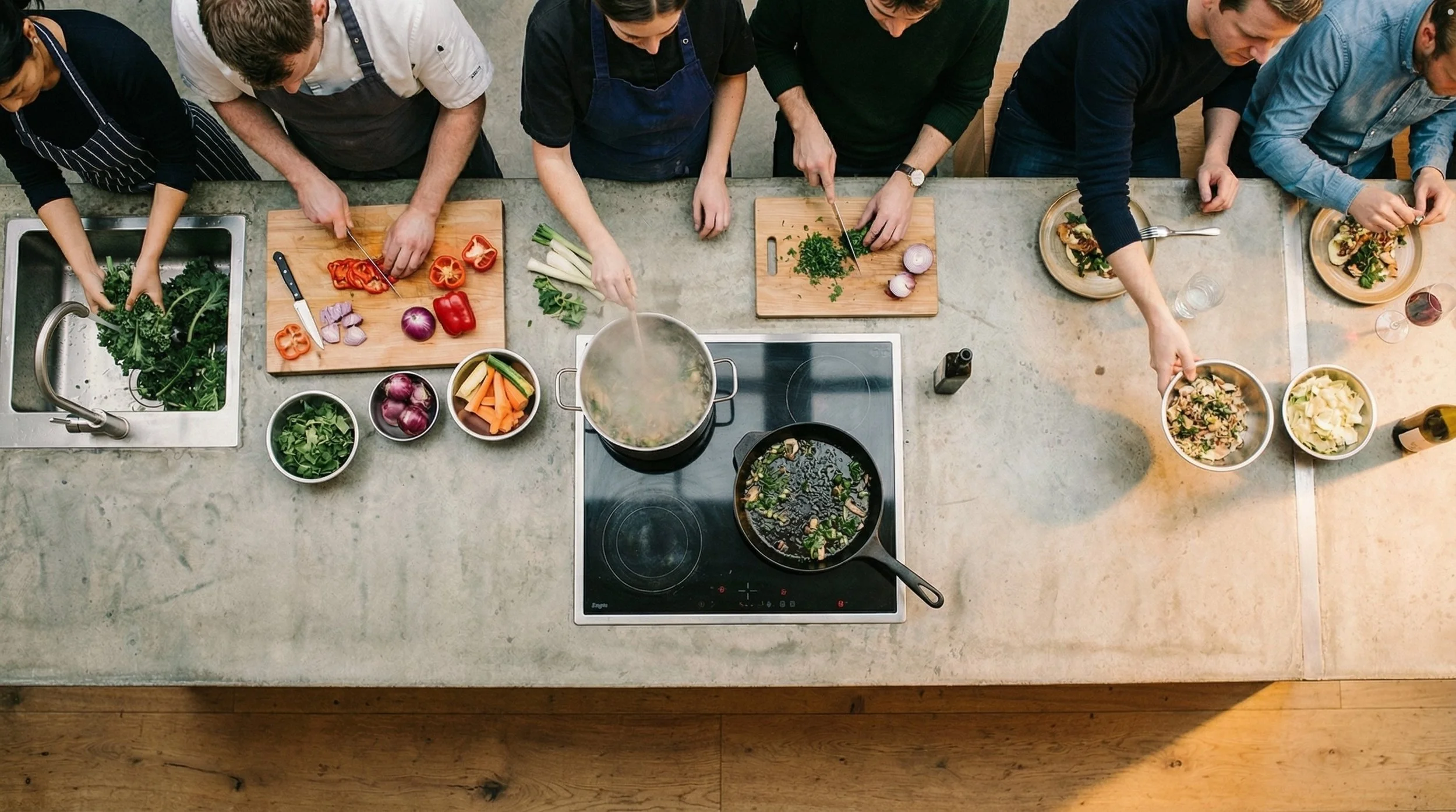
Think of a kitchen.
Not as cabinets and appliances, but as a clear flow: wash, cut, cook, eat.
What we design is not the counter itself, but the experience that unfolds along it.
It becomes infrastructure for activity, not just furniture.
The second is 'Task As Threshold'.
The experience and the task begin at the threshold.
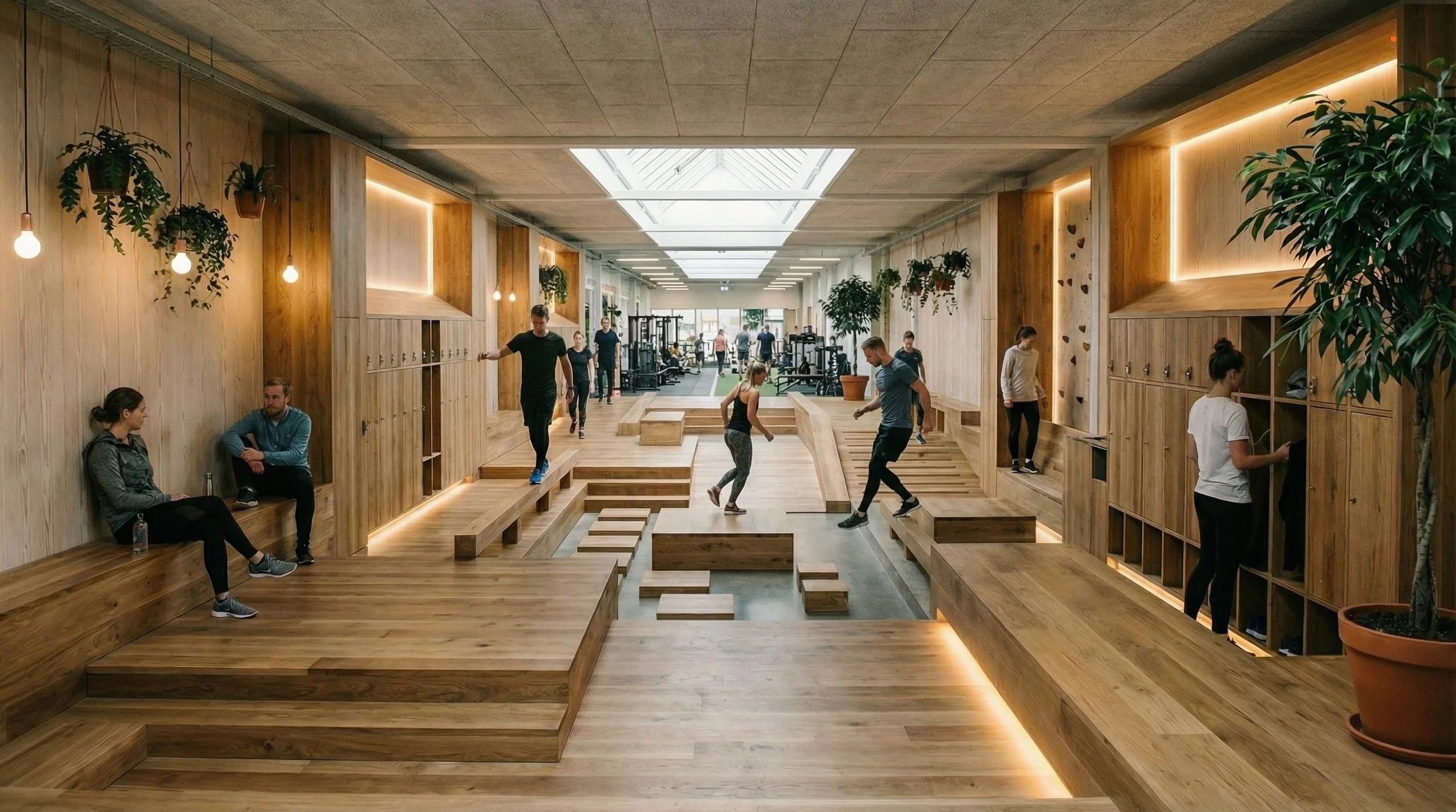
Think of the entrance of a gym.
Instead of a neutral transition, the threshold becomes an activation moment.
Through small level changes, ramps or built-in elements, the warm up task starts as people enter.
Because everyone goes through the same sequence, it creates a shared moment.
It brings people together and reduces the tension of entering the gym alone.
The task is no longer something separate.
It is already part of the architecture from the very beginning.
The third is 'Task As Circulation'.
The experience is broken down into smaller tasks and distributed along the path.
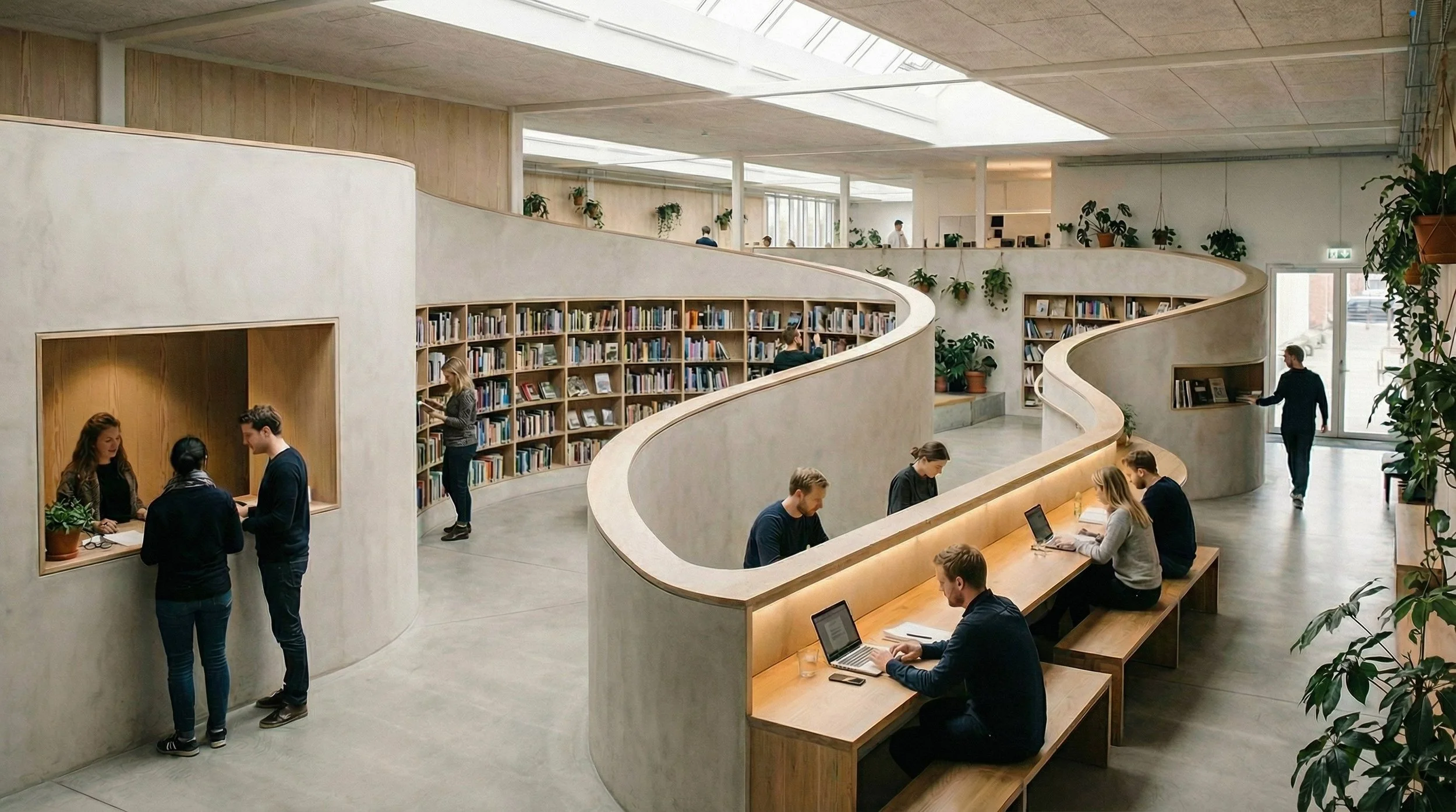
Think of a library.
Instead of a single room, activities unfold along a route: browsing, picking a book, sitting briefly, returning it.
Each task has its own place along the path, without overlapping with the others.
Circulation is no longer just movement from one point to another.
It becomes a sequence of tasks that shape the experience.
People move, pause, interact and continue, all within the same flow.
In the end, we are not just designing spaces.
We are designing how experience unfolds through tasks.
When experience is intentionally designed, it has a real impact on how people feel, behave and connect.
And when architecture supports this, even the simplest actions can become meaningful moments.
